In March and April, Death Valley National Park reveals a softer, more surprising side of its famously harsh landscape: warm light stretching across salt flats, fresh wildflowers brightening the desert floor, and sculpted badlands and mountains glowing in shades of gold, rose, and rust. For landscape photographers, this brief spring window offers an extraordinary mix of drama and delicacy, where vast emptiness meets fleeting color and every sunrise or sunset feels like the desert is putting on a spectacular show.
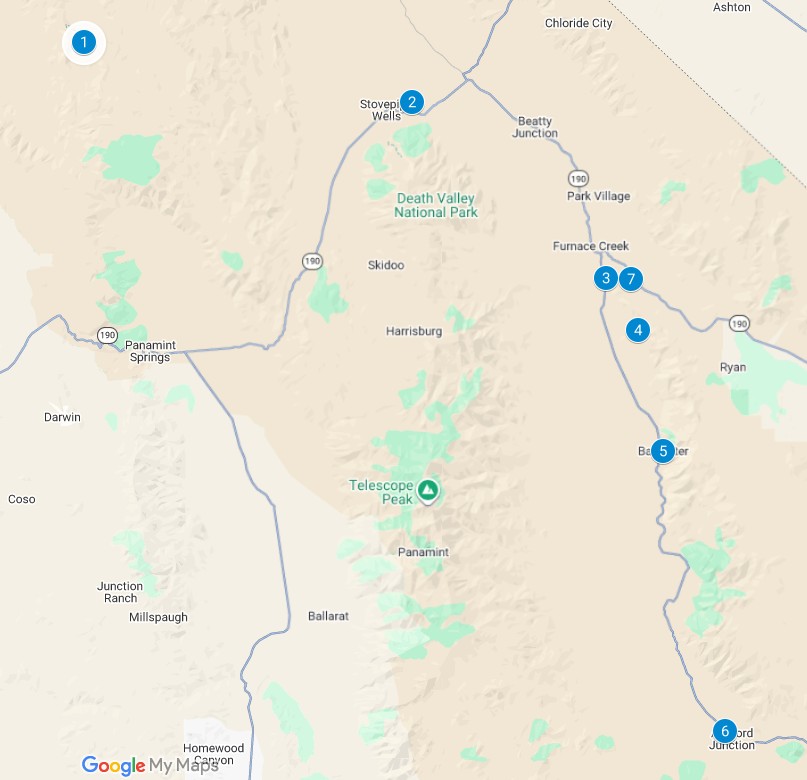
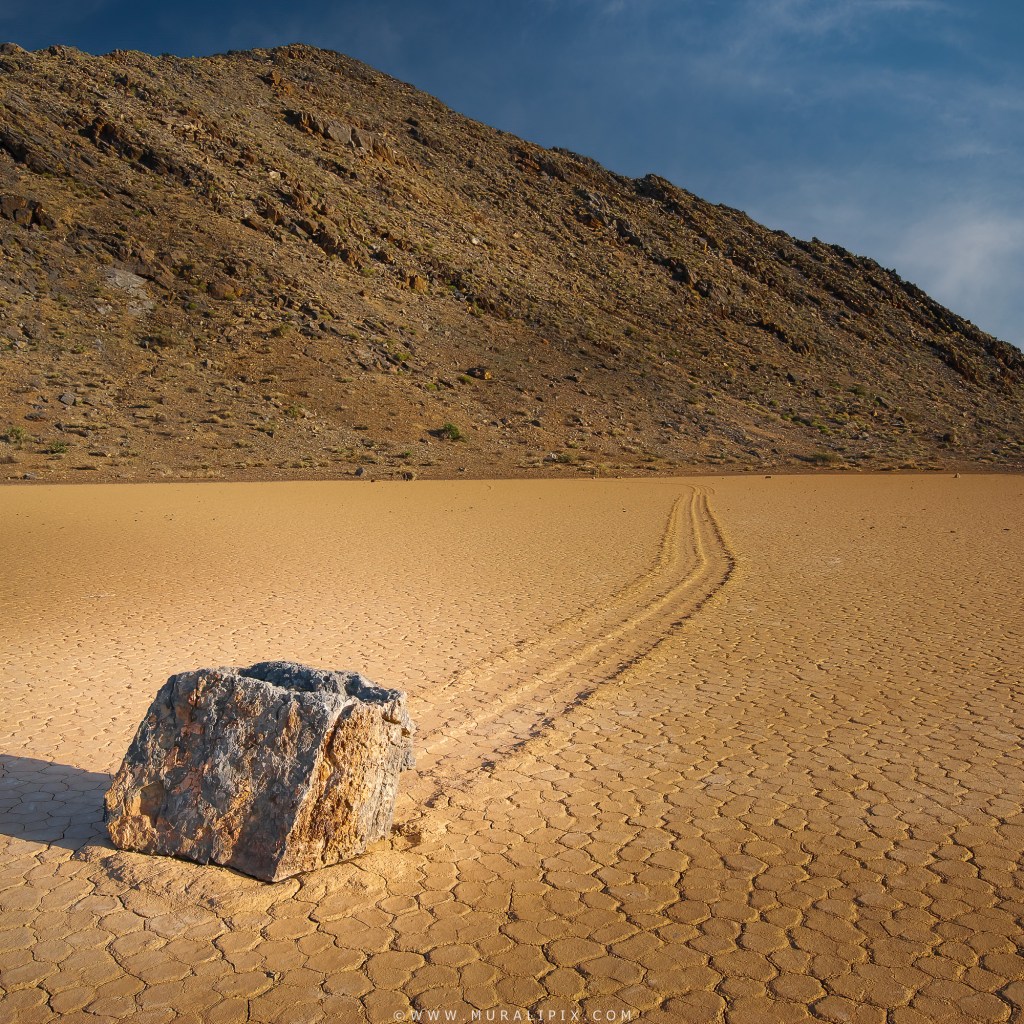
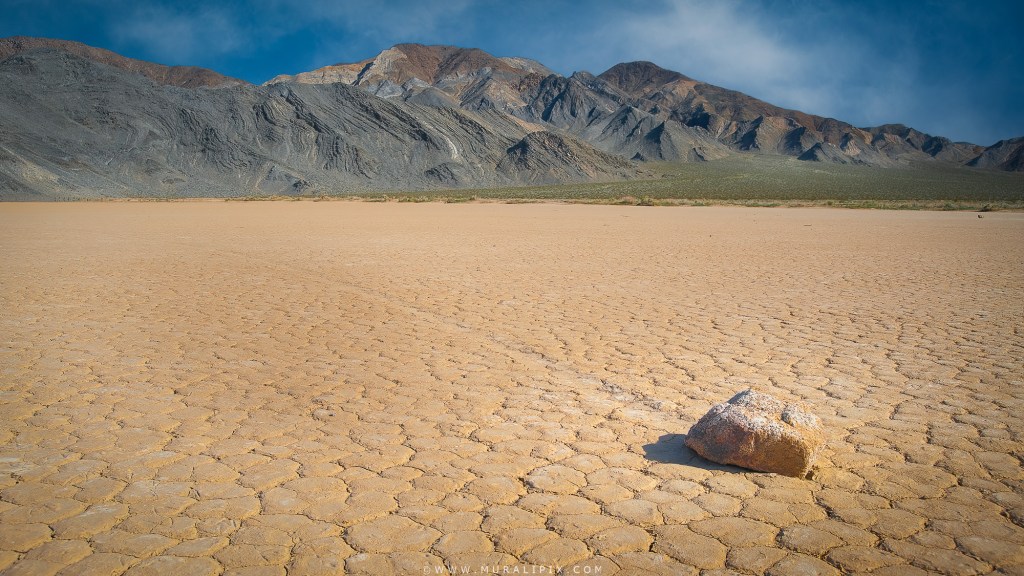
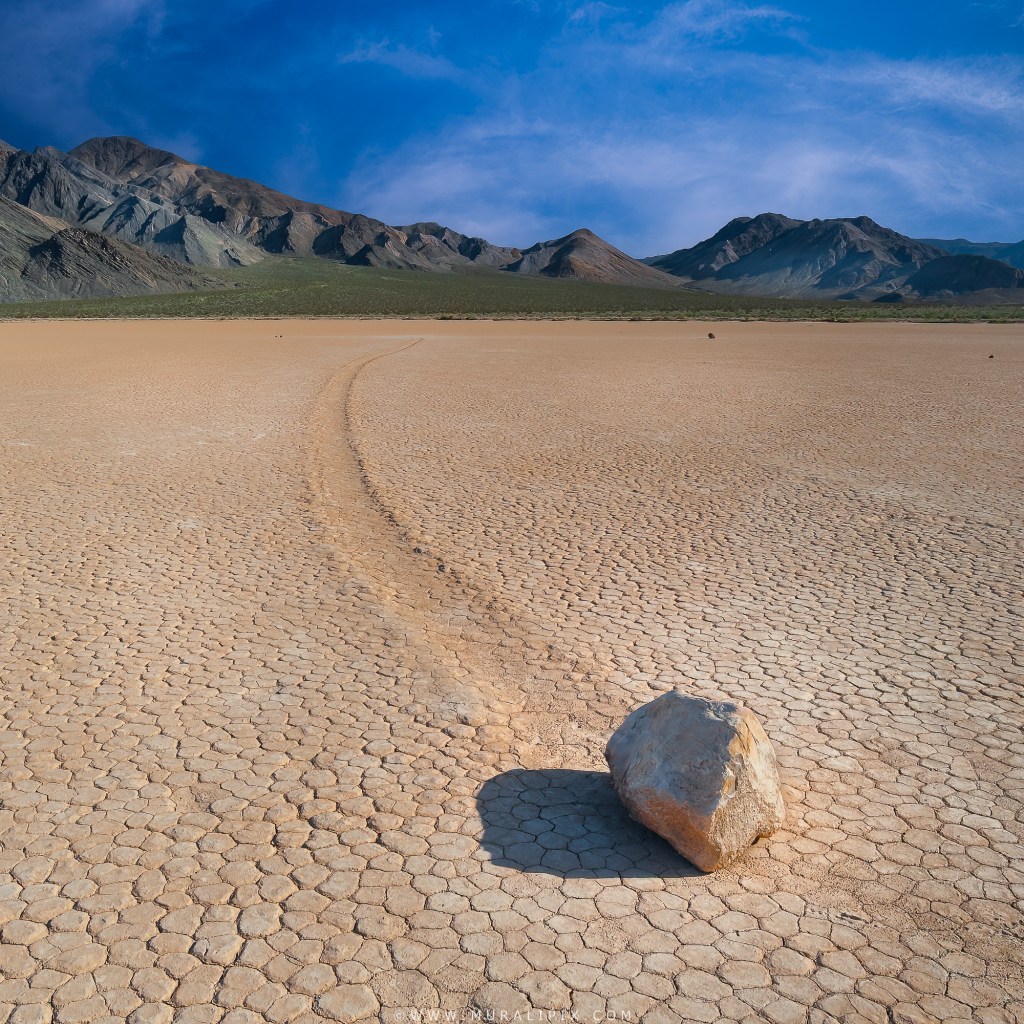
Racetrack Playa (1)
What makes Racetrack Playa unique is how many extremes converge in one minimalist frame: a perfectly level clay pan etched with polygonal mud cracks, ringed by stark desert peaks, and scattered with “sailing stones” that have carved sinuous tracks across the surface. Those tracks record a rare process—thin winter ice panels forming on a shallow flood, then breaking up and drifting under light winds, quietly pushing rocks that can weigh hundreds of pounds. For photographers, that mix of geometric foreground texture, solitary rocks with built‑in leading lines, and an unobstructed horizon beneath dark, remote skies gives Racetrack Playa a compositional clarity that’s hard to match anywhere else.
You’ll need a 4×4 vehicle to reach the playa, and you should carry ample water and food in case you get stuck. There is no cell service out here, and it’s roughly a 70‑mile, 2.5‑hour grind back to the nearest services at Stovepipe Wells. The trek is demanding but photographing the sailing stones in late‑afternoon light makes every mile worthwhile.
Mesquite Flats Sand Dunes (2)
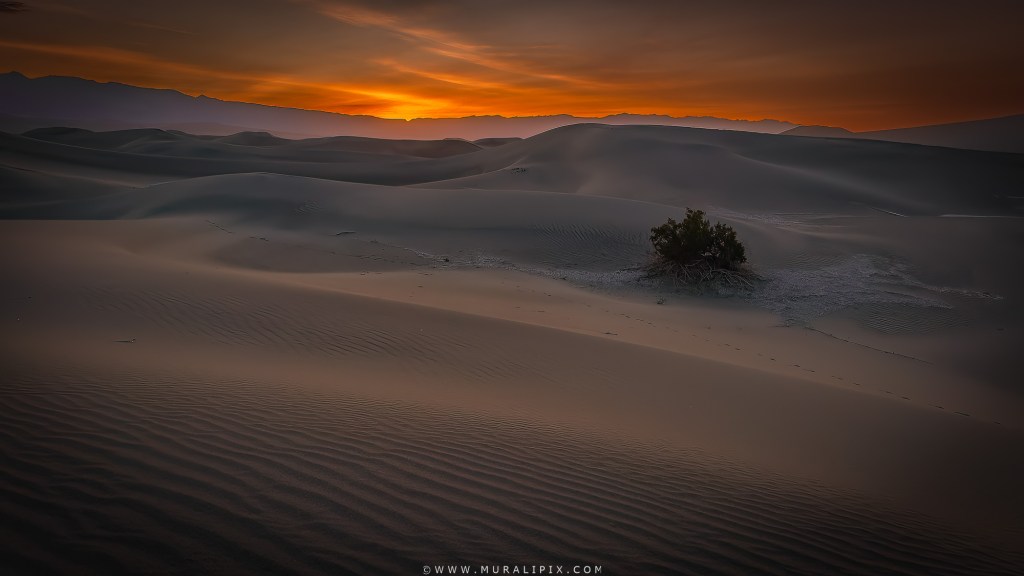
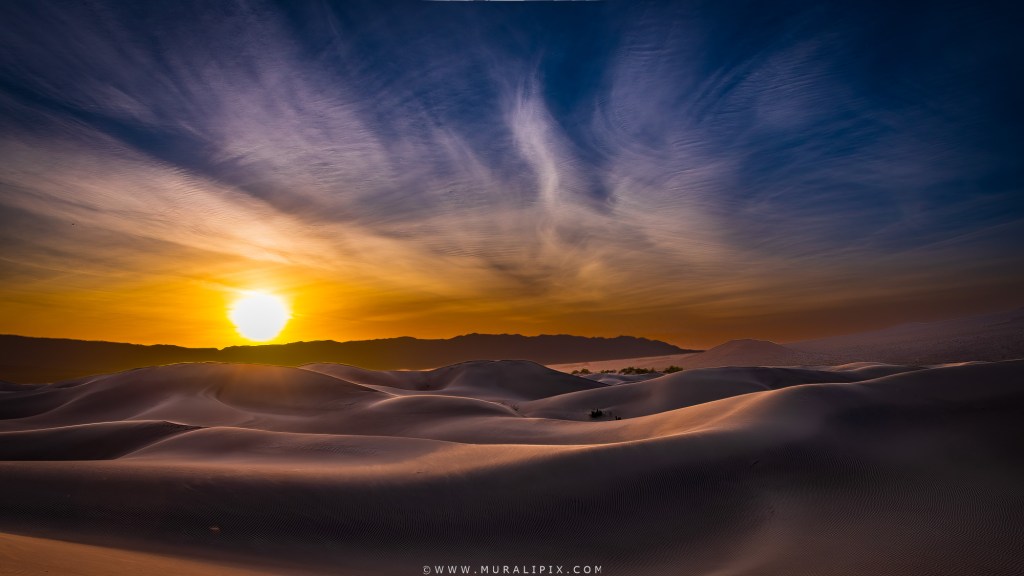
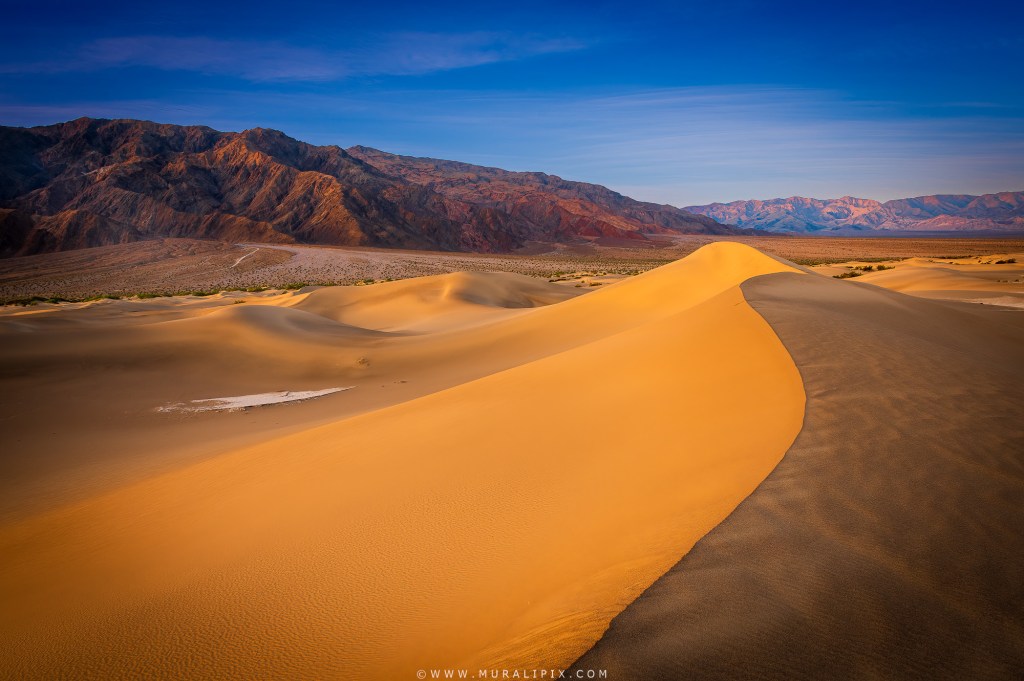
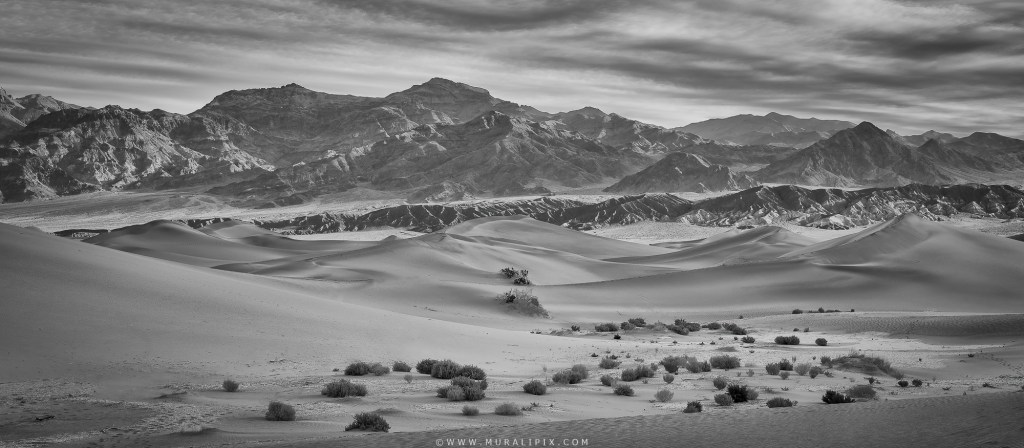
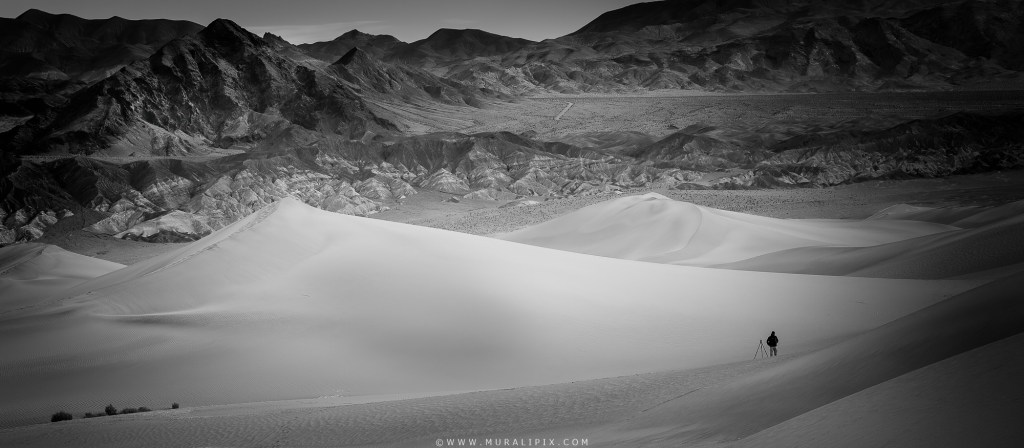
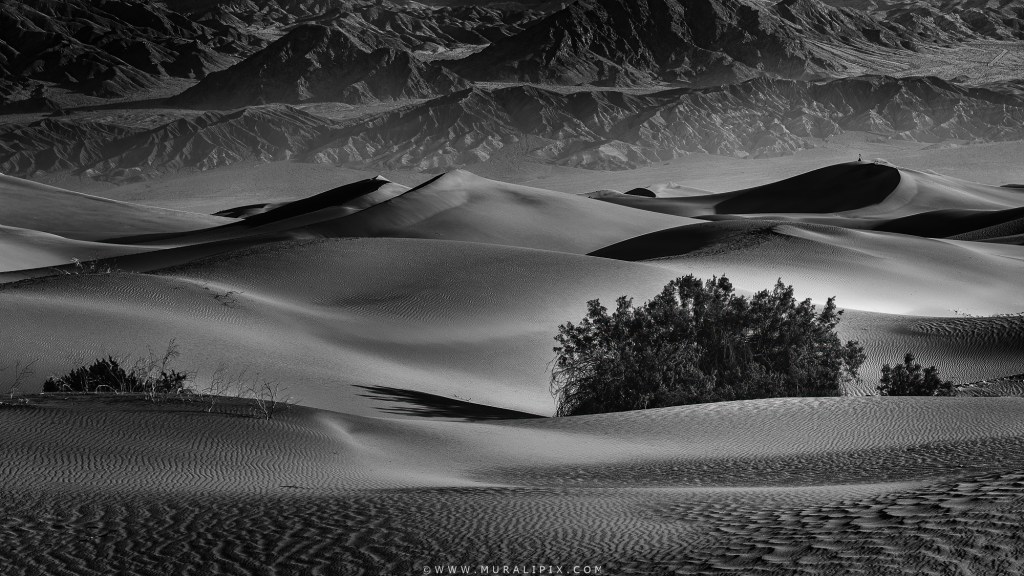
The Mesquite Flat Sand Dunes sit just east of Stovepipe Wells along Highway 190, where a Y‑shaped valley and surrounding mountains slow the wind enough to drop its load of sand. Fed mainly by quartz- and feldspar‑rich sediments eroded from the nearby Cottonwood Mountains and trapped by the Tucki, Grapevine, and Funeral ranges, the dunes form a broad field of crescent, linear, and star-shaped ridges rising up to about 100–140 feet above a cracked clay lakebed. This combination of easy roadside access, classic dune forms, and 360‑degree mountain backdrops makes Mesquite Flat the park’s quintessential sand‑dune landscape for photographers and hikers alike.
The dunes photograph best around sunrise and sunset, when low-angle light reveals ripples and contours. For sunrise, plan to leave the parking area at least 45 minutes early so you can hike well out into the dune field and avoid most footprints in your compositions. Hiking farther from the lot also helps you find cleaner lines and untouched patterns in the sand. If you’re lucky enough to get partly cloudy skies, the mix of soft light and shifting shadows will add depth, texture, and layered contrast to your images in both color & black and white.
Along Badwater Road (3 – 6)
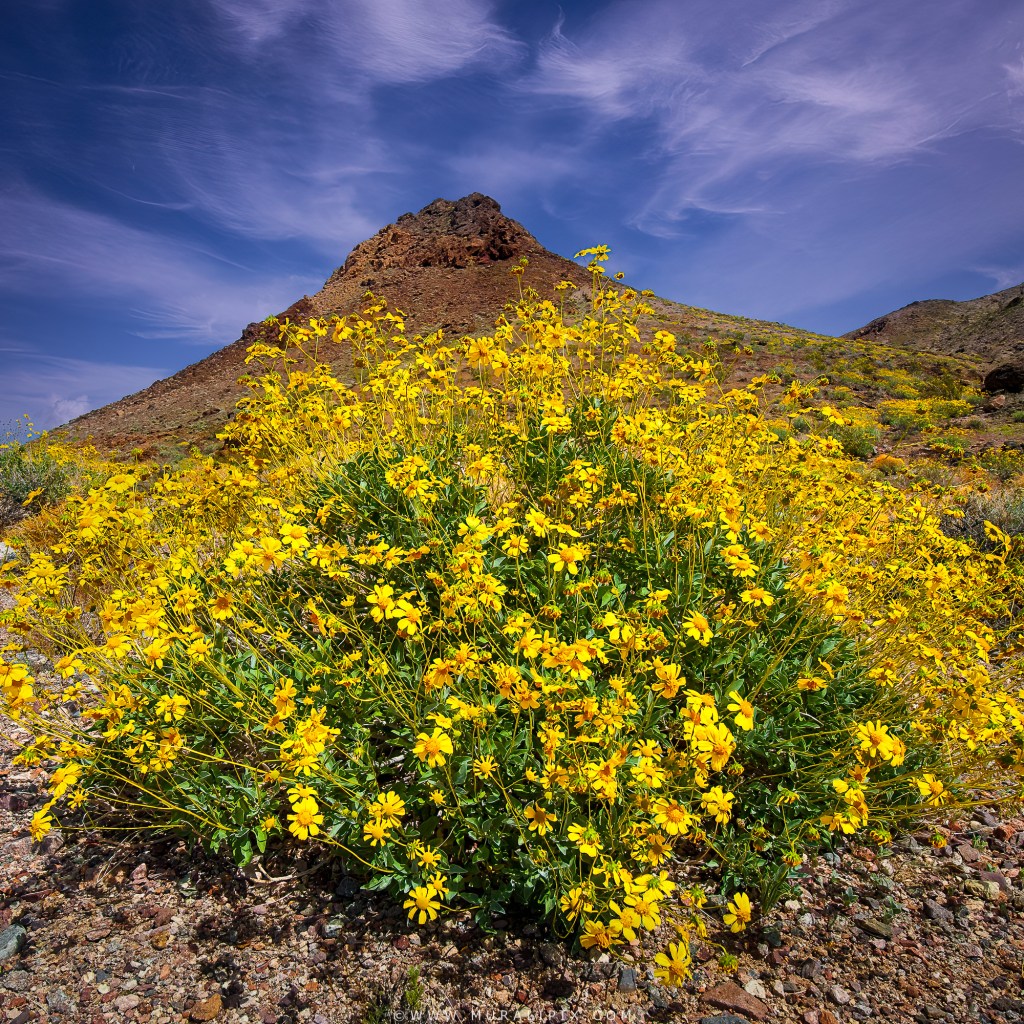
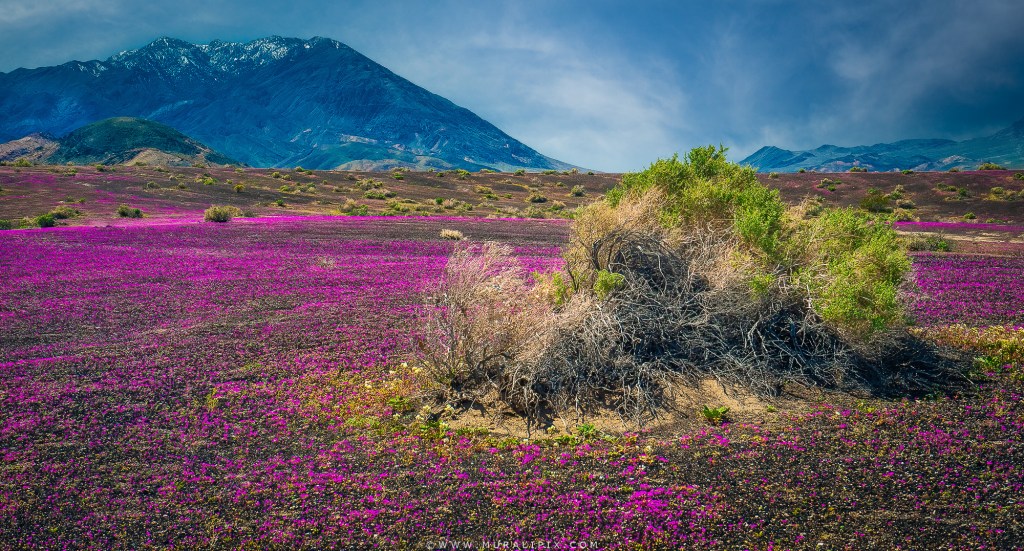
Running south from Furnace Creek, Badwater Road threads together some of Death Valley’s most photogenic stops: the sculpted badlands of Golden Canyon, where warm light carves deep texture into folded rock; the vividly colored volcanic hills of Artist Palette along the one‑way side drive; and, farther on, the vast salt pans of Badwater Basin, where polygonal crystals and mirrored reflections create minimalist compositions at the lowest point in North America. Just beyond, near Ashford Junction, spring can bring sweeping displays of wildflowers—especially desert gold and purple phacelia—turning the gravelly alluvial fans into a carpet of color that contrasts beautifully with the stark mountains and salt flats beyond.
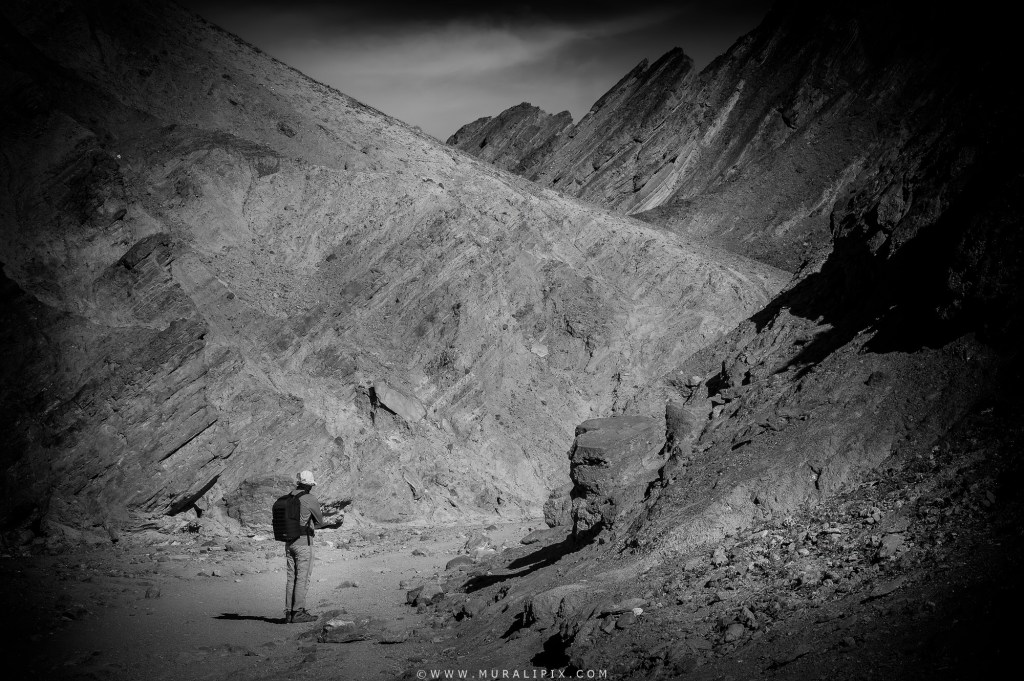
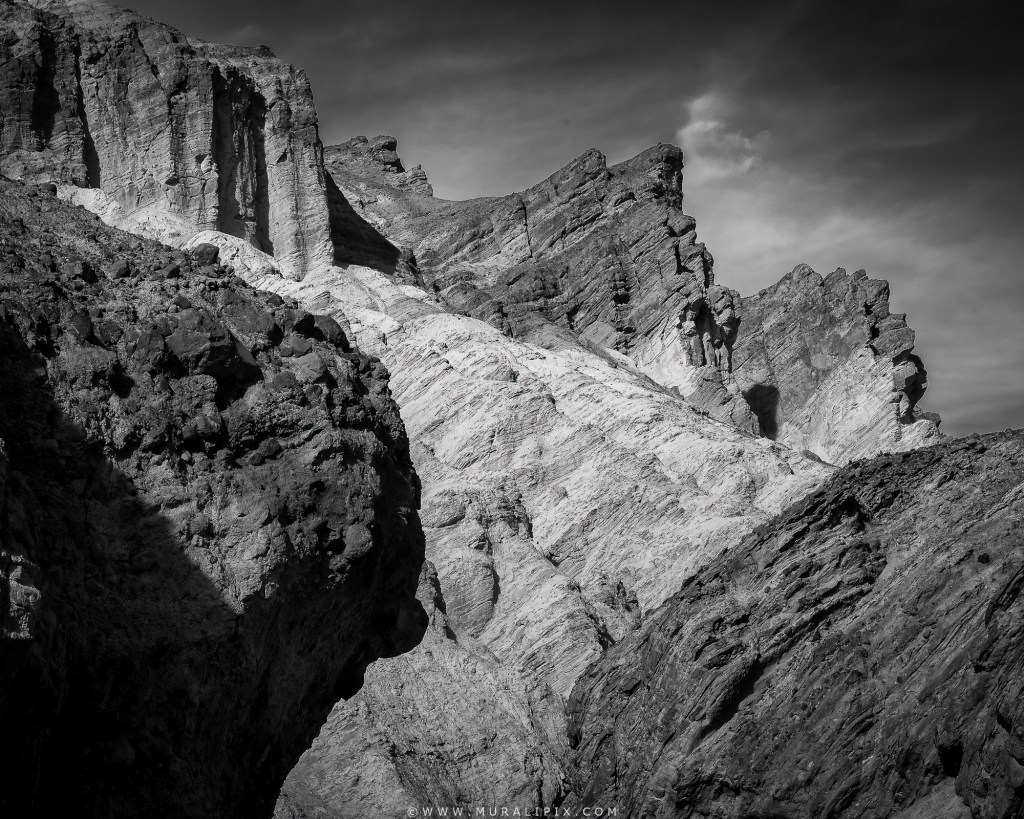
Golden Canyon (3)
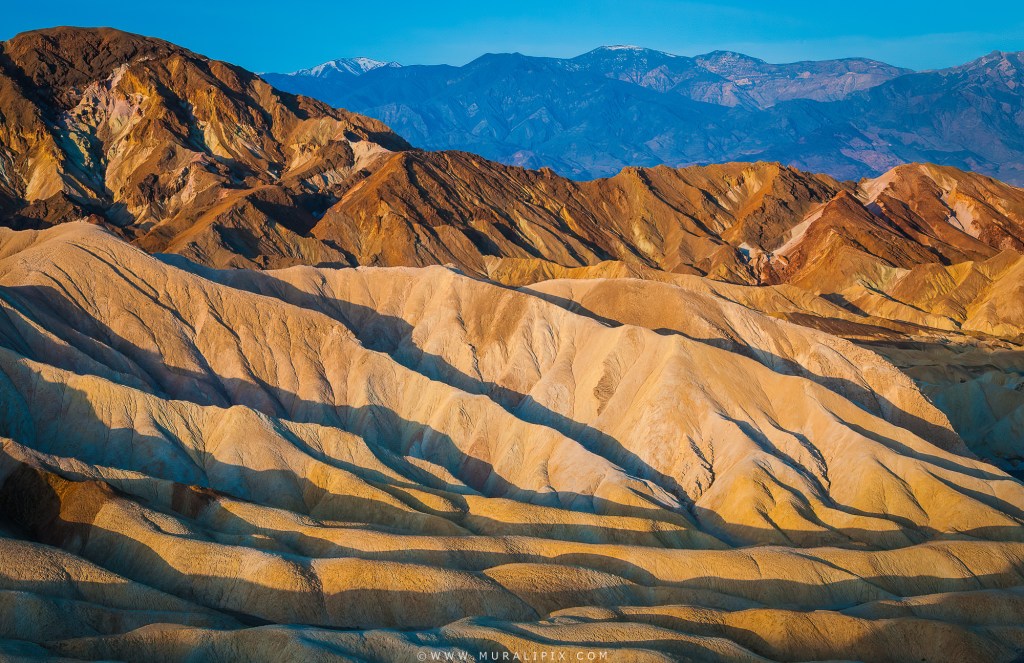
Golden Canyon slices through soft yellow mudstones and older conglomerates that were once lakebed sediments and alluvial fans, later uplifted, tilted, and carved into badlands by flash floods.
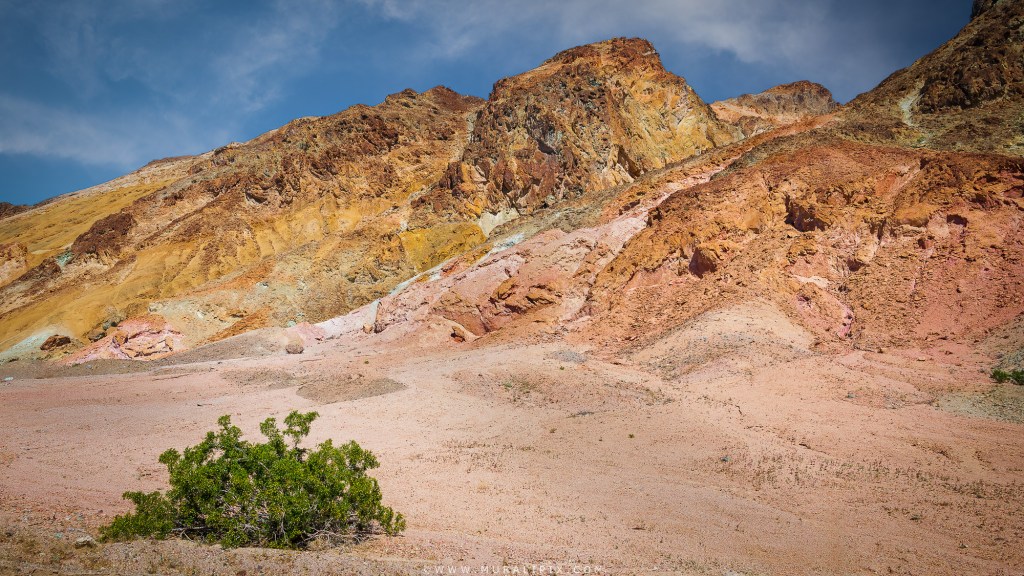
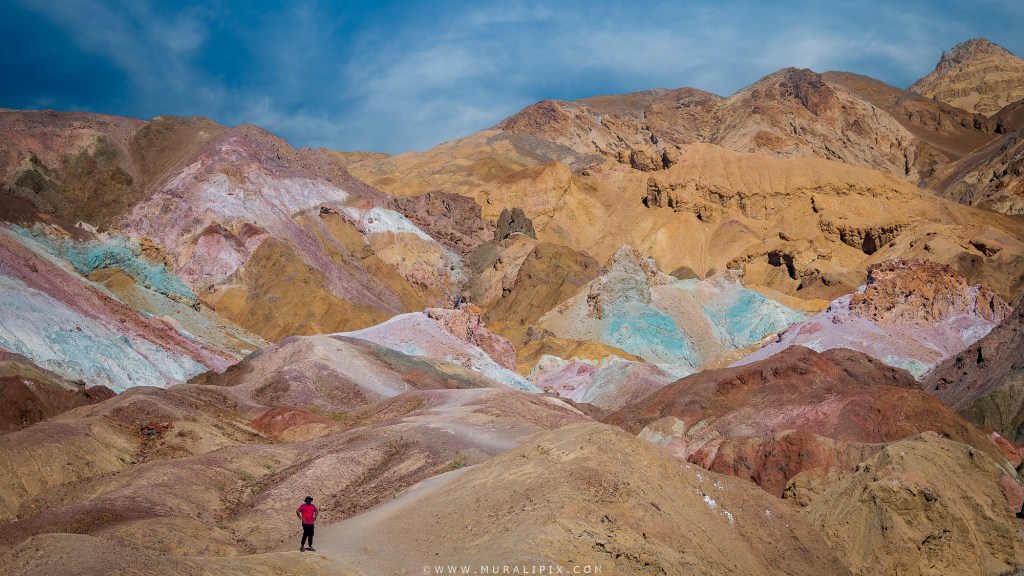
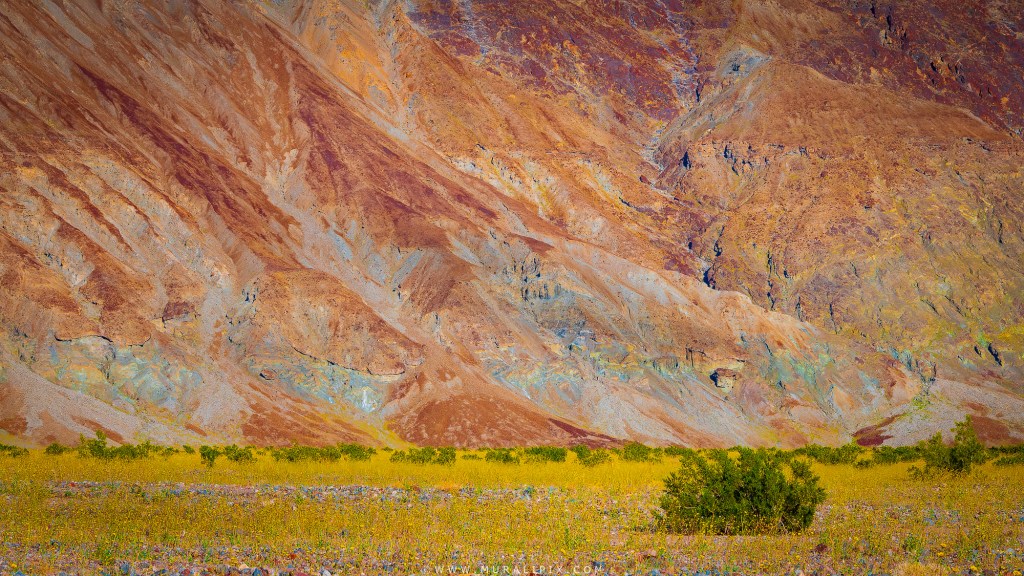
Artists Drive & Artists Palette (4)
The one‑way loop of Artists Drive winds through deeply eroded gullies on the west face of the Black Mountains, leading to the technicolor hillsides of Artist Palette. Here, Miocene‑age volcanic ash, gravels, and playa deposits—collectively known as the Artist’s Drive Formation—have been chemically altered and oxidized, so iron, manganese, and mica‑derived minerals paint the slopes in reds, yellows, greens, and purples that glow dramatically in low-angle light.
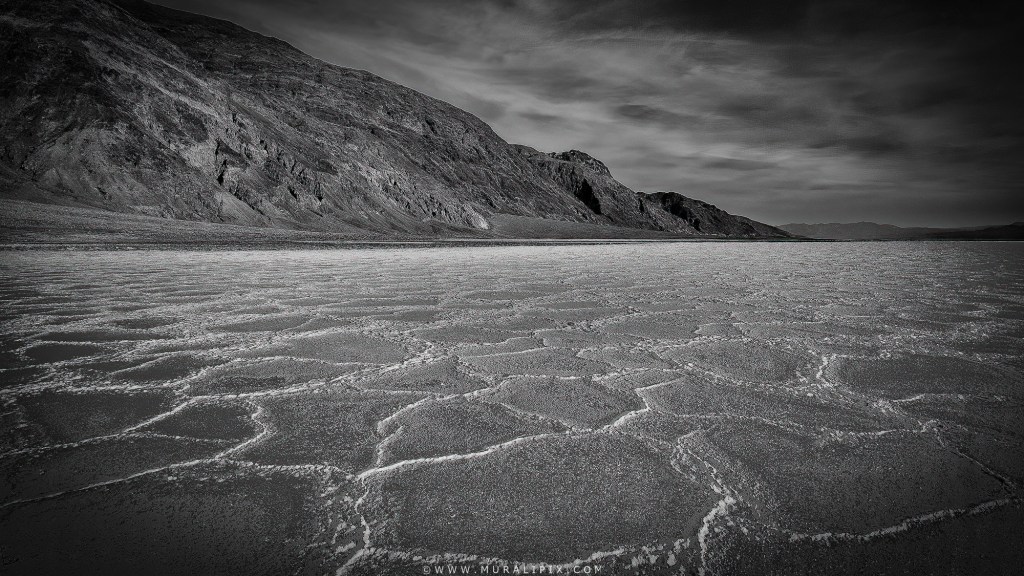
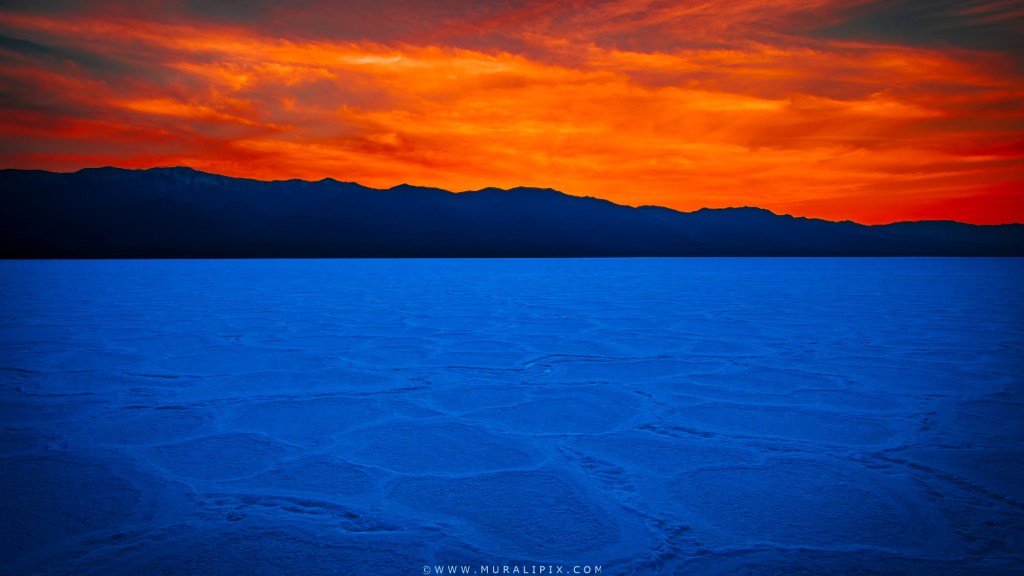
Badwater Basin Salt Pans (5)
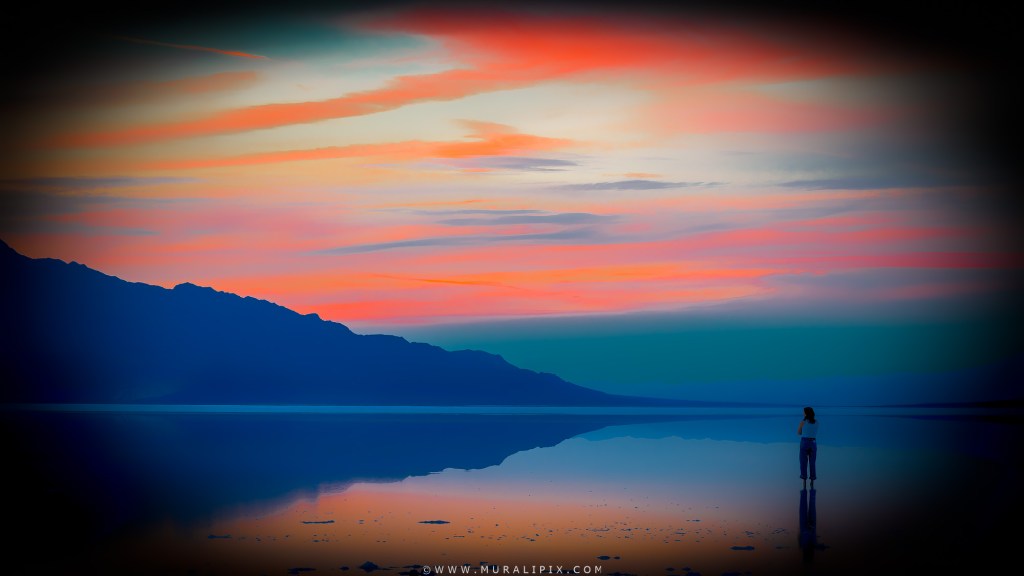
The salt pans of Badwater Basin are a vast, blinding-white mosaic of salt polygons formed at the lowest point in North America, 282 feet below sea level. Once the floor of ancient Lake Manly, the basin now fills only during rare late winter storms, when shallow water briefly floods the valley and then rapidly evaporates, leaving behind thick crusts of mostly sodium chloride mixed with calcite, gypsum, and other minerals. Over thousands of years, repeated flooding and evaporation cycles have built up salt layers up to a few inches thick, while expanding salt crystals continuously heave and fracture the surface into the intricate honeycomb patterns that make the Badwater flats such a compelling subject for late afternoon landscape photography.
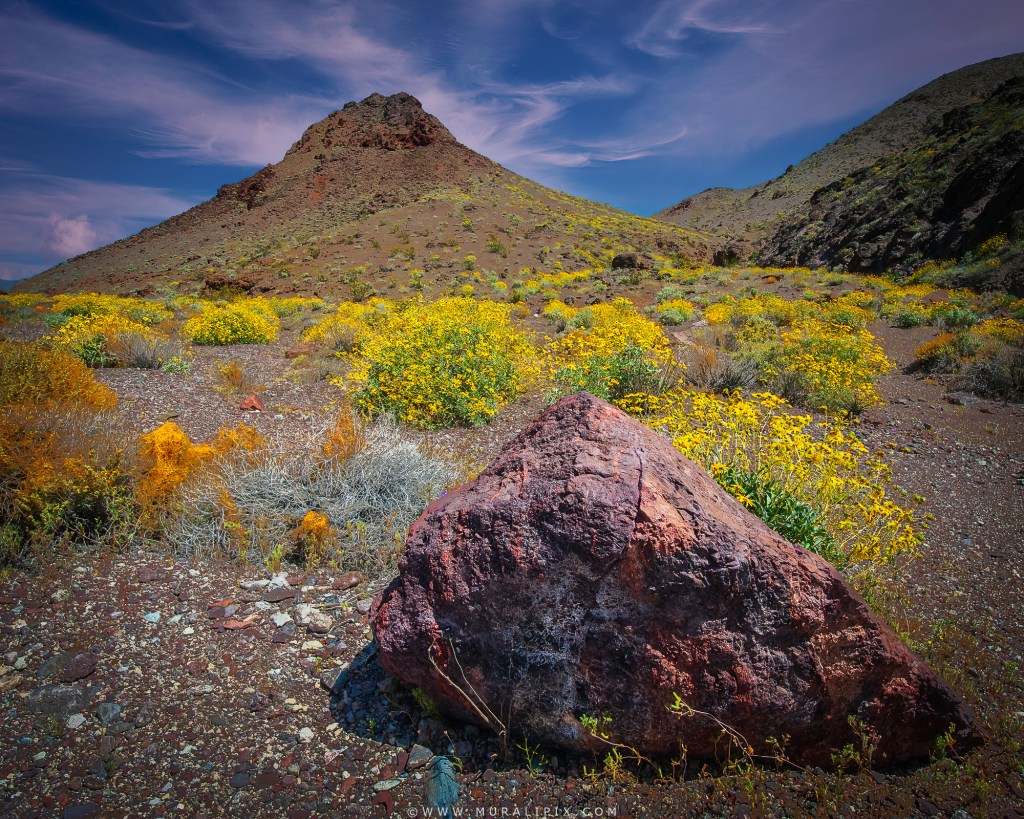
Around Ashford Junction (6)
In a good bloom year, the drive south along Badwater Road toward Ashford Junction becomes a rolling wildflower hunt, with your eyes scanning the fans and roadside flats for patches of desert gold and splashes of purple phacelia.
Mesquite Flats Sand Dunes (2)
Zabriskie Point (7)
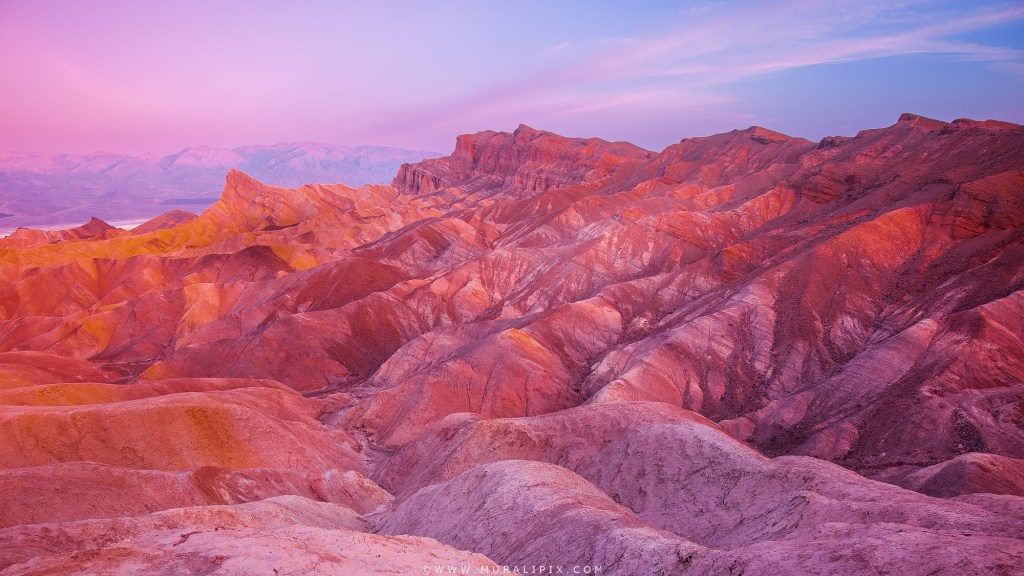
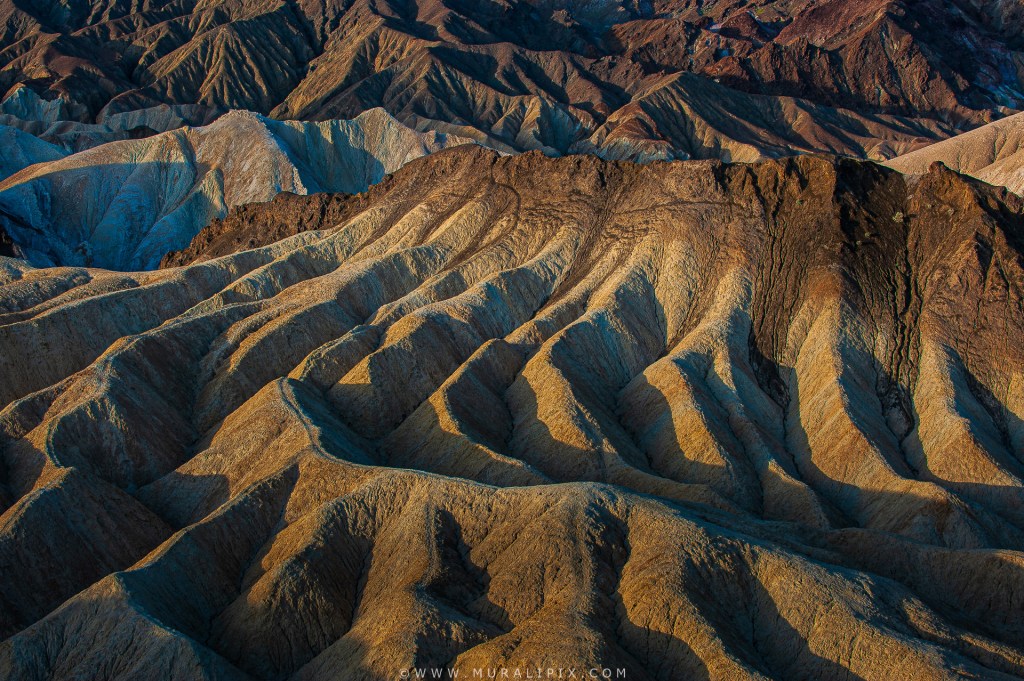
Zabriskie Point sits on the east side of Death Valley in the Amargosa Range, just a short drive from Furnace Creek, overlooking a maze of yellow and brown badlands with the salt flats and Panamint Mountains visible beyond. Those sculpted hills are part of the Furnace Creek Formation, made of clay-rich lakebed sediments, gravels, and volcanic ash deposited in an ancient lake that filled this area 3–5 million years ago and later dried out; subsequent uplift and tilting of the Black Mountains, combined with intense flash-flood erosion, carved the ridges and gullies seen today, while resistant lava caps help preserve sharp features like Manly Beacon.
The prime time to photograph here is pre‑dawn through the first 20–30 minutes after sunrise, when side‑light from the east rakes across the badlands, carving deep shadows and warming the yellow Furnace Creek Formation into gold and ochre. Many photographers aim to arrive 30–60 minutes before sunrise so they can set up in the dark, catch the subtle twilight glow on Manly Beacon, and then work through the fast‑changing light as the sun clears the horizon.
In just a few spring days, Death Valley National Park can take you from pastel badlands at dawn to glowing dunes, mirror-smooth salt flats, and wildflower-streaked alluvial fans by sunset. If you bring a flexible plan, plenty of water, and a willingness to chase the light, March and April here will reward you with some of the most varied and memorable landscape photographs you’ll make anywhere in the Southwest.
 Murali Narayanan Photography