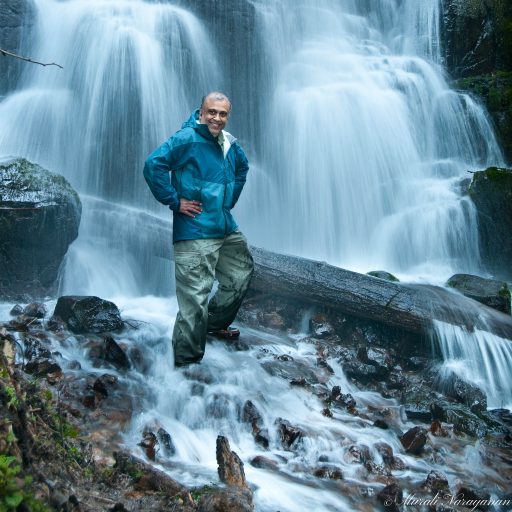
The Skagit Valley, about 50 miles north of Seattle, boasts a captivating landscape shaped by the meandering Skagit River. It is renowned for hosting the Skagit Valley Tulip Festival, a dazzling display of millions of tulips in full bloom. During April, vibrant petals create a kaleidoscope of colors across the county, drawing visitors from far and wide.
Many tulip farms open to everyone at 10AM, but some farms let photographers in earlier, at 6am. There’s a fee to enter this early, either $100 for one day or $350 for the whole month. The benefit is you get to take pictures with no people around and during pretty sunrises and sunsets. But if you are not interested in a restaurant, toilets, and other side shows, there are also a few fields with limited number of tulip varieties that you can visit at any time.

Nikon D780 240mm f8 1/320 sec ISO 400 (10-image Focus Stack)
(48.396786, -122.415403)
The weather forecast for the morning was cloudy, some fog, and a slight drizzle, an ideal weather for flower photography. Cloudy weather keeps the colors saturated, instead of washing them out like sunshine does on a clear day. I avoid taking out my camera on sunny days. An added benefit of “bad weather” means less crowds.
We left home at 5AM & reached an “unmanaged” tulip field at about 615AM. There were 5 other photographers, two with large lenses (500 f4) who were photographing small birds landing on tulip flowers. The field had rows of tulips in different colors.
Sometimes, there would be a single flower of a different color mixed in with a whole bunch of the same color. This could be either due to errors at planting or intentionally done to aid photographers in capturing unique compositions. I had seen this during my previous visit to Skagit two years ago, but I decided to focus (no pun intended) on the contrasting colors that morning. The following images highlight the contrasting colors of these beautiful flowers.
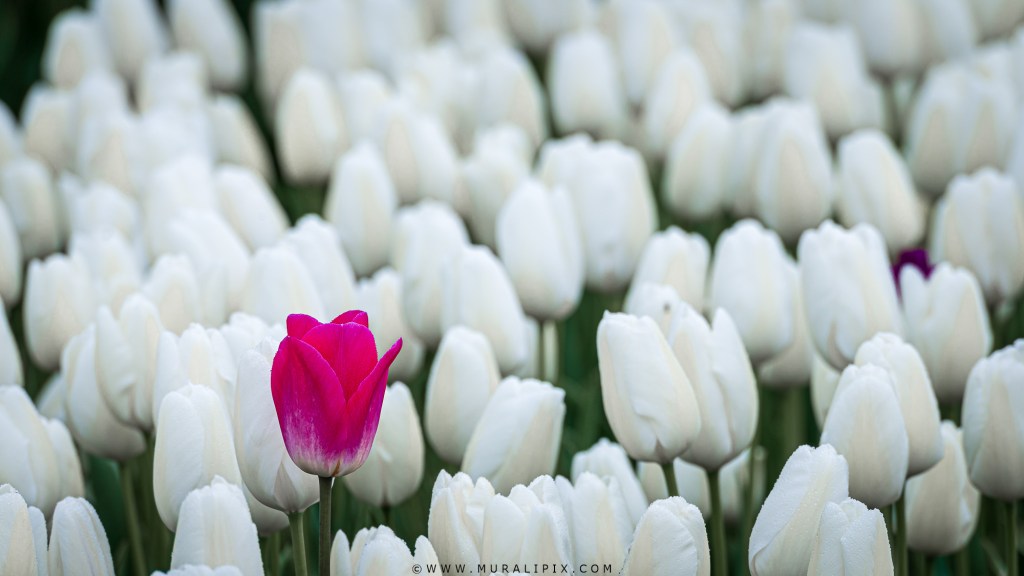
Nikon D780 400m f8 1/500 sec ISO 400
When using a full-frame camera with a focal length of 400mm and an aperture of f/8, the depth of field (DOF) at a subject distance of 15 feet is approximately 2.4 inches. Consequently, any flowers positioned more than 2.4 inches in front of or behind the subject will not be sharply focused. This intentional limitation has a distinct advantage: it isolates the subject, allowing it to dominate the frame and stand out prominently.
The wind started to pick up and so I had to reduce the shutter speed to 1/500 sec to get a sharp image of the flower. When there is a conflict between ISO and shutter speed and if you want sharp images, shutter speed beats ISO any day.
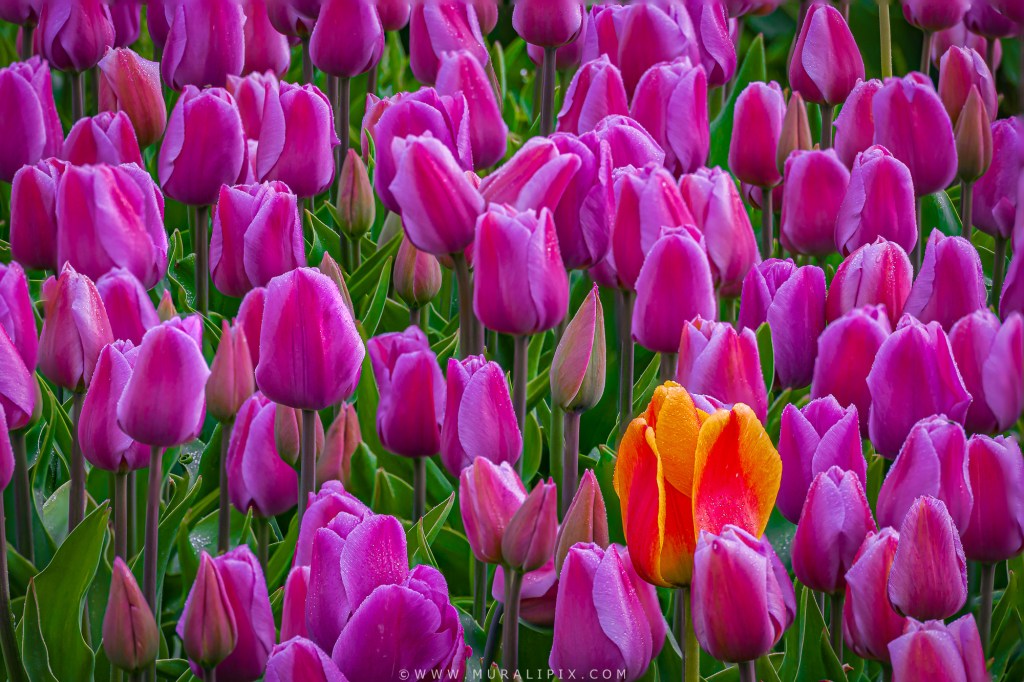
Nikon D780 400mm f8 1/160 sec ISO 400
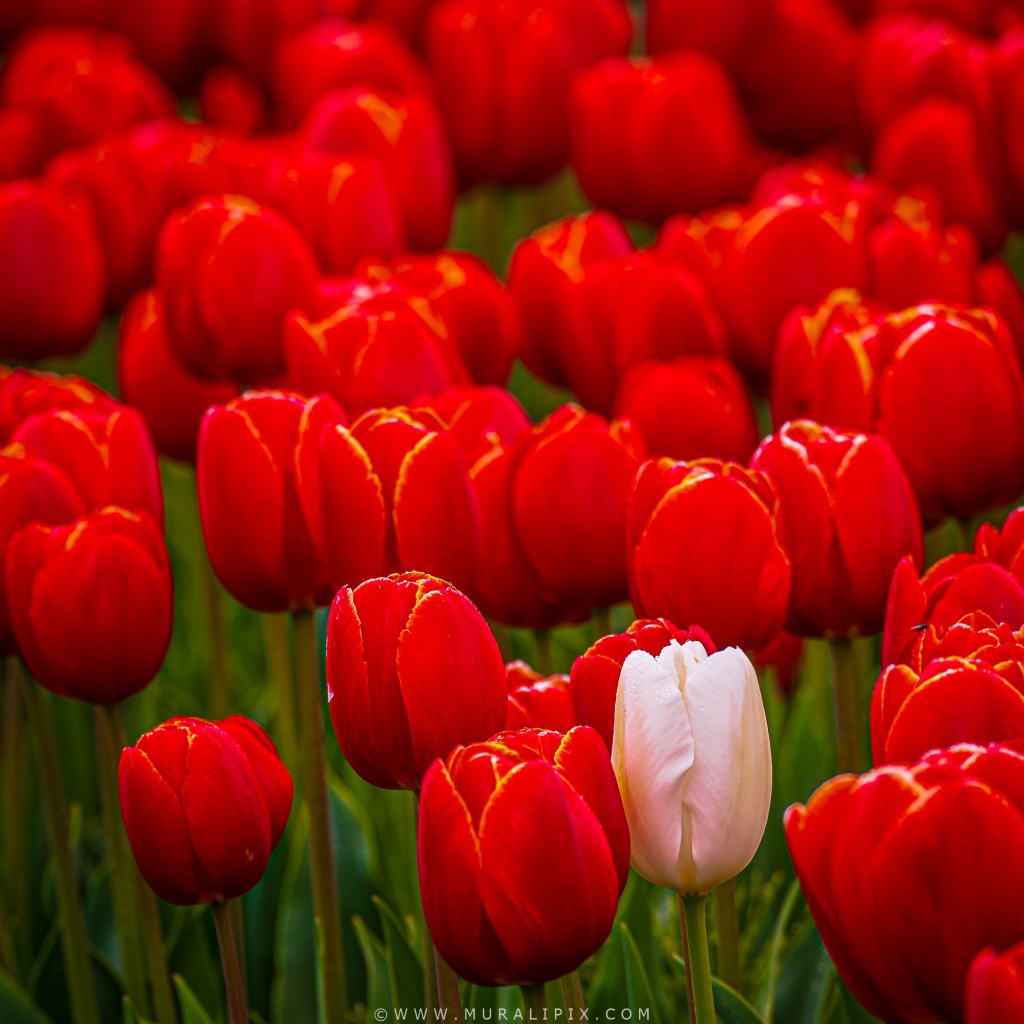
Nikon D780 400mm f8 1/250 sec ISO 200
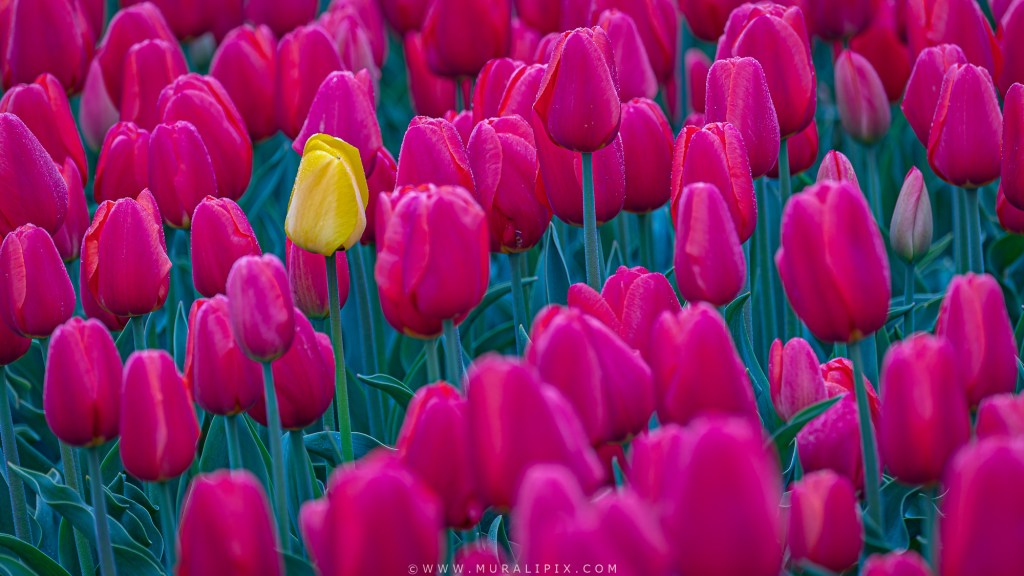
Nikon D780 310mm f6.3 1/13 sec ISO 100
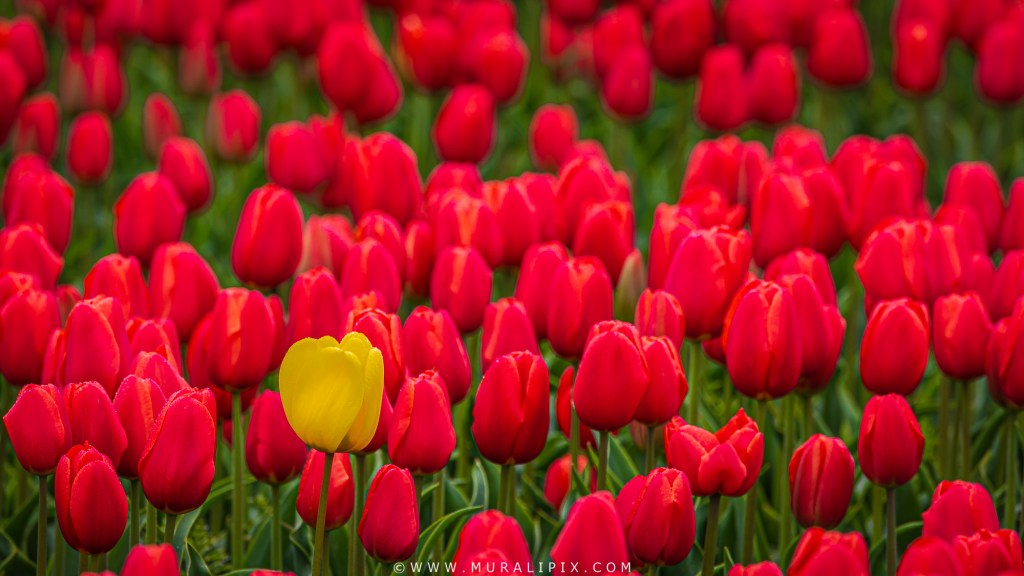
Nikon D780 350mm f8 1/400 sec ISO 400
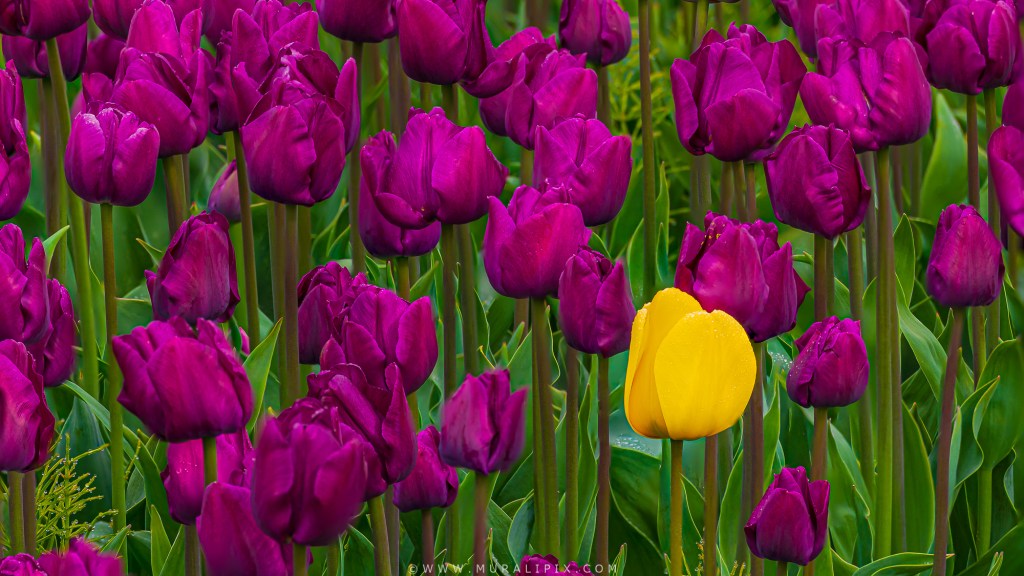
Nikon D780 380mm f8 1/500sec ISO 800 (6 Image Focus Stack)
Camera sensors of smartphones are much smaller than that of a full frame camera and one of the benefits of a small sensor is that it provides a great depth of field which is ideal for casual photography. As mentioned previously, at long focal lengths, the depth of field on a full frame camera is extremely narrow. How do you capture an image with everything from the front to back is in focus? Focus stacking is a technique to achieve greater depth of field. It involves capturing multiple photos of the same scene, each with a slightly different focus point. These photos are then combined (stacked) using software to create a final image where everything—from the foreground to the background—is in sharp focus. It’s like blending different layers of focus to get a clear and detailed picture. Zerene Stacker is my go-to software for stacking. I then processed the stacked image in Adobe Lightroom and Photoshop. The above image was created by using 6 images to create the stack.
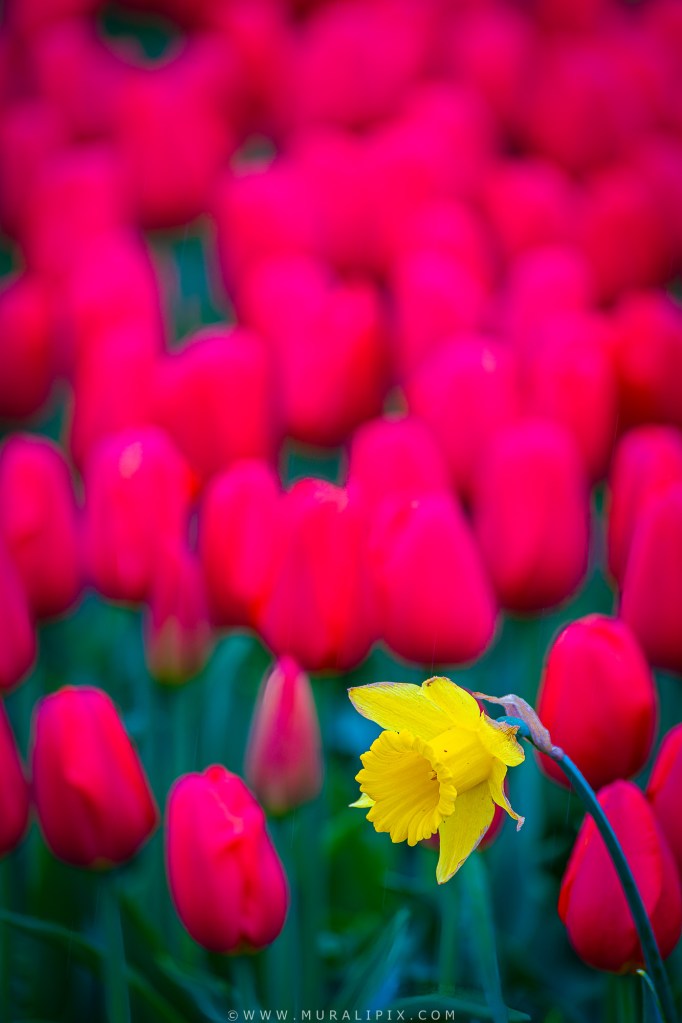
Nikon 380mm f5.6 1/100sec ISO 200
While walking around the field, I noticed a lonely daffodil among a large group of pink tulips. The contrast was worthy of a shot.
Suddenly, a rainbow appeared for a minute or so. With landscape photography, you take what nature gives you but when she gives you a terrific opportunity, you grab it real fast. I moved a few meters so that the rainbow was just over a red barn. A red tractor with a farmer in blue jeans and a yellow shirt was coming into the frame and I waited until he was not blocking another red barn. I then took a couple of shots.

Nikon D750 44mm f8 1/200sec ISO 100
It was now close to 10AM and the place was getting crowded. That means it was time to leave. On our way back home, we stopped by a daffodil field. Daffodils peak in late March in the Puget Sound area, but the field had an old home/barn that caught my attention.

Nikon D750 95mm f8 0.4sec ISO 100
(48°24’24.8251″ N 122°23’43.1696″ W)
 Murali Narayanan Photography
3 responses to “Springtime in Skagit Valley (April 2024)”
Much valuable information and education on the nuances of advanced Photography! Outstanding effort Murali.
LikeLike
Thank you for forwarding this wonderfully written article and incredible photography. You are a perfectionist on everything that you do. I too love the highly saturated colors of tulips. Each one is brilliant, and a field of them yields a brilliant splash of color. The white color reflecting off the edges of the red tulips is beautiful.
When I was in Turkey, I was surprised to learn that Tulips originated from Turkey. Some time ago, there was a “tulip market” for international sales of the tulip bulbs. Prices were driven sky high, until he markets collapsed.
It would be interesting to arrange an Indian Hill West reunion sometime. Possibly back in Naperville. What do you think? Would anyone attend? (I would).
Thanks again for sharing your beautiful and outstanding photo captures.
Dennis
LikeLike
stunning pictures, Murali. Love the uniqueness of capturing the odd one out – makes it even more beautiful ! Learnt a thing or two about the technique too
LikeLike