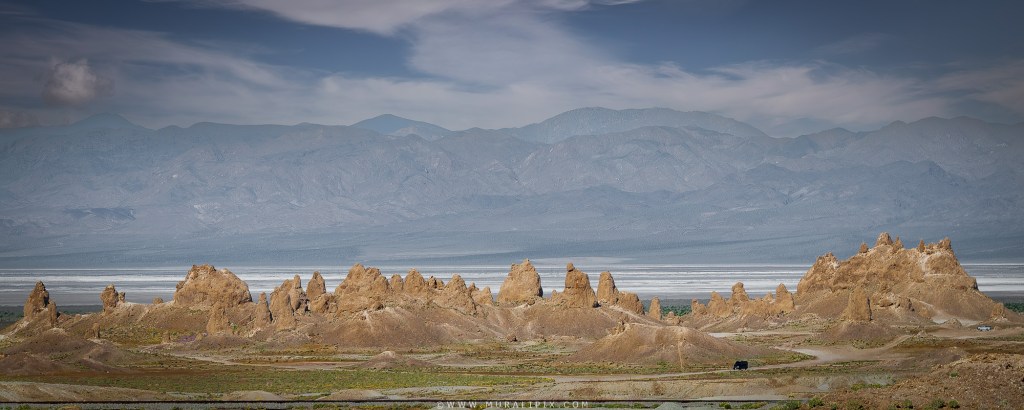
The Trona Pinnacles lie on the western edge of the Searles Valley, about 20 miles southwest of the town of Trona. Managed by the Bureau of Land Management, the area sits within a broad, arid basin bordered by the Argus Range to the west and the Slate Range to the east. Access is via graded dirt roads off State Route 178, and the setting is remote, quiet, and expansive—typical of the Mojave Desert’s basin-and-range topography.
Geologically, the pinnacles are tufa spires formed when this basin held ancient Searles Lake during the Pleistocene. Calcium-rich groundwater upwelled through the lakebed and mixed with carbonate-rich lake water, precipitating calcium carbonate (tufa) around spring vents. As lake levels fluctuated and eventually receded, these deposits were exposed and left standing as hundreds of towers, some reaching over 100 feet tall. The result is one of the largest tufa fields in North America, comparable in origin—though different in scale and setting—to the formations at Mono Lake.
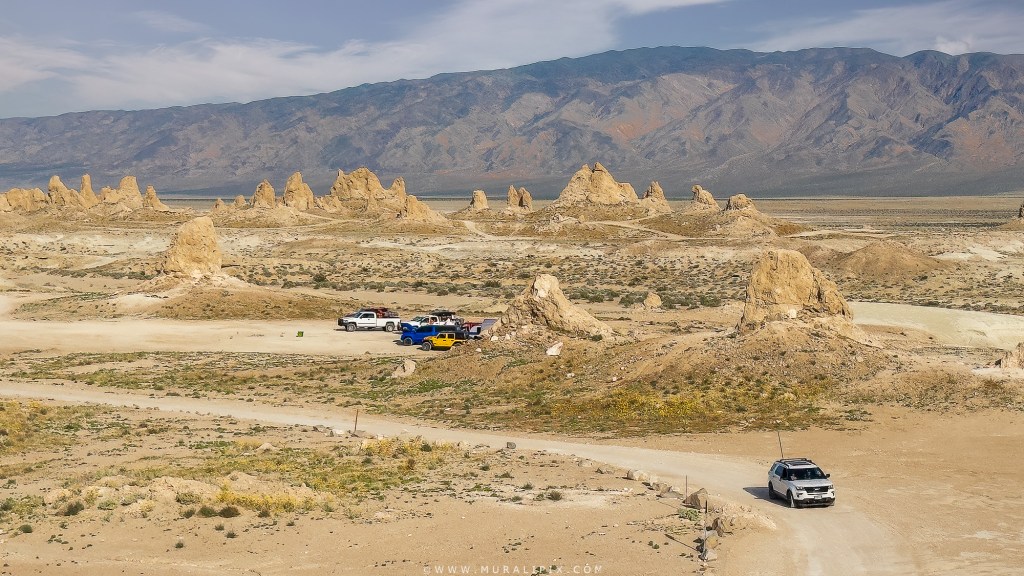
The pinnacles are about 6 miles off CA-178, with two access points—one closer to Ridgecrest and the other nearer Trona. Both routes involve very rough, washboarded dirt roads, though the approach from the Trona side is slightly less punishing. Even in a high-clearance 4×4, it took us a bit over 30 minutes to cover the 6 miles. I wouldn’t recommend attempting this drive in a low-clearance vehicle, and it’s best avoided altogether after any rain.
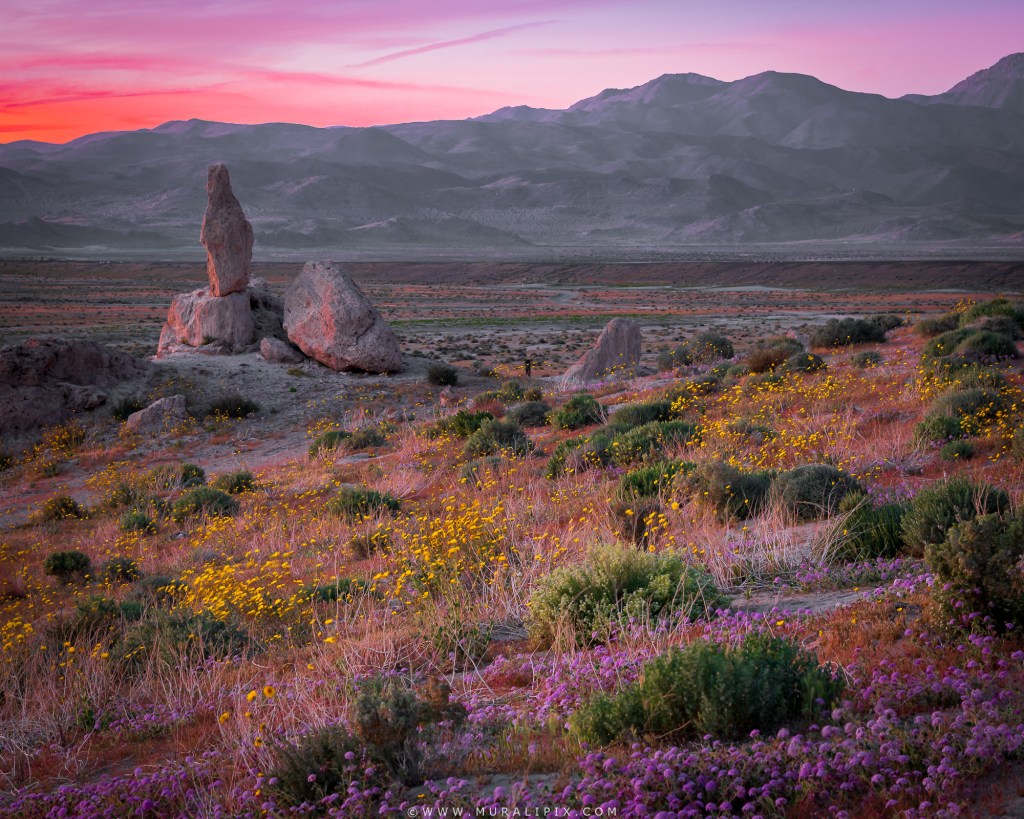
For landscape photography, the Trona Pinnacles offer exceptional compositional opportunities. The dense clusters of spires allow for strong foreground–background relationships, especially when aligned with distant mountain ranges or dramatic skies. Sunrise and sunset are particularly effective, as low-angle light accentuates texture and casts long shadows across the playa. Night photography is equally compelling—the area is designated as a dark-sky location, making it ideal for Milky Way compositions framed by the pinnacles. Wide-angle lenses emphasize the surreal geometry, while longer focal lengths can isolate individual towers against layered desert backdrops.
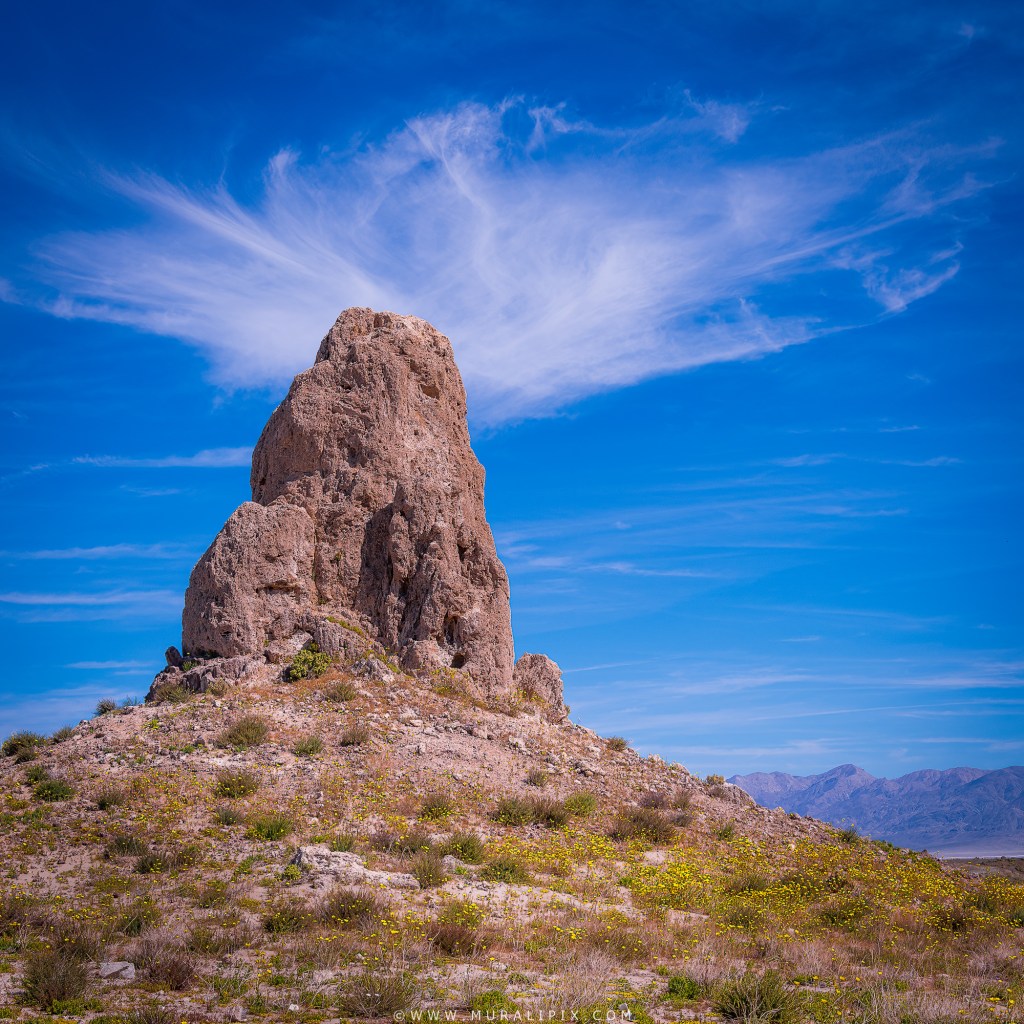
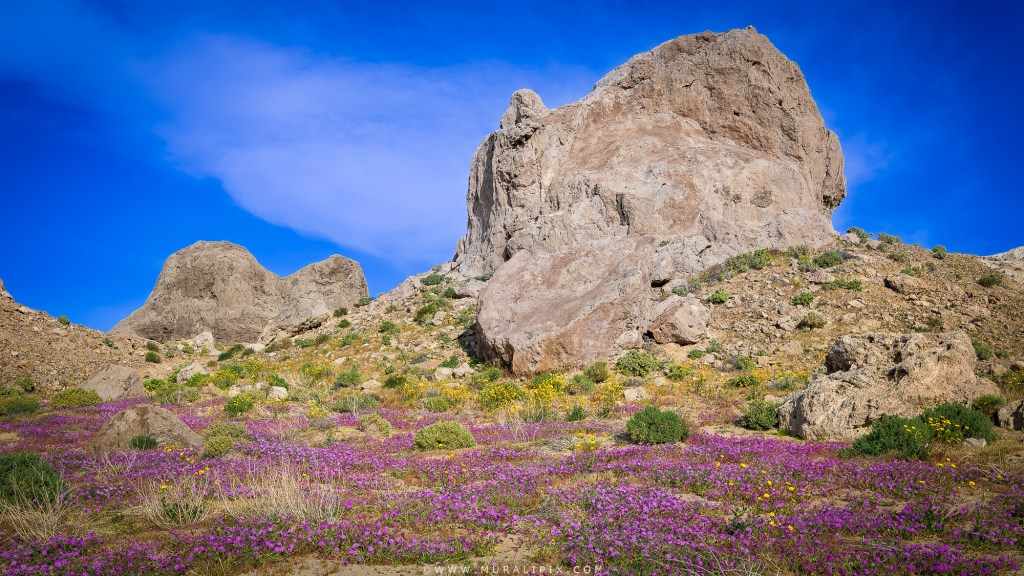
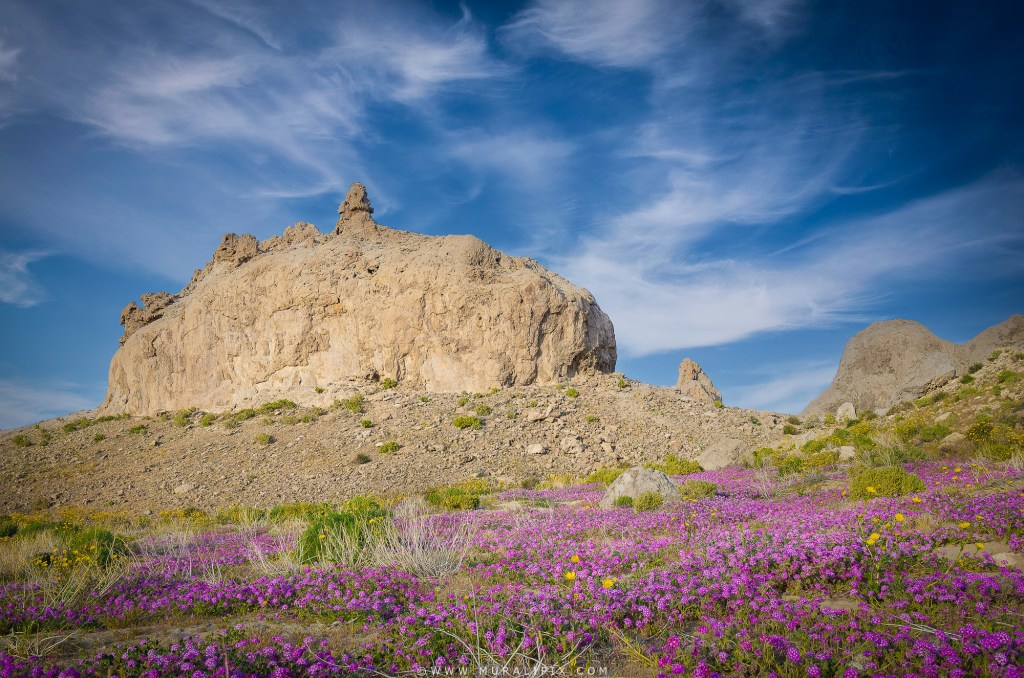
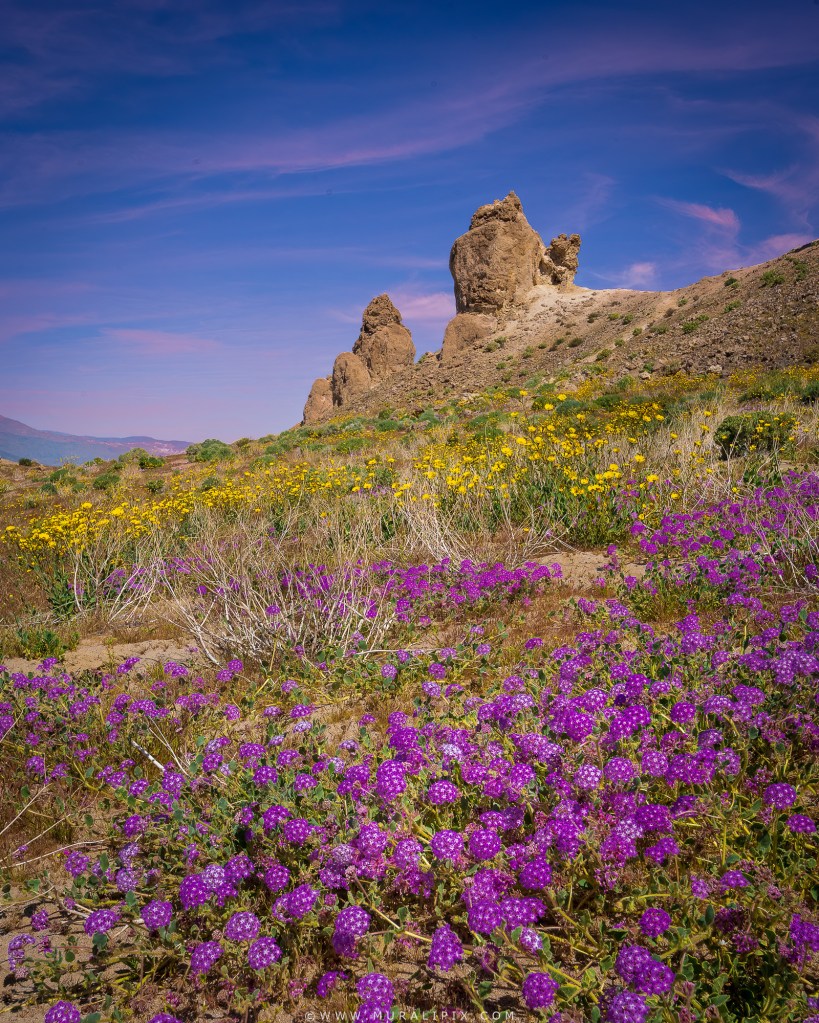
In March, the surrounding desert can come alive with wildflowers depending on winter rainfall. While the pinnacles themselves rise from a largely barren playa, the adjacent flats and low alluvial fans may host blooms of species like Desert Gold and Sand Verbena.
 Murali Narayanan Photography
One response to “Trona Pinnacles: A Landscape Photographer’s Dream”
Wonderful, C.M. Loved the beautiful photos. Keep it up.
LikeLike