Windsor is a beautiful town where centuries of royal history blend seamlessly with bustling streets, historic buildings, and views of the world’s oldest and largest occupied castle. During our visit, the skies were overcast creating ideal conditions for photography. It was crowded because King Charles III was presenting new Colors to the Royal Marines at the Castle, drawing more than a thousand visitors to witness the historic ceremony. All of the images in this post were captured using my iPhone, which proved to be an excellent travel camera.
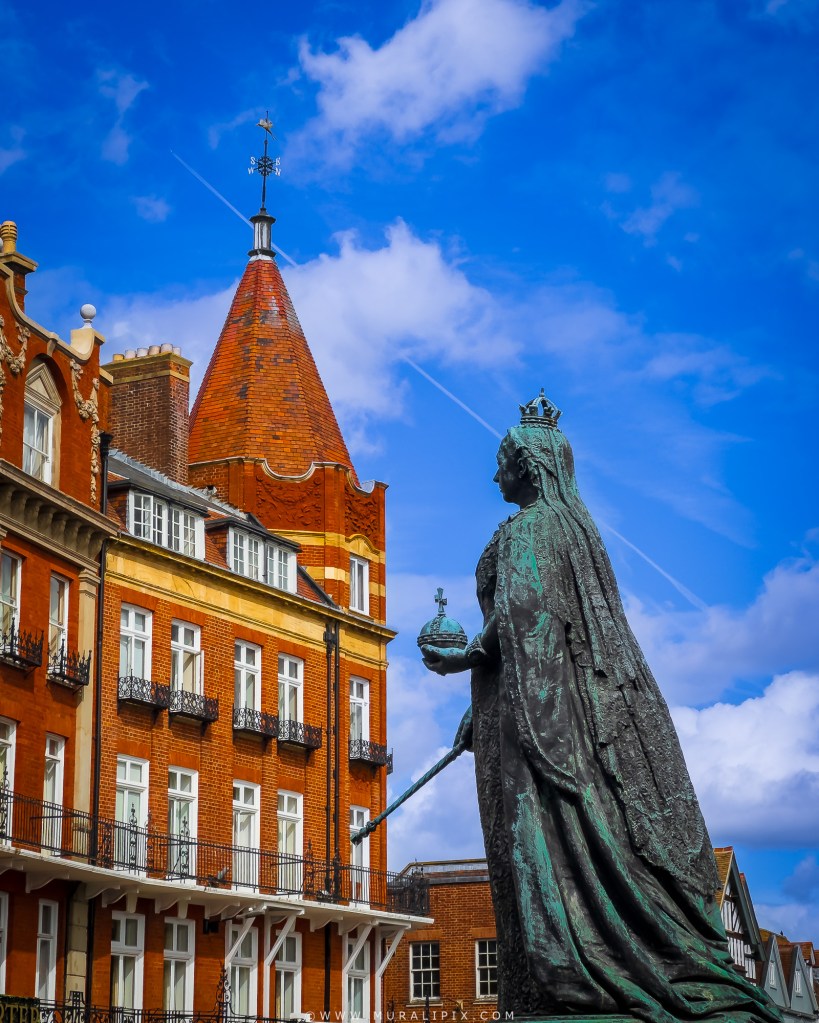
To reach Windsor, we took a GWR train from London Paddington and transferred at Slough. The castle is just a 5-minute walk from the station. Our first stop was at the intersection of Castle Hill and Thames Street, where the elegant facade of the Harte & Garter Hotel rises in front of the statue of Queen Victoria. The spot is just a block from the Visitors Entrance to the Castle.
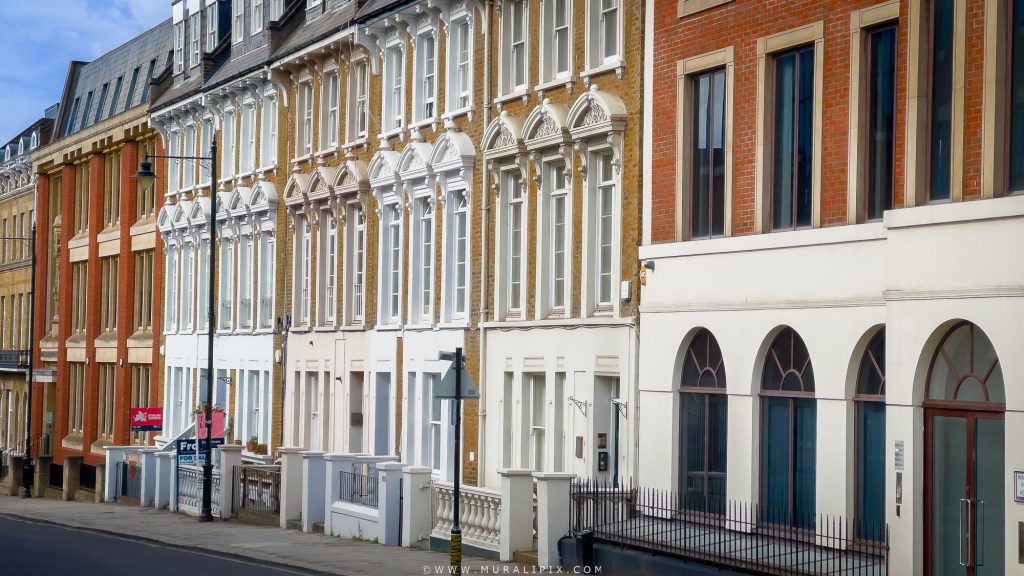
We had about 45 minutes to kill before our allotted time to enter the castle and so walked around the quaint town. A short walk away, at the intersection of Park Street and St. Alban’s Street, beautiful homes showcase a quieter side of Windsor. Away from the crowds gathering near the castle, these streets reveal the town’s residential charm and provide a glimpse into everyday life beneath the shadow of a royal residence.
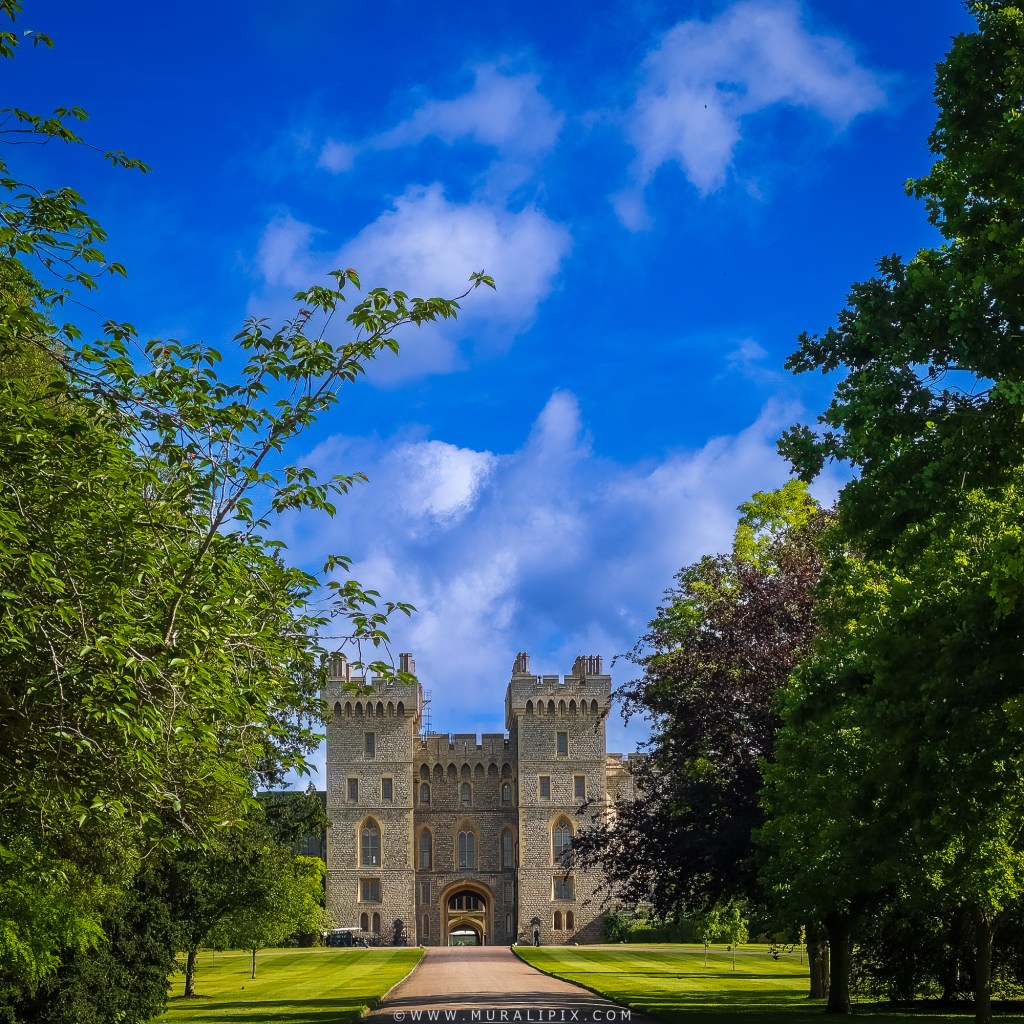
One of the most impressive views of Windsor Castle can be found at the gate where Park Street meets the Long Walk. From here, the castle dominates the skyline, its massive stone walls and towers standing as a reminder of nearly a thousand years of English history. Due to the Marines ceremony, the gates from the castle along The Long Walk was closed and I grabbed an image of George IV Gateway from the gate.
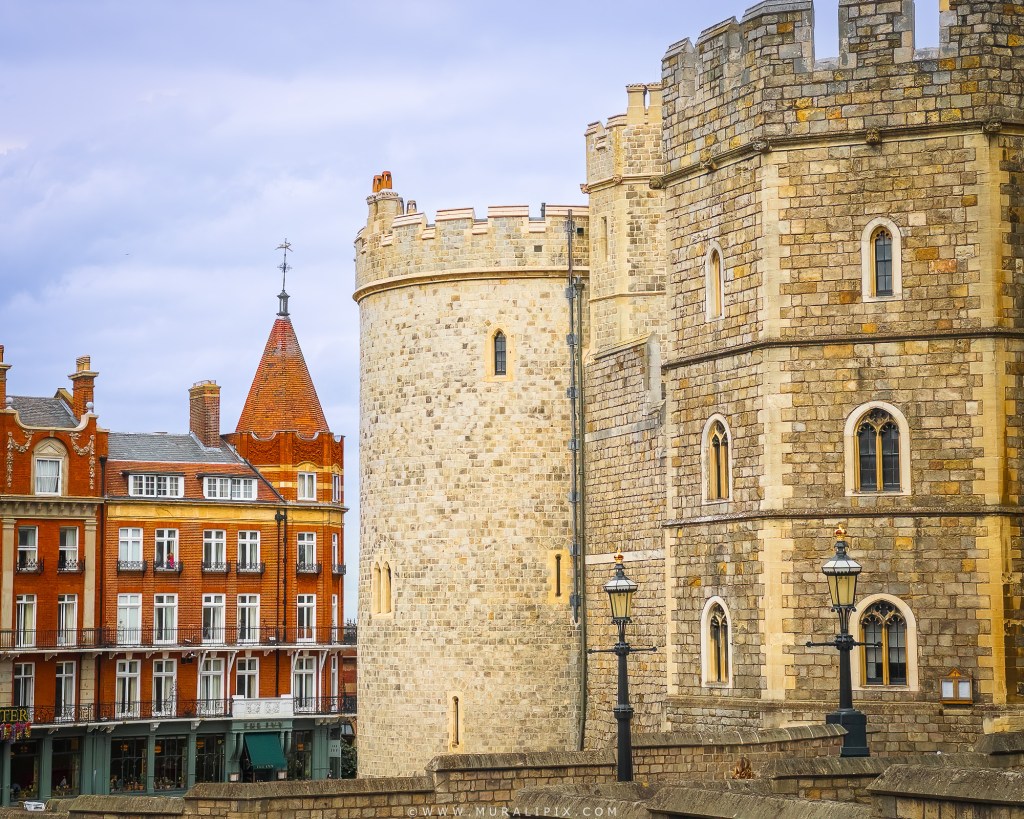
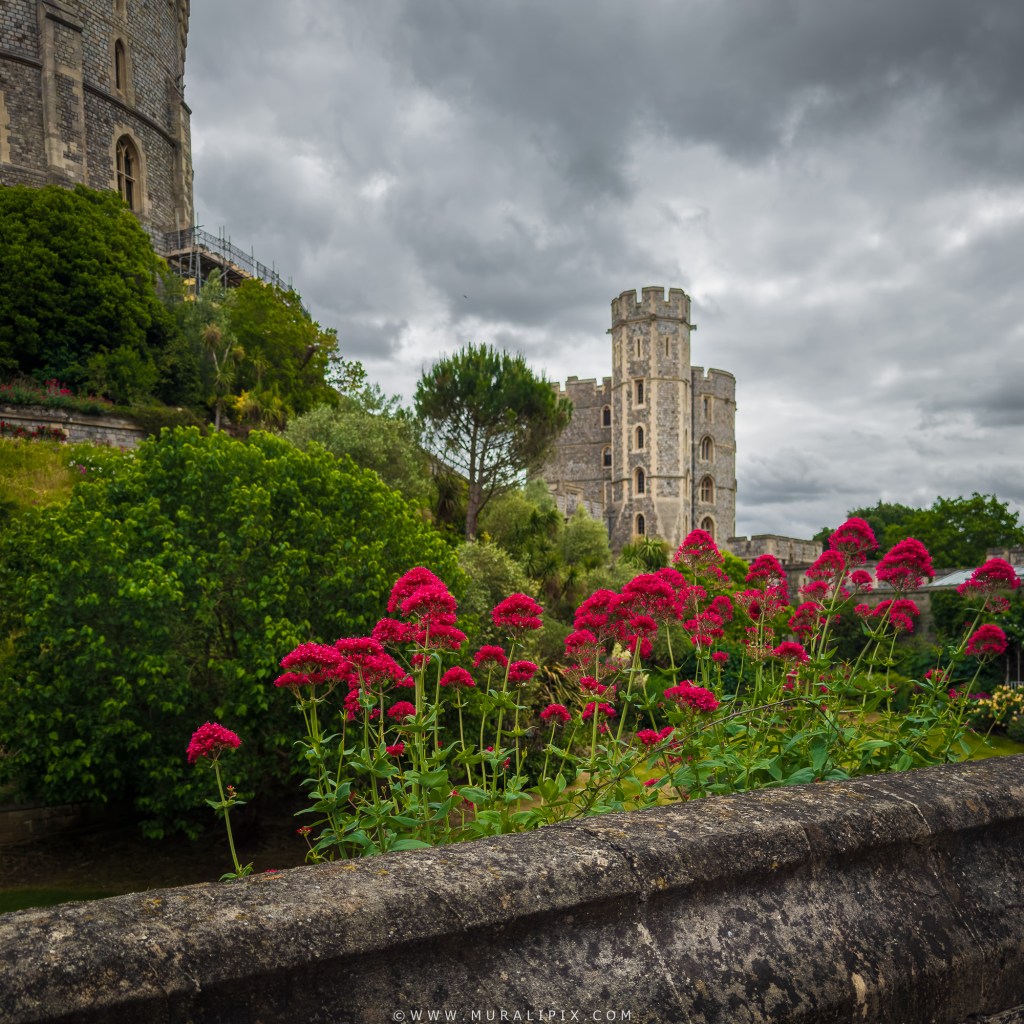
It was time to do the castle tour. After passing through airport style security, we walked along the Moat Garden. Here is an image of the King Edward III tower. It anchors the east side of Windsor Castle’s Upper Ward, built in the 14th century to honor the monarch who transformed the castle into a royal palace.
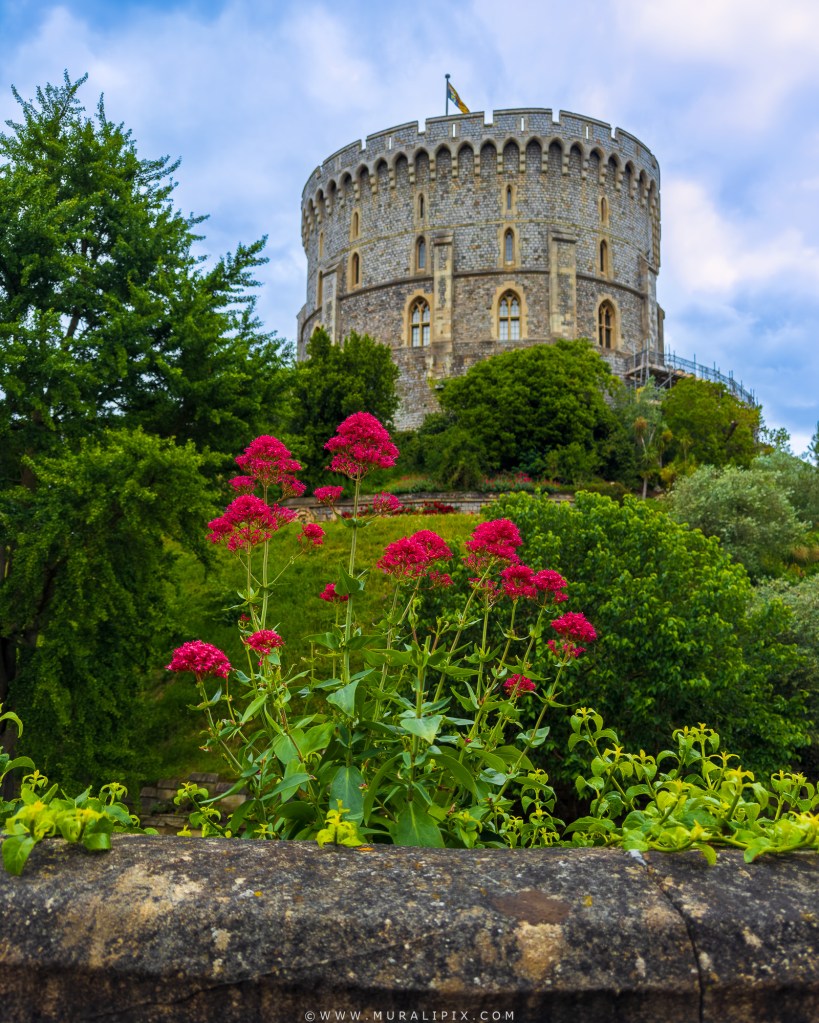
The Round Tower was originally built by William the Conqueror around 1070–1080. The massive stone structure you see today was largely rebuilt and heightened in the 12th century under Henry II and later reshaped in the 1820s by George IV, but its origins go straight back to the very beginning of Norman rule in England.
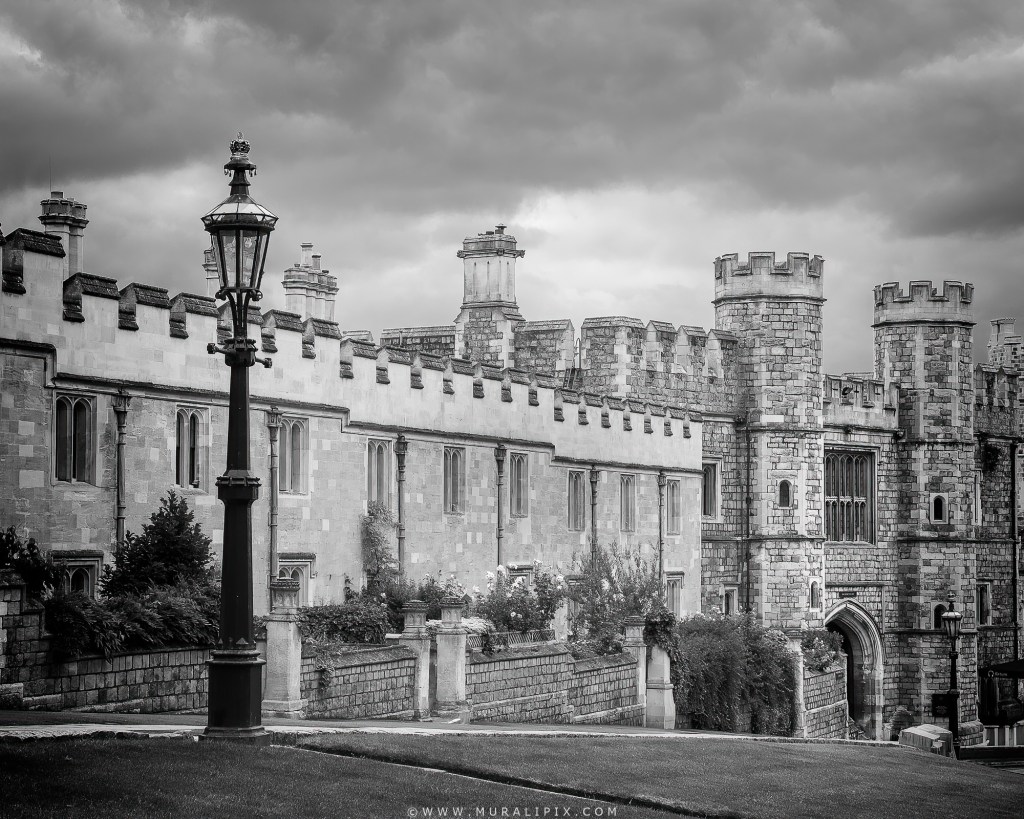
The B&W image below captures the outer façade of the Horseshoe Cloister, with its stonework, tall chimneys, and arched doorway. It was shot from a spot just outside St. George’s Chapel.
Below are two images of a Foot Guards soldier at the Horseshoe Cloister protecting the private residences of the Military Knights of Windsor and the Lower Ward area of St George’s Chapel.
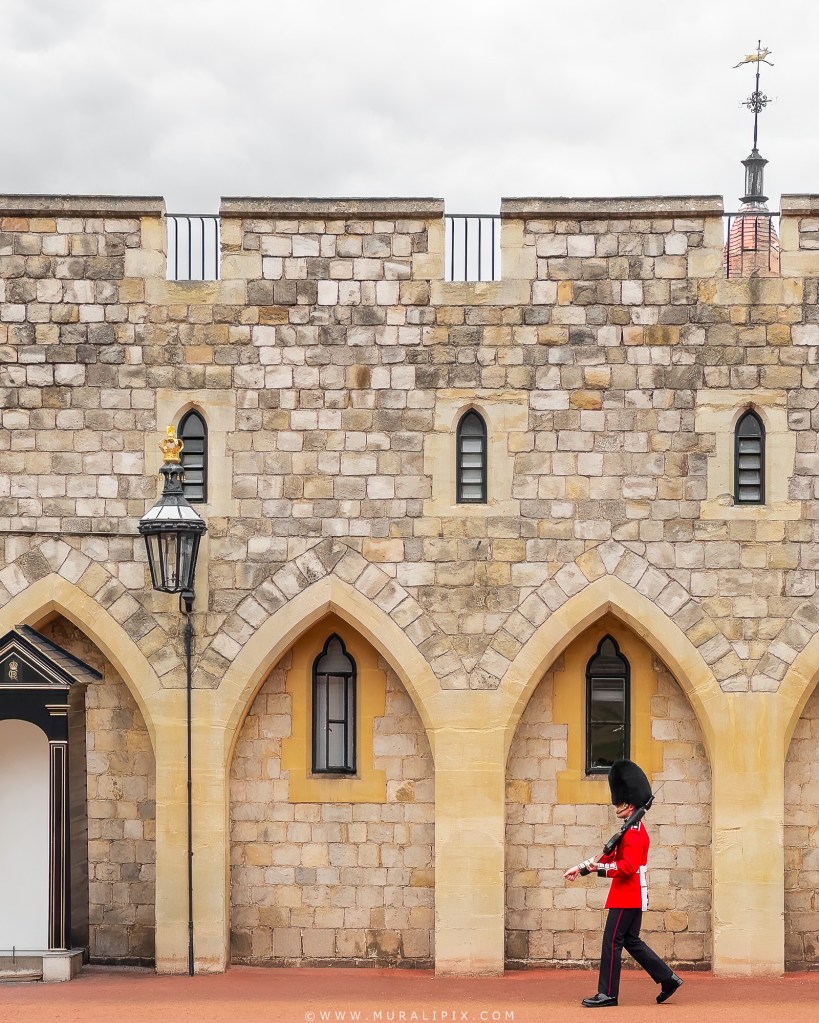
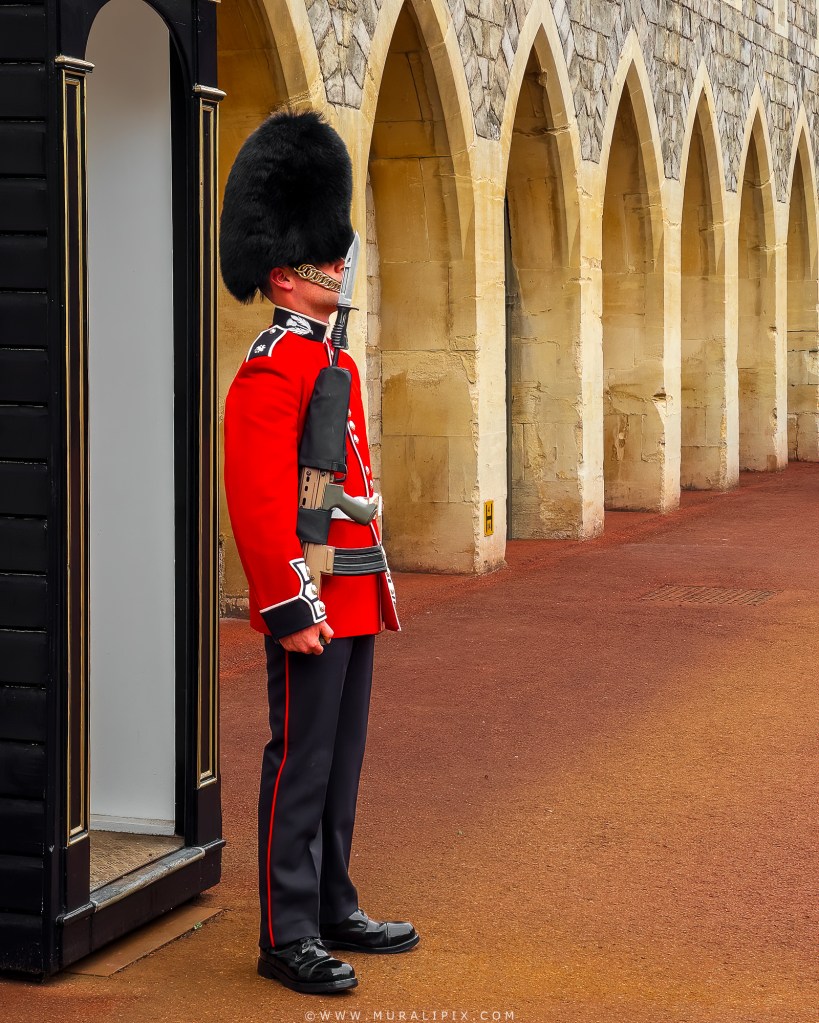
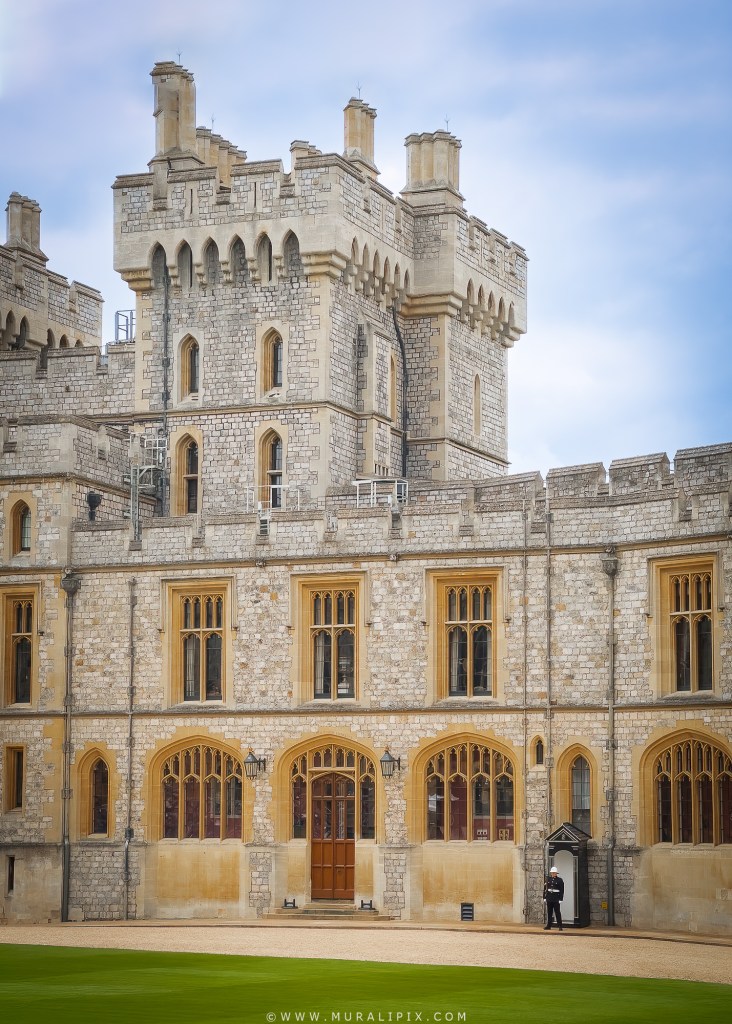
There was a huge gathering of over 500 people at the Quadrangle in front of the State Apartments. I waited patiently for about 10 minutes for the people to move away from around the guard so that I could capture the image below.
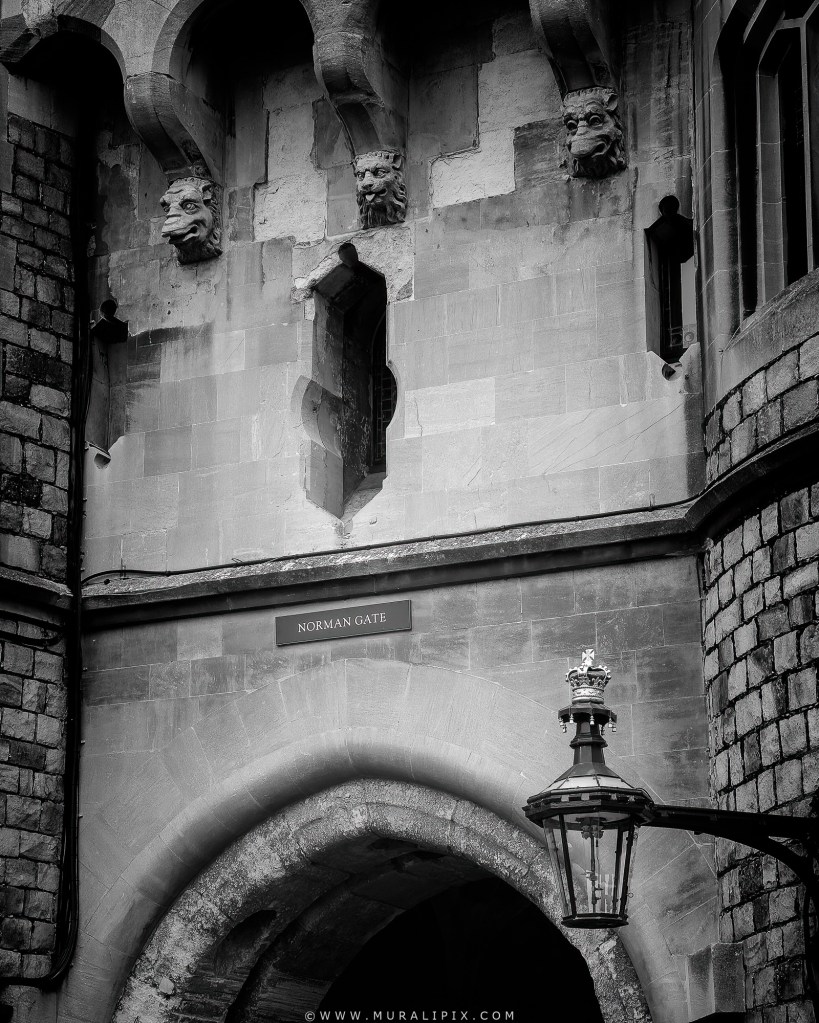
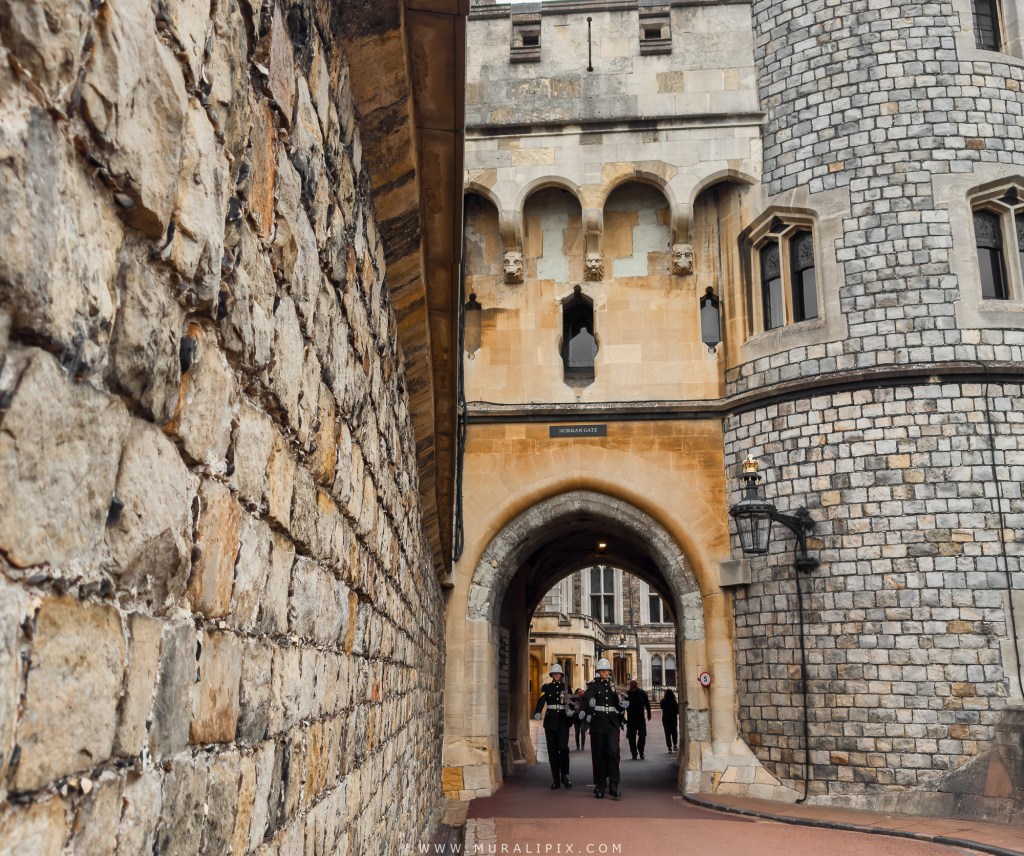
Norman Gate was built in the mid‑14th century, around 1350–1360, during the reign of King Edward III. It formed part of his massive reconstruction of Windsor Castle, transforming it from a fortress into a grand royal palace that still shapes the castle’s appearance today.
I used iPhone 15 Pro to capture the images in this post. Using an iPhone for landscapes and cityscapes gives you a powerful mix of portability and computational photography, letting you capture dramatic scenes without carrying heavy gear. The only challenge I encountered was battery life. Using the camera, I exhausted 75% of the battery charge in about 4 hours, carrying a power bank to recharge the phone is prudent.


2 responses to “Discover Windsor Castle’s Beauty through iPhone Photography”
Stunning. Each and every capture is awe inspiring-that all were taken with your IPhone; is next level.
LikeLike
simply awesome. You give hope to miliions of aspiring photographers who own iPhones (one small eg is penning this note)
LikeLike