
Canterbury is one of England’s most historic and picturesque cities, best known for the magnificent Canterbury Cathedral and its role as a major pilgrimage destination since the martyrdom of Thomas Becket in 1170. A walk through the city reveals centuries of history, from the medieval Westgate Towers—the largest surviving city gate in England—to the tranquil Westgate Gardens along the Great Stour river. Other highlights include the Pilgrims’ Hospital, founded in the 12th century to provide lodging for travelers and pilgrims, and the charming Old Weavers’ House, a half-timbered building that reflects Canterbury’s rich medieval heritage and its connection to the weaving industry.
Canterbury Cathedral – A Short Background
Canterbury Cathedral is one of the oldest and most important Christian churches in England. Its history dates back to AD 597, when St. Augustine arrived from Rome and established the seat of the Archbishop of Canterbury. Over the centuries, the cathedral became the spiritual center of the Church of England and a major destination for pilgrims, especially after the murder of Archbishop Thomas Becket inside the cathedral in 1170.
The cathedral seen today was built over many centuries and combines several architectural styles. Much of the present structure dates from the late 11th and 12th centuries, after a fire destroyed parts of the earlier Norman cathedral. Visitors can see massive stone columns, soaring Gothic arches, beautiful stained-glass windows, and intricate medieval craftsmanship throughout the building. The Bell Harry Tower, completed around 1500, remains one of the cathedral’s most recognizable features.
Canterbury Cathedral played a central role in English religious and political history. Following Thomas Becket’s martyrdom, it became one of the most important pilgrimage sites in medieval Europe, inspiring Geoffrey Chaucer’s famous work, The Canterbury Tales. Today, the cathedral is a UNESCO World Heritage Site and continues to serve as the mother church of the worldwide Anglican Communion.
We took the 840AM Southeastern Railway fast train from London St. Pancras station that dropped us at Canterbury West station in under an hour. It was a 10-minute walk from the station to the cathedral’s Visitors Entrance at Christ Church Gate.
Christ Church Gate
Christ Church Gate is the magnificent ceremonial entrance to Canterbury Cathedral, built between 1504 and 1521 during the reign of Henry VII. Richly decorated with stone carvings, coats of arms, and statues, the gate served as the principal entrance for pilgrims and visitors and remains one of the finest examples of late medieval architecture in England.
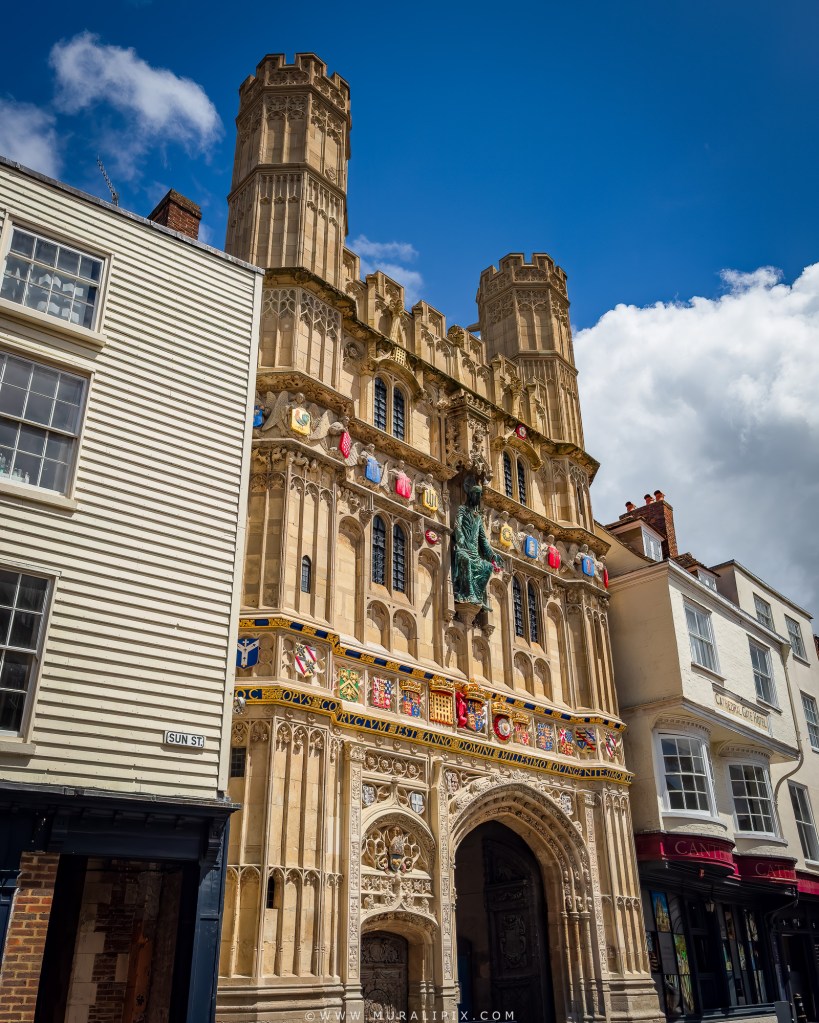
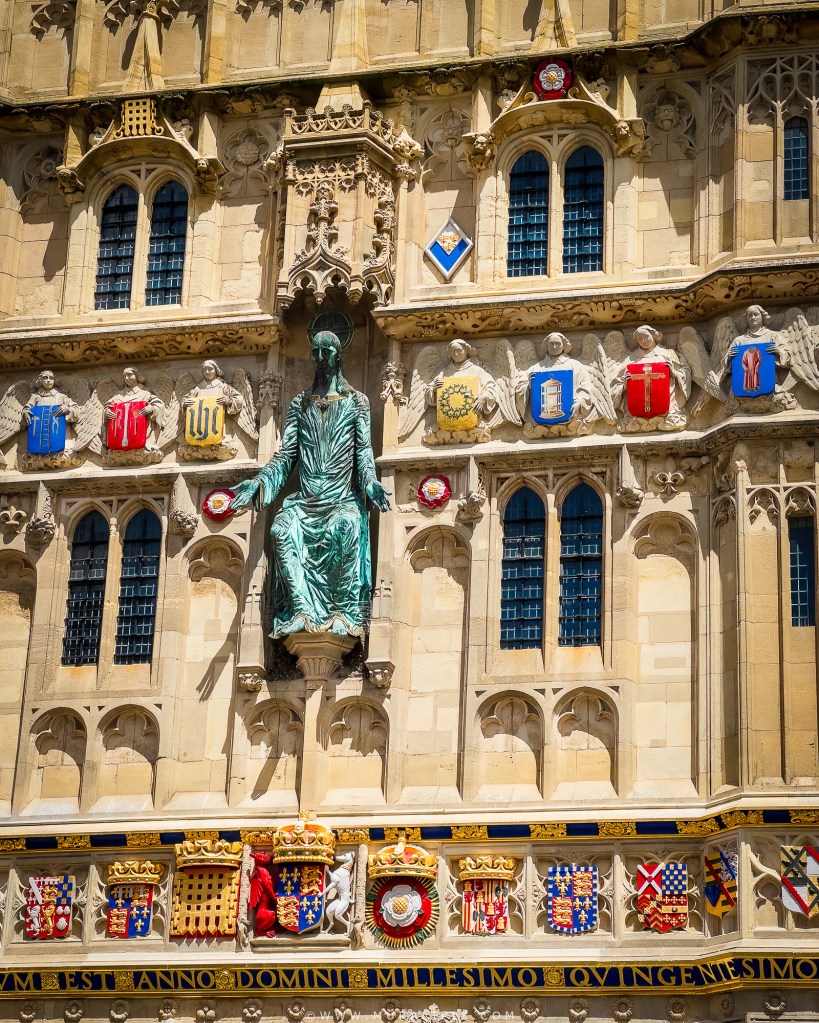
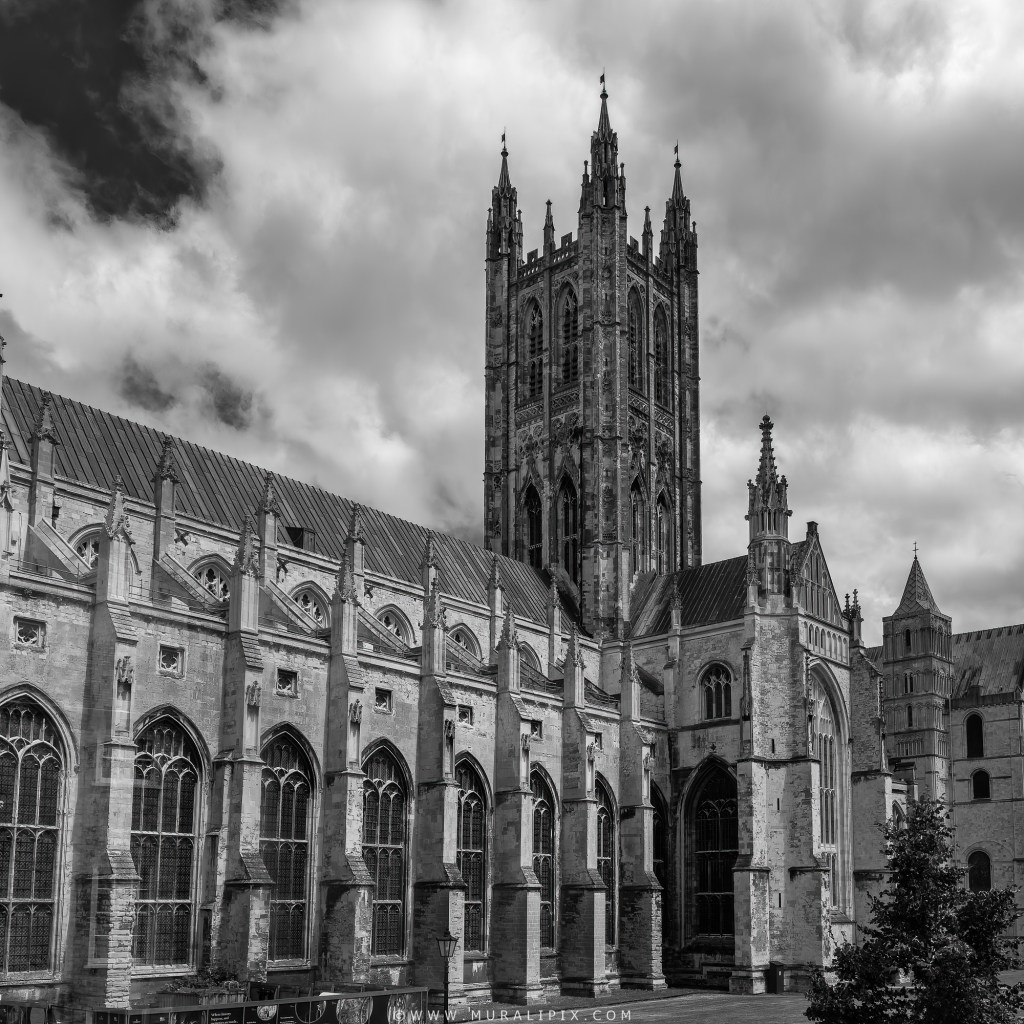
As the Cathedral is surrounded by buildings that stand close to its walls, it is nearly impossible to capture the entire structure from ground level. To fully appreciate and photograph the cathedral’s immense scale and grandeur, an aerial view from a drone would be ideal. The best I could do was capture the magnificent Bell Harry Tower from the cathedral gift shop.
Bell Harry Tower
Canterbury Cathedral’s Bell Harry Tower is the central crossing tower of the cathedral and its most recognizable vertical feature. It rises to about 235 feet (c. 72 meters) and was completed in 1498 in the Perpendicular Gothic style, giving the building its distinctive late-medieval silhouette. The tower is named “Bell Harry” after a bell that once hung there, and it now serves as both a structural and visual focal point of the cathedral’s interior and exterior.
Bell Harry Tower is the central crossing tower of the cathedral and its most recognizable vertical feature. It rises to about 235 feet and was completed in 1498 in the Perpendicular Gothic style. The tower is named “Bell Harry” after a bell that once hung there.
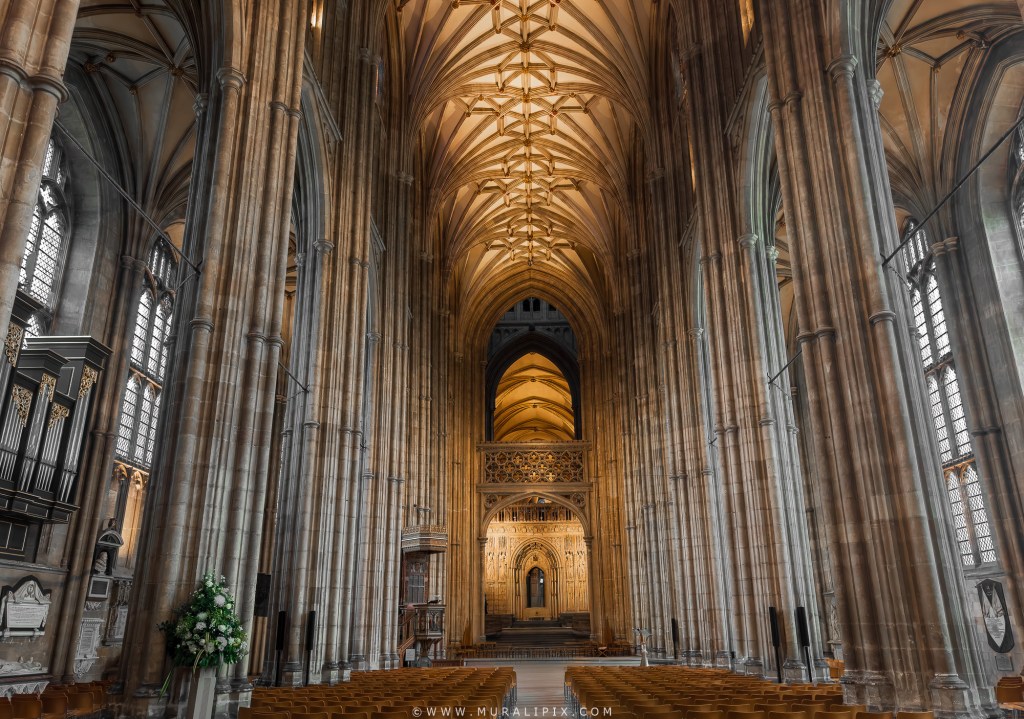
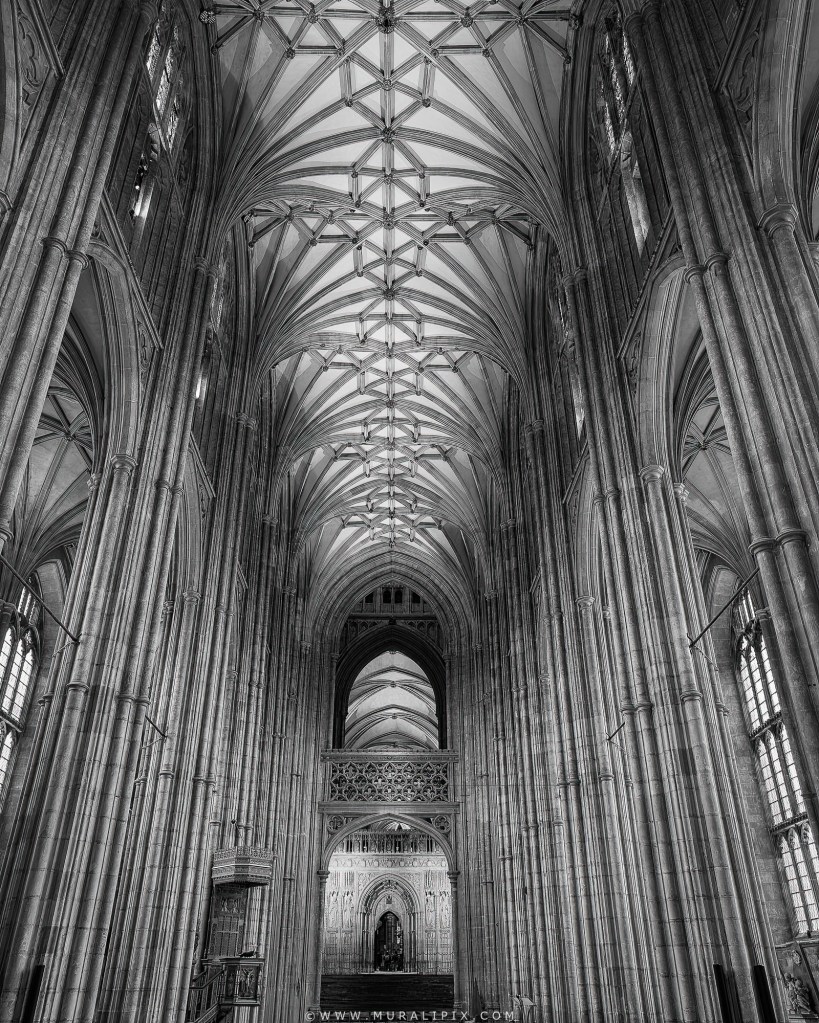
The Nave
The nave of Canterbury Cathedral is impressive with soaring Gothic arches, elegant stone columns, and a beautifully patterned ceiling. Rebuilt in the late 14th century in the Perpendicular Gothic style, it creates a remarkable sense of scale and light, offering visitors a glimpse of the craftsmanship and ambition of medieval builders.
As the cathedral interior was quite dimly lit, the Night Mode on my iPhone allowed me to capture its grandeur and intricate architectural details without the need for a tripod.
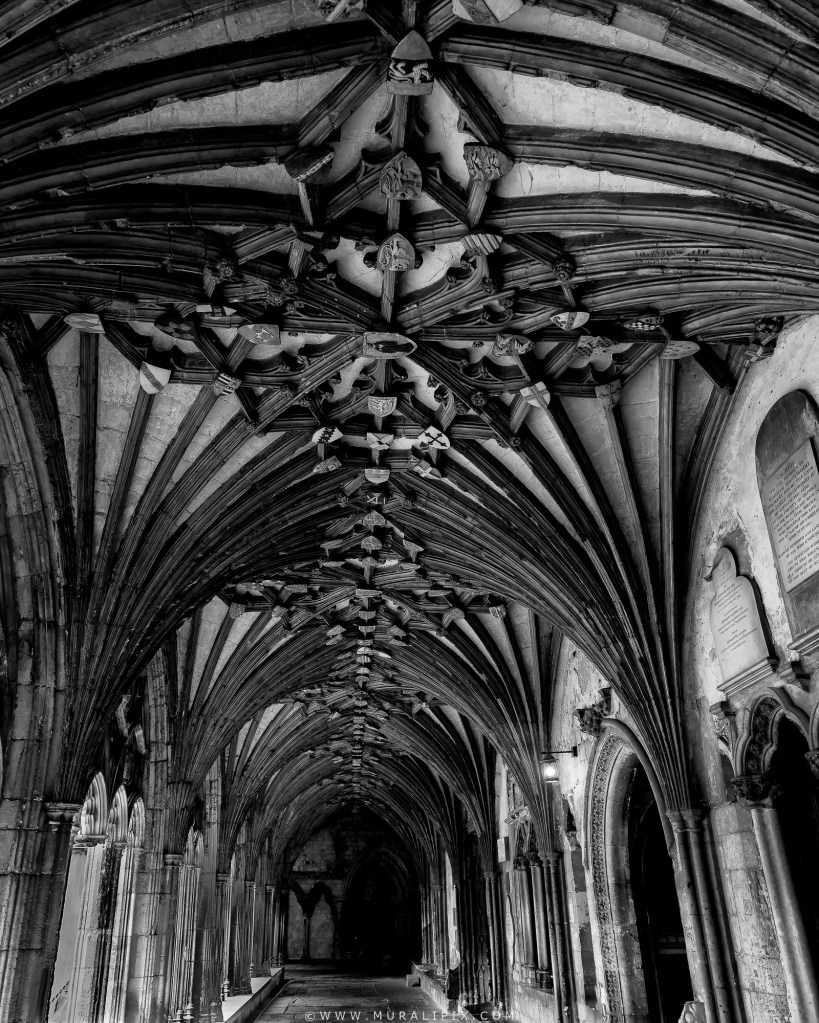
The Cloister
The cloister at Canterbury Cathedral is a peaceful, enclosed walkway that once connected the daily activities of the monastery to the cathedral itself. Surrounded by graceful Gothic arches and intricate stonework, it provided a quiet space for prayer, study, and contemplation for generations of monks.
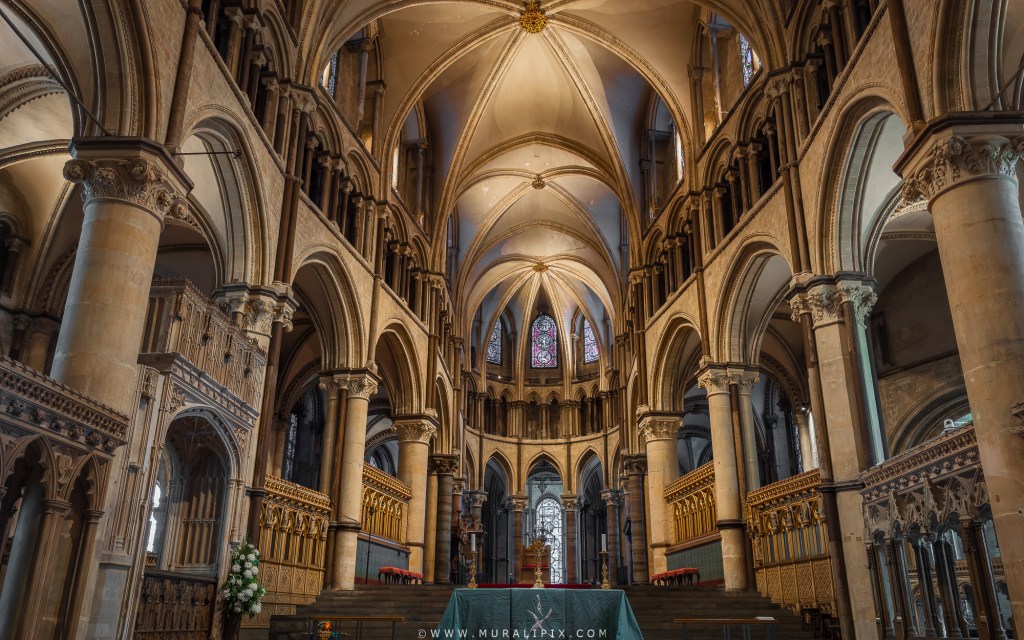
The Presbytery
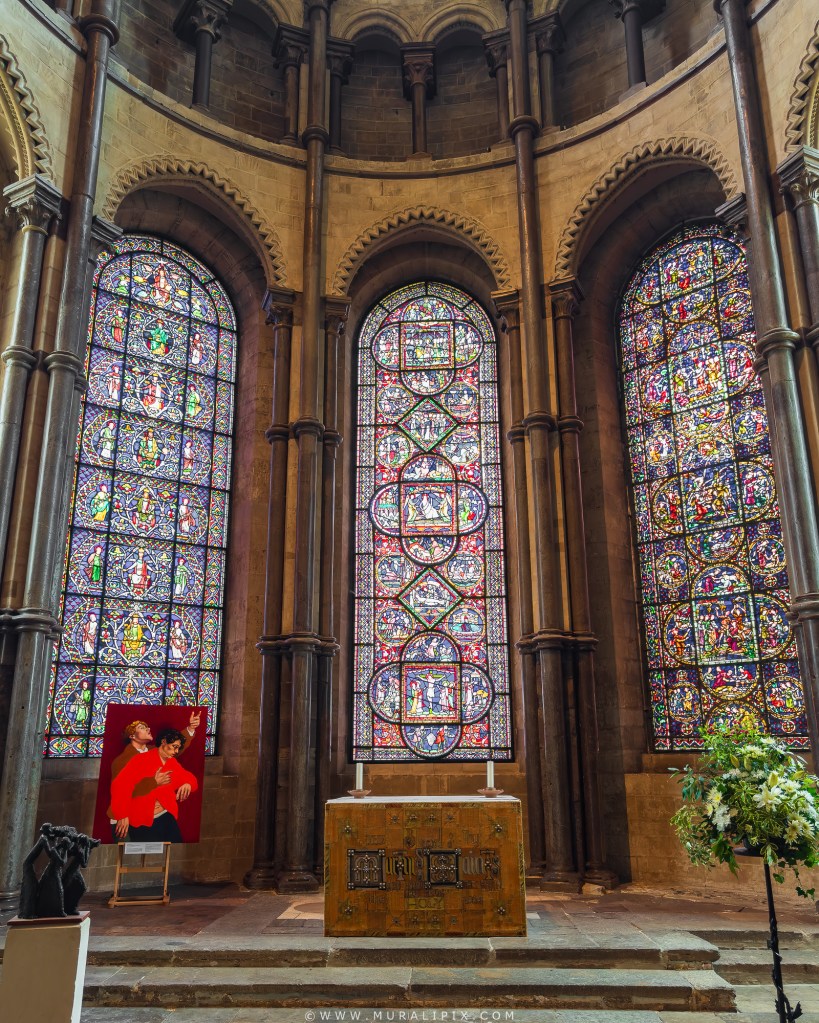
The Presbytery is one of the most beautiful parts of the cathedral distinguished by its soaring Gothic architecture and magnificent stained-glass windows. Rebuilt after a fire in 1174, it introduced the Gothic style to England and marked a major turning point in English cathedral design. The space later became closely associated with the shrine of Thomas Becket.
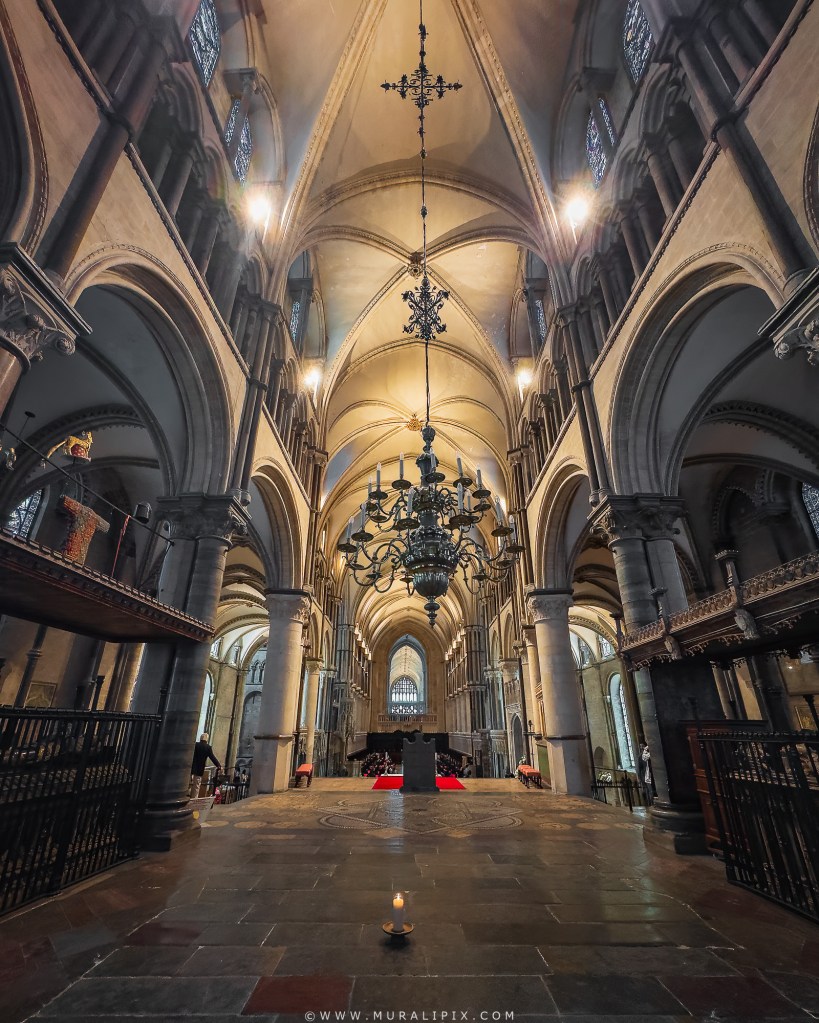
The Trinity Chapel
The Trinity Chapel was built in the late 12th century as part of the cathedral’s reconstruction following the fire and became the site of the magnificent shrine of Thomas Becket. For more than three centuries, pilgrims from across Europe traveled to Canterbury to visit the shrine, making the chapel one of the most important pilgrimage destinations in Christendom. The shrine was destroyed on the orders of Henry VIII in 1538. Its gold, jewels, and treasures were seized. Becket’s relics disappeared from the historical record and were likely destroyed.
Today, a simple candle marks the location of Thomas Becket’s shrine, serving as a quiet reminder of the archbishop’s martyrdom and the millions of pilgrims who journeyed to Canterbury over the centuries.
The Corona Chapel
The Corona Chapel, also known as Becket’s Crown, forms the easternmost part of Canterbury Cathedral and was built in the late 12th century as part of the reconstruction following the fire. It was originally intended to house a relic of Thomas Becket’s crown, which was said to have been struck during his martyrdom.
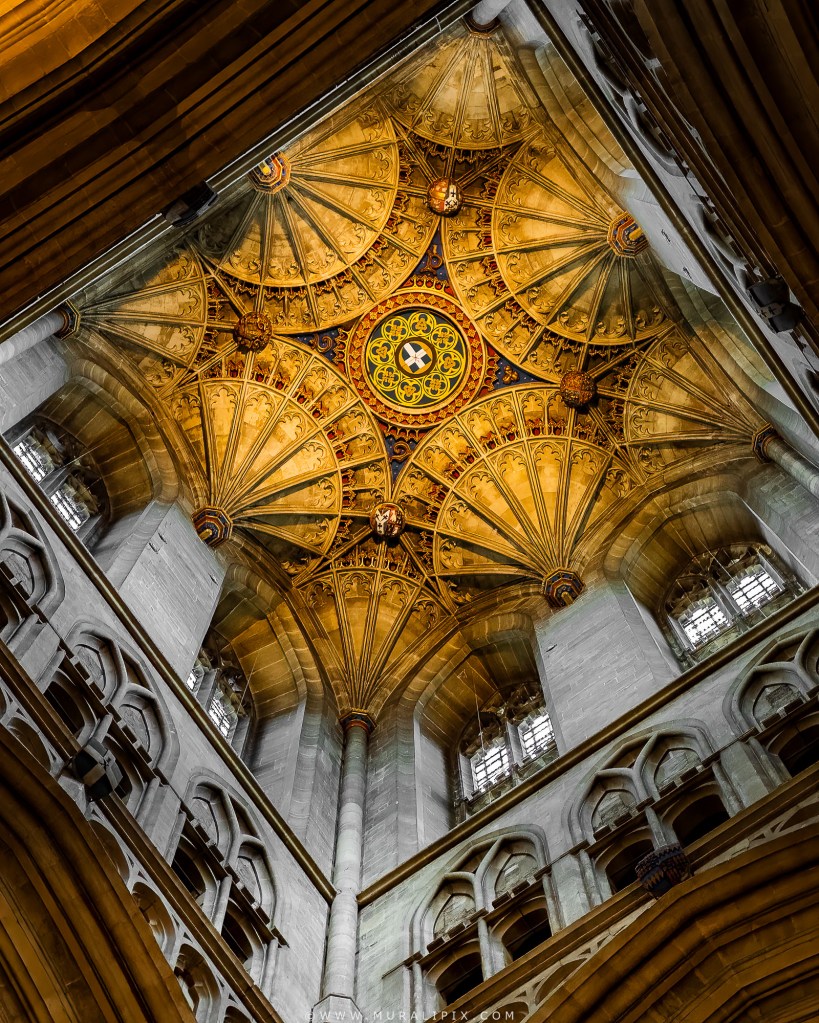
Bell Harry Tower Ceiling
Bell Harry Tower ceiling is made of stone ribs that curve and meet in the middle, like the inside of a big stone umbrella. It helps hold the tower up and also makes the inside look very tall and open.
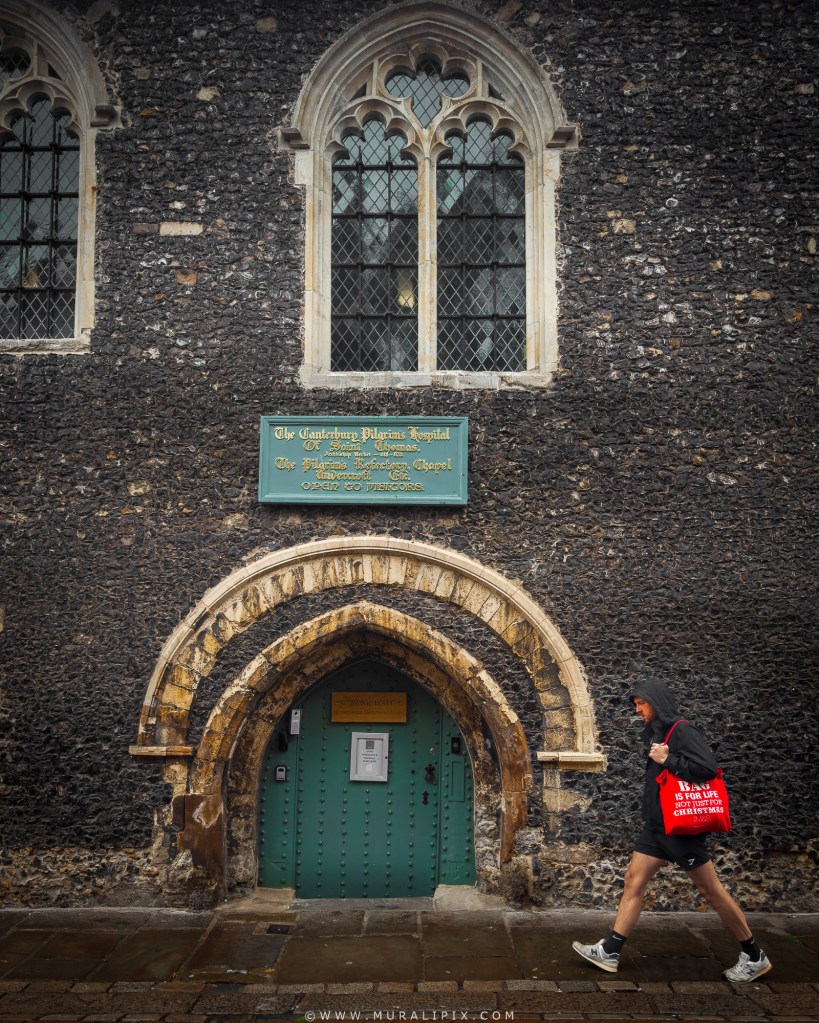
Canterbury Pilgrims Hospital
About 0.2 miles from the cathedral’s entrance on High Street is Canterbury Pilgrims Hospital. It was founded in the 12th century to provide lodging and care for poor pilgrims visiting the shrine of Thomas Becket. It is one of the oldest surviving charitable hospitals in England and still retains many of its medieval rooms.
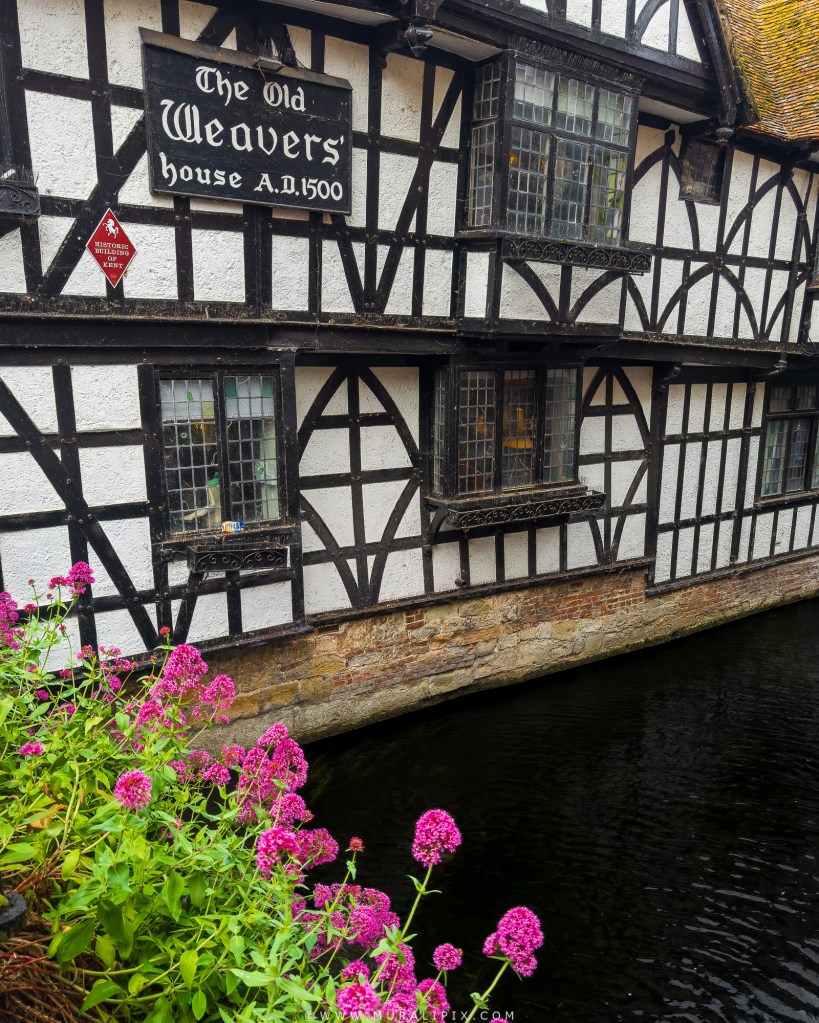
The Old Weavers’ House
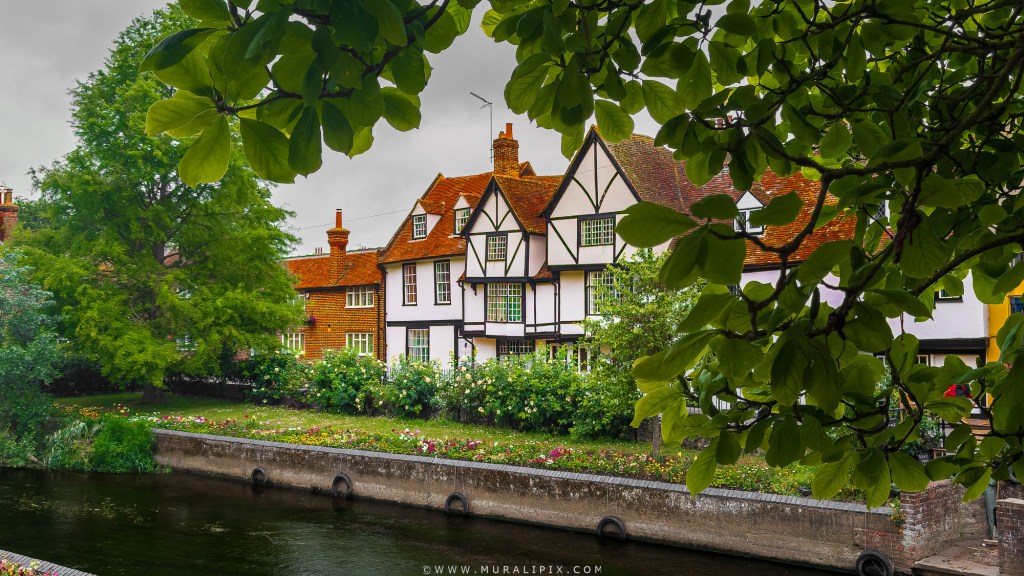
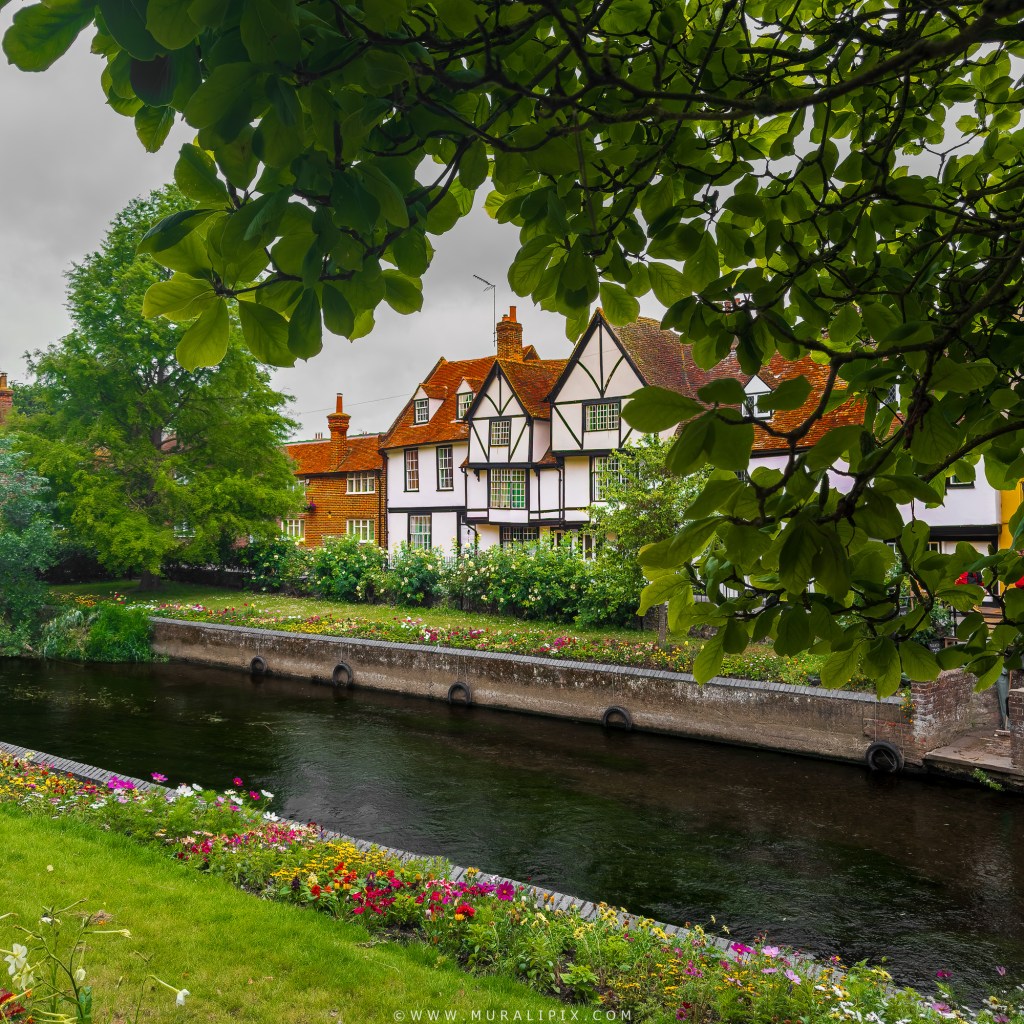
Opposite to the hospital is the Old Weavers House. It is a timber-framed building dating back to the 16th century that once housed silk weavers working along the River Stour. Its overhanging upper floors and exposed wooden beams are classic Tudor features, and the building sits right on the water, with parts of it extending over the river. Today it operates as a restaurant, but it still preserves much of its historic character.
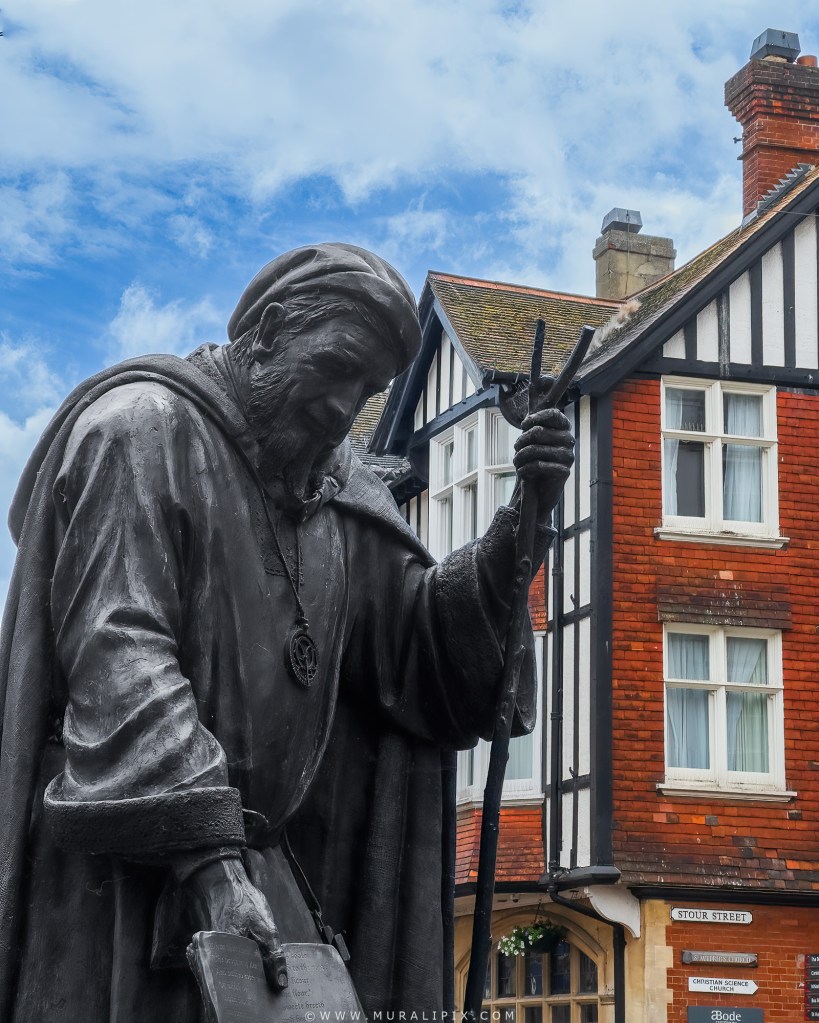
Geoffrey Chaucer’s Statue
Geoffrey Chaucer’s statue in Canterbury stands on the High Street as a tribute to the famous writer who is closely linked to the city through The Canterbury Tales. It shows Chaucer holding a book and reminds visitors of the pilgrims who once traveled to Canterbury, as described in his famous stories.
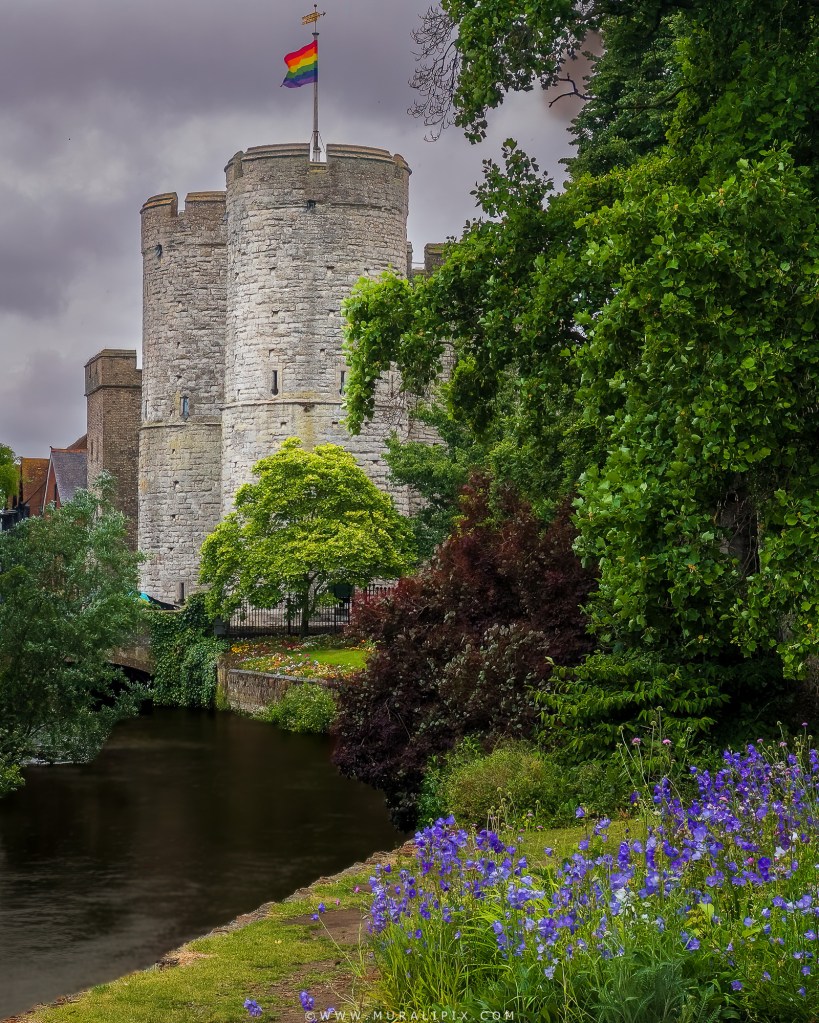
Westgate Towers & Westgate Gardens
Westgate Towers is the largest surviving medieval gateway in England and once formed the main western entrance into Canterbury’s walled city. Built in the late 14th century, it also later served as a prison and now houses a museum. Next to it is the Westgate Gardens, a peaceful riverside park along the River Stour, known for its flowerbeds and lawns.


2 responses to “Exploring Canterbury & the Cathedral with an iPhone”
As usual, Murali, your photography is simply superb and I also enjoy the wonderful blog that goes with your photography!
LikeLike
Incredible Murali, absolutely mind blowing incredible! I feel you need to be shared and displayed. WOW, you are so talented, your eye, your processing, and an IPhone??!!! You should a guest speaker
LikeLike