London’s St. Paul’s Cathedral is one of the most recognizable landmarks in the United Kingdom, standing as a symbol of resilience, faith, and architectural brilliance for more than three centuries. Designed by Sir Christopher Wren and completed in 1710 after the Great Fire of London destroyed its medieval predecessor, the cathedral represents the finest achievement of the English Baroque style. From its soaring dome—one of the largest in the world—to its elegant colonnades, intricate stonework, and magnificent interiors, St. Paul’s offers photographers a wealth of visual treasures while telling the story of London’s remarkable journey through fire, war, and renewal.
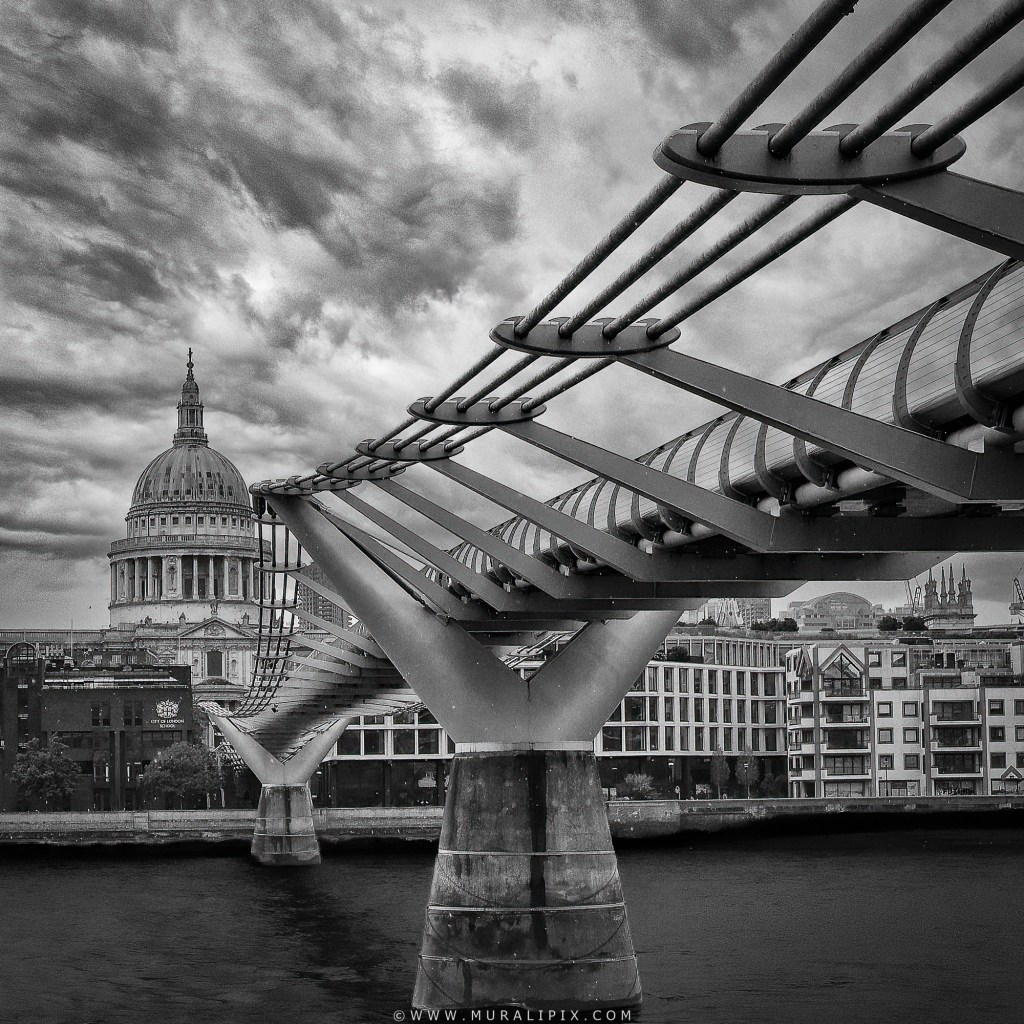
View of the Cathedral & Millenium Bridge from Across the river Thames
For a photographer, one of the most striking views of St. Paul’s Cathedral is from the south bank of the River Thames, where its magnificent dome rises above the London skyline. The sleek steel span of the Millennium Bridge leads the eye directly toward the cathedral, creating a powerful composition that blends modern engineering with historic architecture. This iconic scene perfectly reflects London’s ability to connect its rich past with the present.
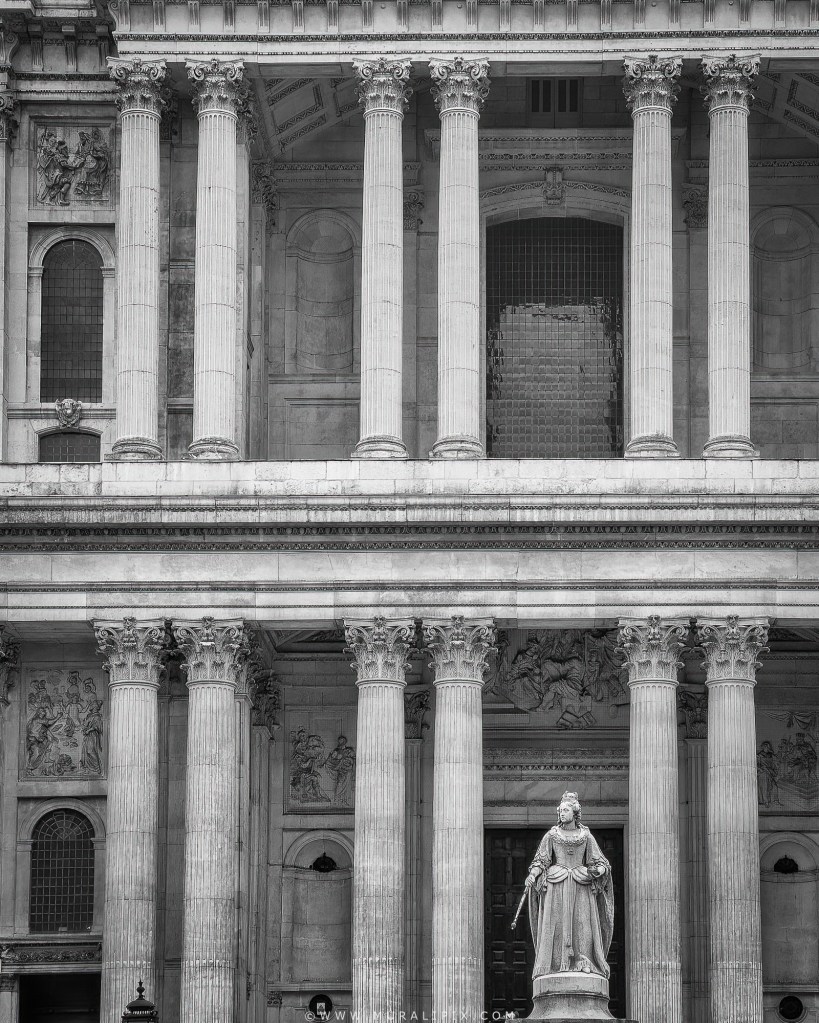
Statue of Queen Anne Statue in front of the Cathedral
Standing before the statue of Queen Anne, visitors are treated to a classic view of St. Paul’s Cathedral’s grand west façade, with its towering columns, twin bell towers, and magnificent dome rising behind. The composition creates a striking contrast between the monarch who reigned during the cathedral’s completion and the architectural masterpiece.
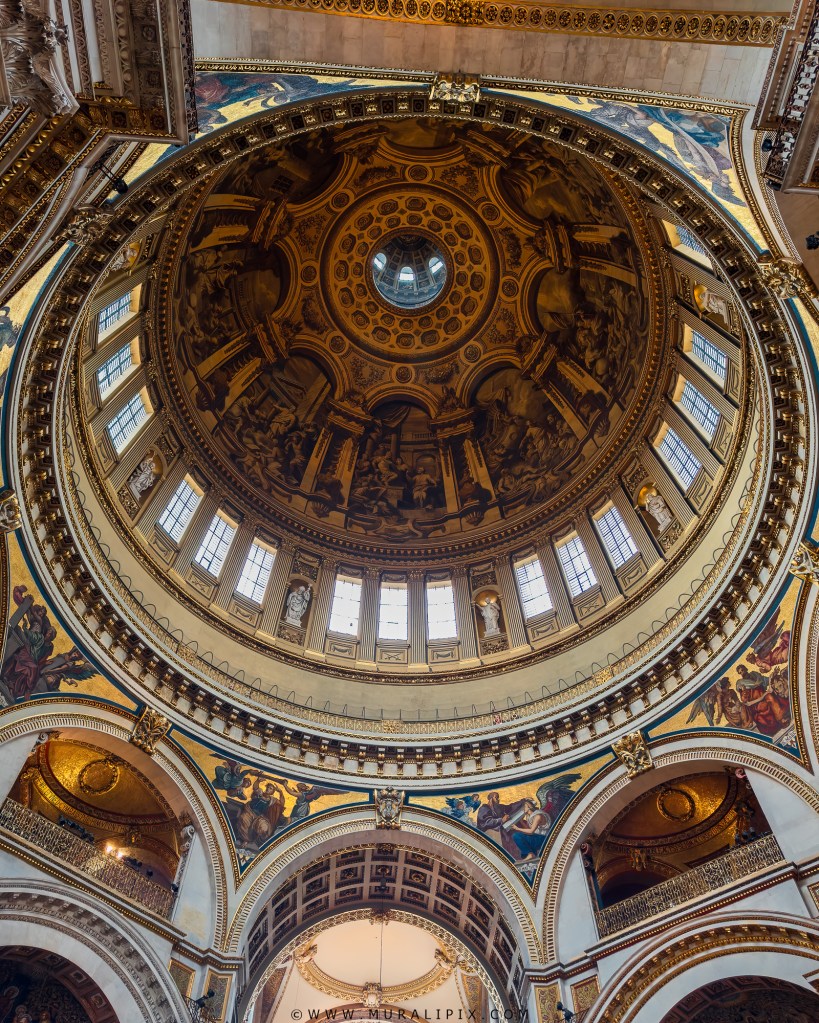
The Dome
The dome of the Cathedral is one of the most recognizable features of London’s skyline and remains a masterpiece of engineering and design. Inspired by the great domes of Renaissance Europe, Sir Christopher Wren created a triple-shell structure that combines strength, elegance, and impressive interior space. The height from the cathedral floor to the top of the inner dome is approximately 225 feet. It is the only dome to be seen on an English cathedral.
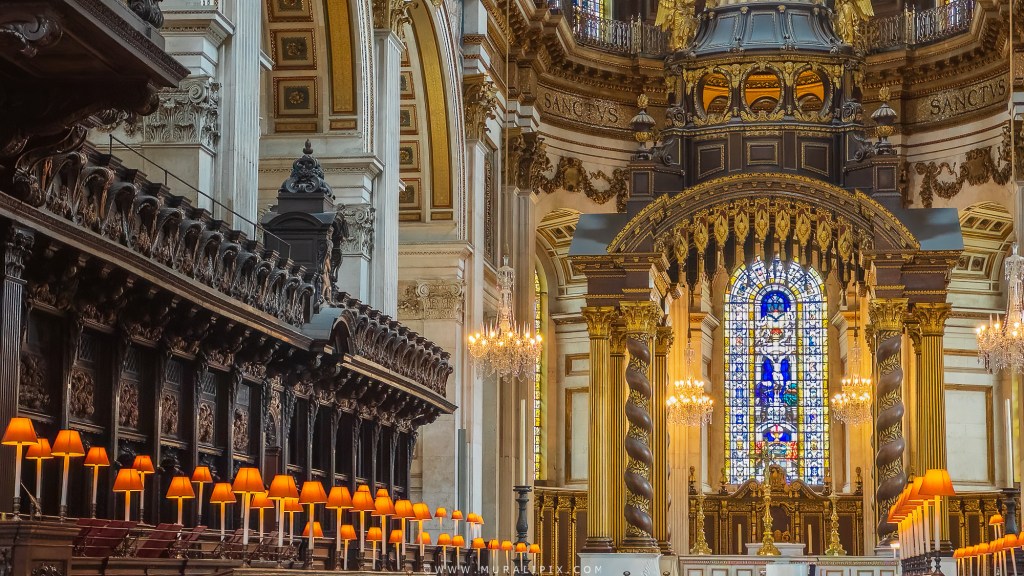
View of Quire, High Alter & the American Memorial Chapel from below the dome
Standing beneath the great dome, the eye is naturally drawn eastward along the cathedral’s central axis toward the richly decorated Quire and the High Altar. The soaring arches, intricate carvings, and gleaming mosaics create a sense of depth and grandeur that showcases the brilliance of Sir Christopher Wren’s design. Beyond the altar lies the American Memorial Chapel, dedicated to the more than 28,000 American servicemen who gave their lives while based in Britain during the Second World War. Viewed from below the dome, these sacred spaces form a magnificent sequence that blends architectural beauty, spiritual significance, and historical remembrance.
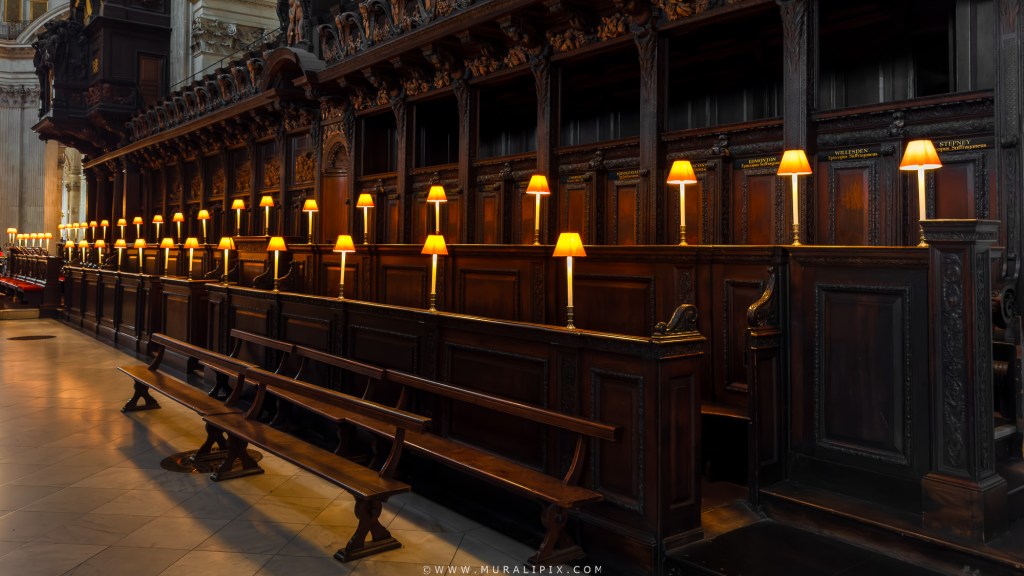
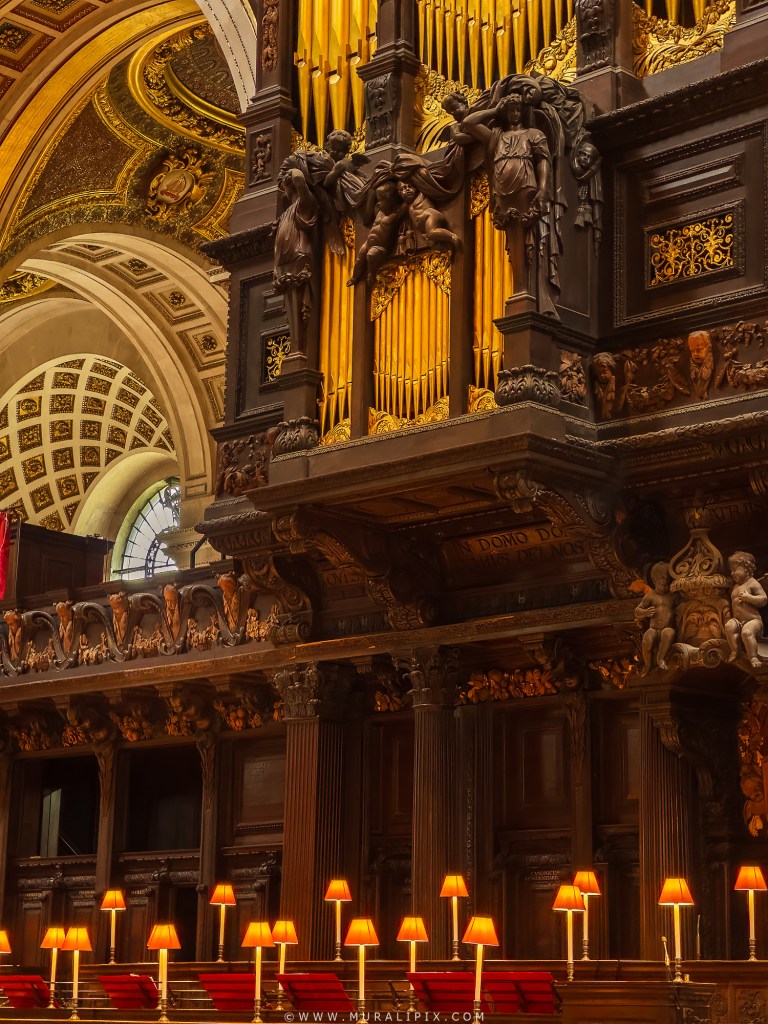
The Quire & the Great Organ
The Quire is the heart of St. Paul’s Cathedral’s daily worship, where clergy and choir gather for services. Its beautifully carved wooden stalls and ornate decorations reflect the craftsmanship and artistic vision of the late seventeenth century.
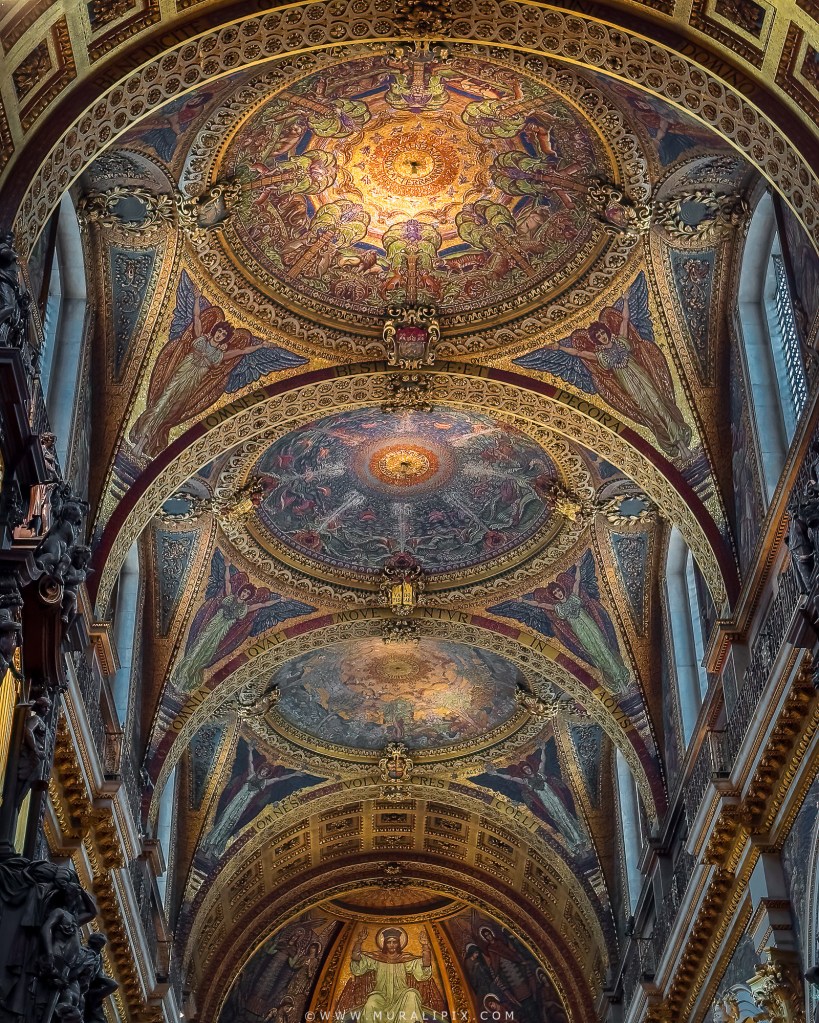
The ceiling above the Quire is richly decorated with gilded details, intricate carvings, and vibrant mosaics that draw the eye upward. Its elaborate design adds warmth and splendor to the space, creating a fitting setting for worship and choral music beneath the grandeur of the cathedral.
The Great Organ is one of the largest and most impressive musical instruments in the United Kingdom, filling the cathedral with powerful and resonant sound. Its magnificent case, originally designed in part during the time of Sir Christopher Wren, is itself an architectural masterpiece that complements the grandeur of the cathedral interior.
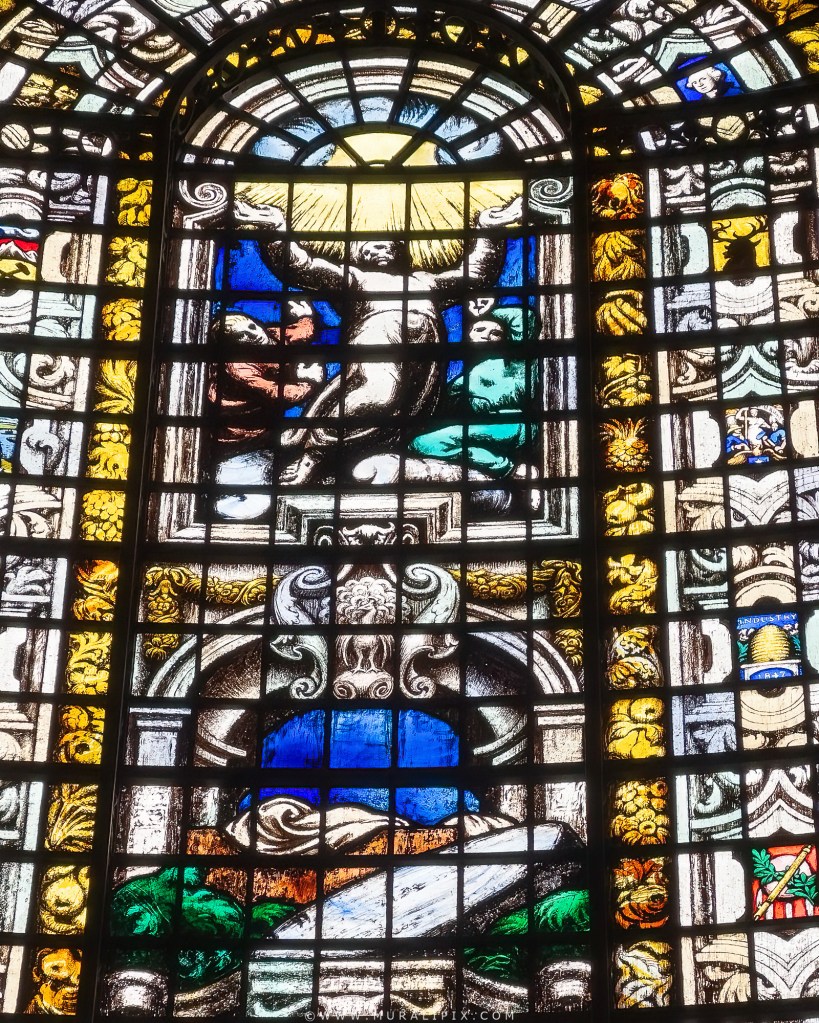
Stained-glass window panel of the American Memorial Chapel
Completed in 1958, the stained-glass windows of the American Memorial Chapel fill the space with rich colors and soft light, creating an atmosphere of reflection and remembrance. Their designs combine Christian symbolism with themes of sacrifice, service, and hope, honoring the American servicemen and women who served during the Second World War. One of the most notable panels depicts George Washington, recognizing his role in American history and symbolizing the enduring ties between Britain and the United States. Can you locate George Washington in the image below?
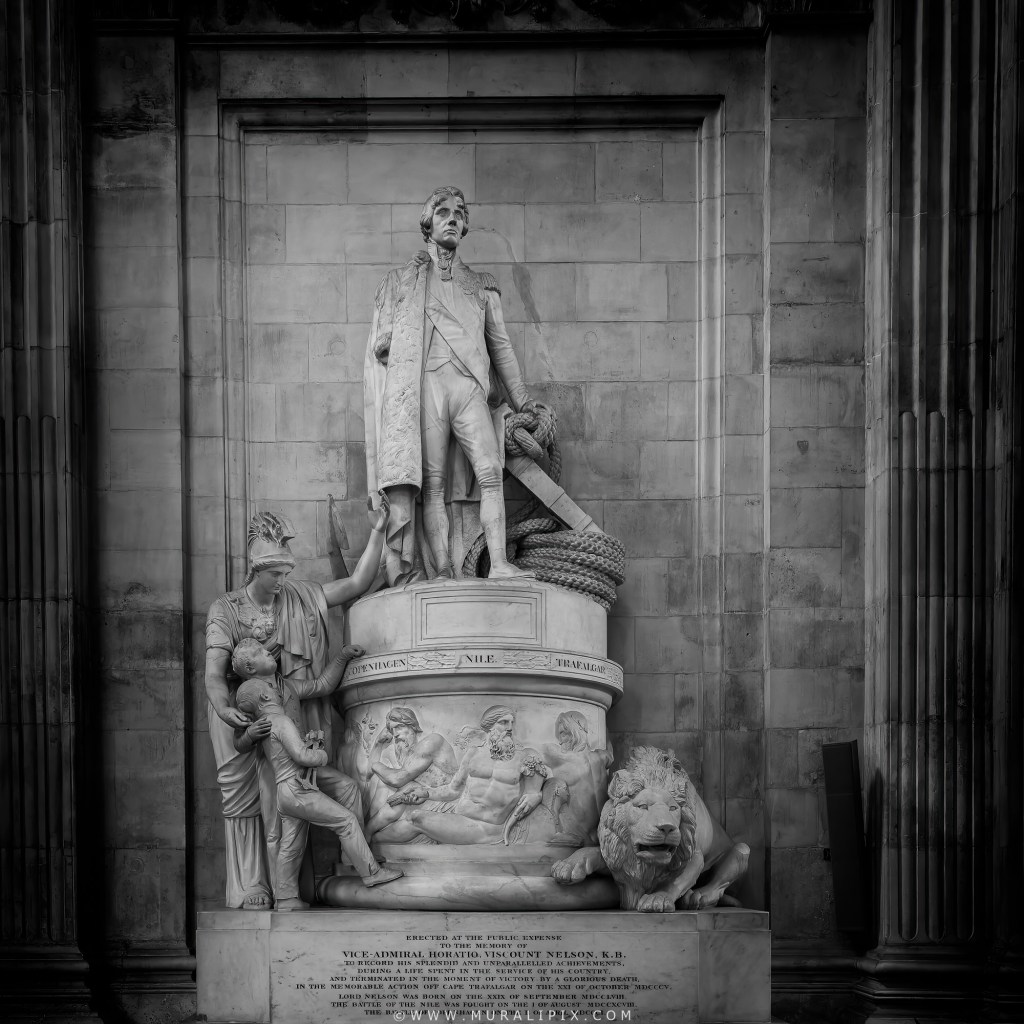
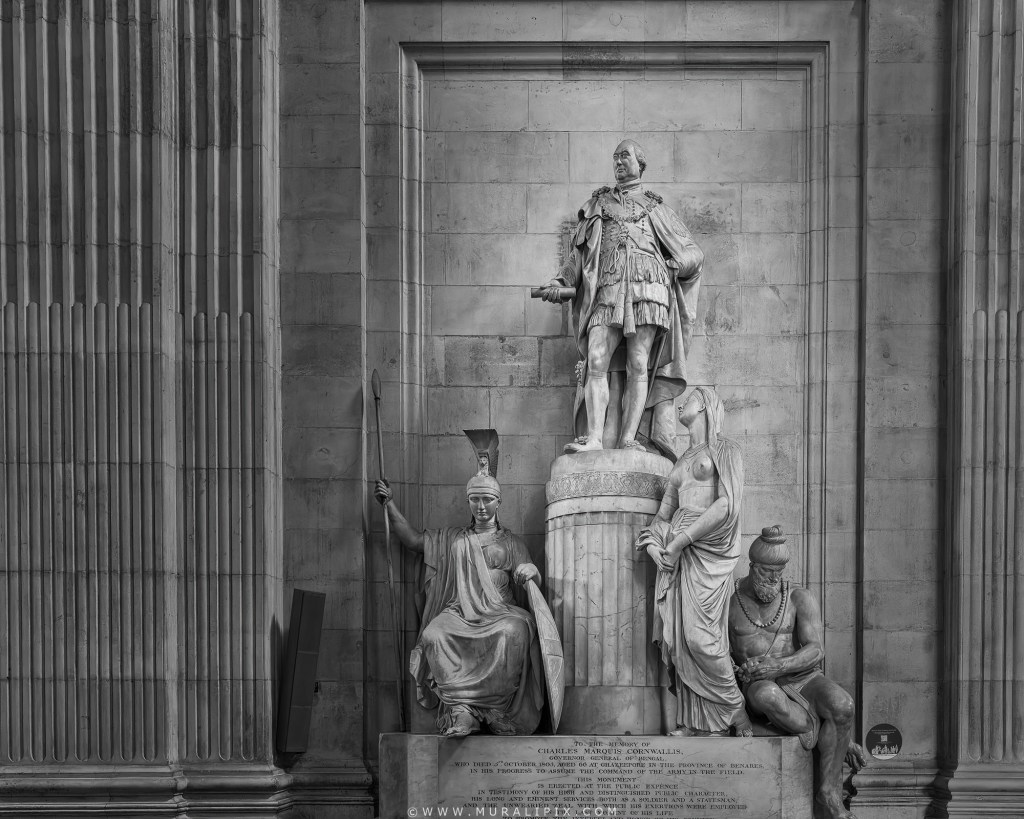
Nelson & Cornwallis Monuments
The memorial to Admiral Horatio Nelson in St. Paul’s Cathedral commemorates Britain’s most celebrated naval hero, who died at the Battle of Trafalgar in 1805.The statue of Horatio Nelson in the south transept captures him in a dignified, heroic pose, emphasizing his status as Britain’s greatest naval commander.
The memorial to Charles Cornwallis honors the military commander best known for his role in the American Revolutionary War and later service in India. The statue of Charles Cornwallis presents him in full military regalia, commemorating his long service in the British Army. Located opposite to Nelson’s monument, it forms part of a broader sculptural program honoring key figures of Britain’s imperial and military past.