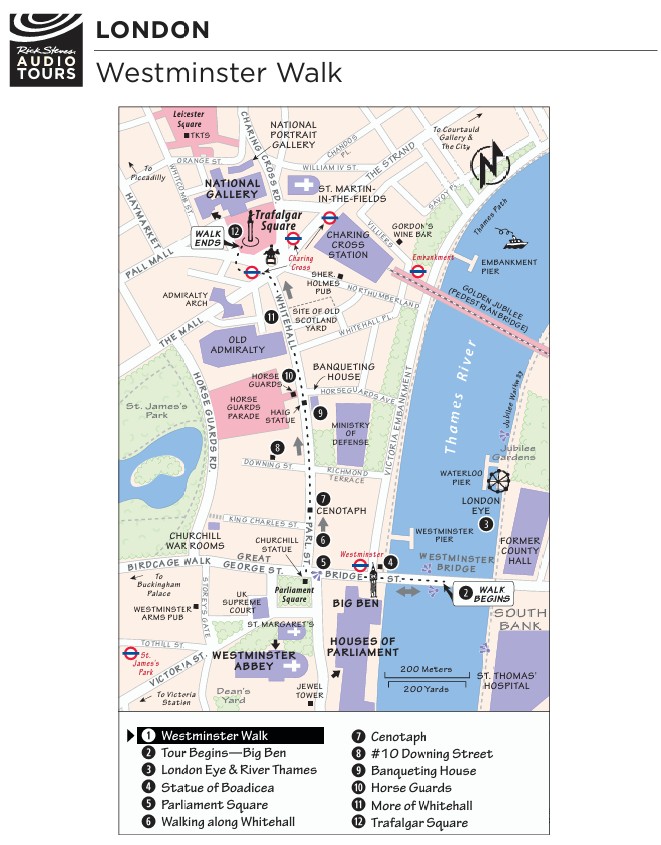
Rick Steves is an American travel writer and television host best known for making European travel accessible through his guidebooks, TV programs, and free audio walking tours. During our visit to London, we followed his Westminster Walk audio tour, which provided an engaging introduction to the area’s history, architecture, and landmarks. It was raining on and off and it took us about two hours to complete the walk.
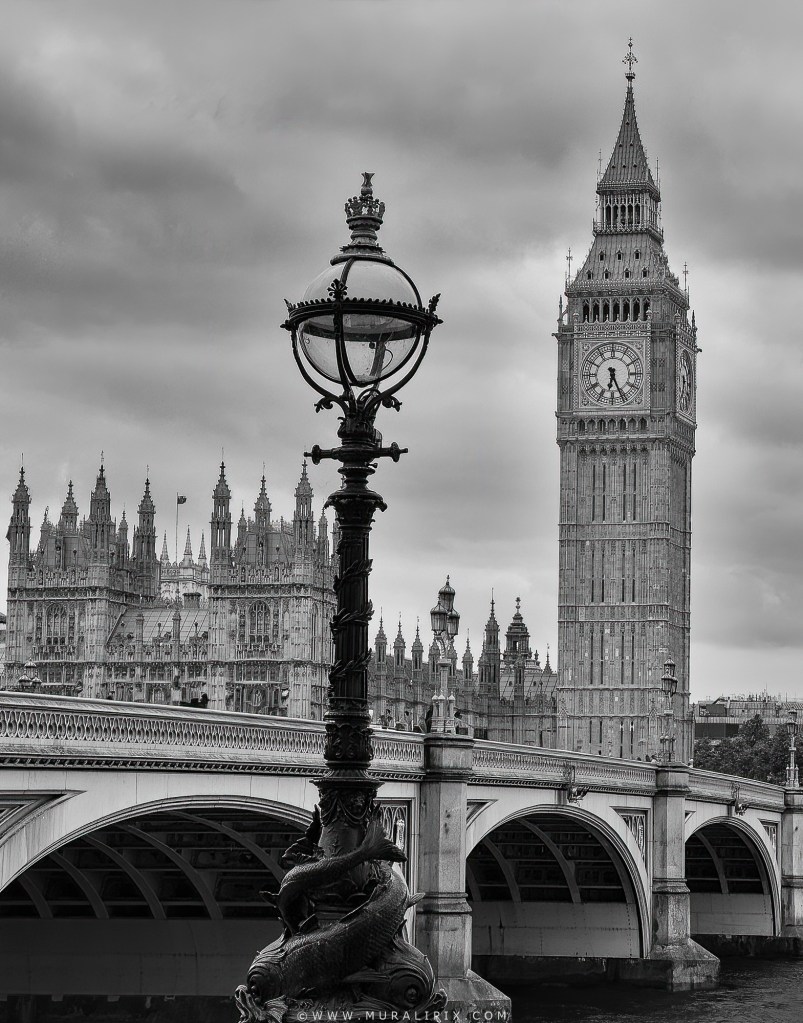
Westminster Bridge, Big Ben & The Houses of Parliament
We began the tour on the south bank of the River Thames beside Westminster Bridge, one of the best vantage points in London for photographing Big Ben and the Houses of Parliament. The bridge creates a strong leading line, particularly at sunset and during the blue hour, but unfortunately rain and heavy cloud cover prevented the colorful skies that often make this location so spectacular.

Parliament Square
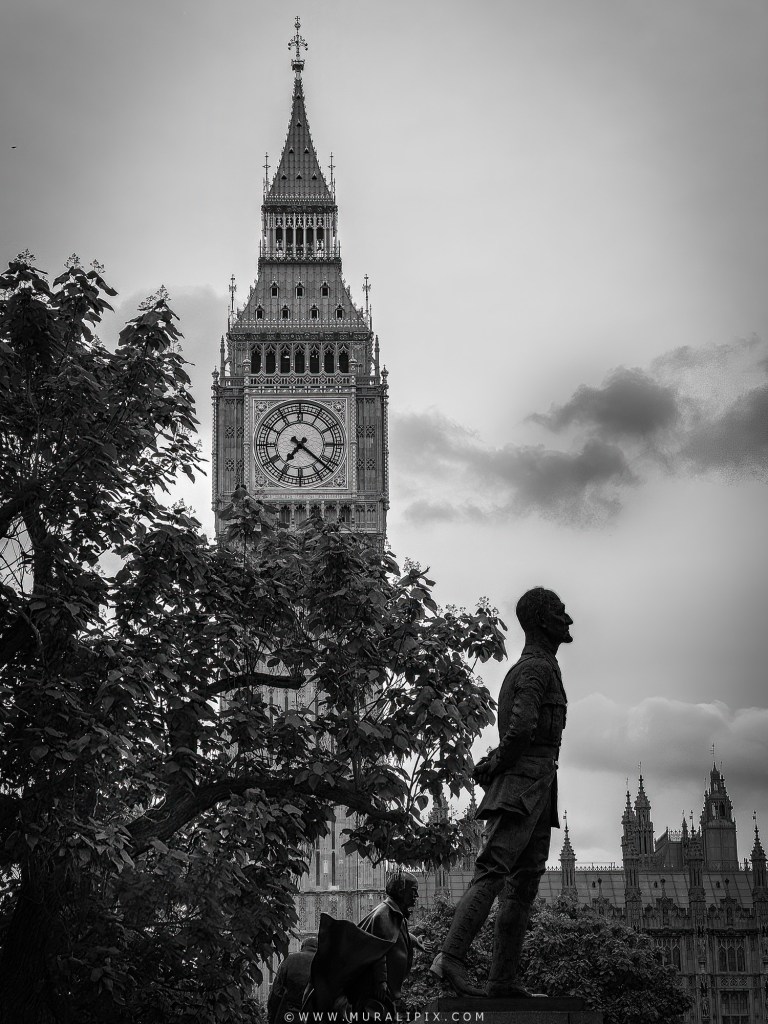
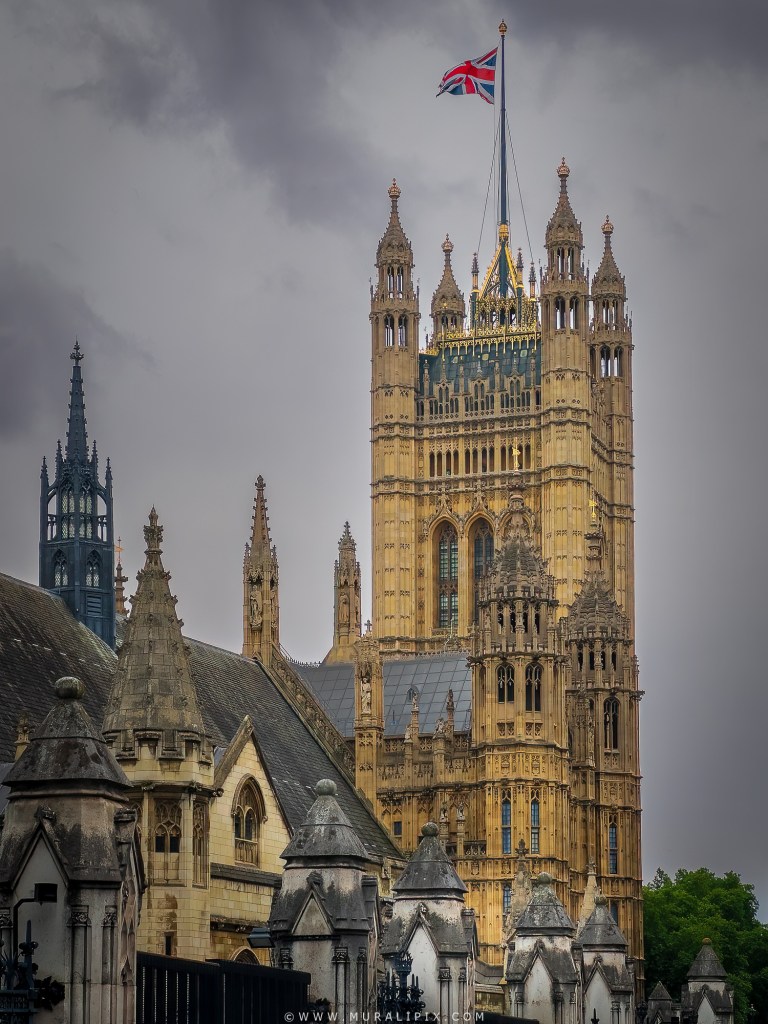
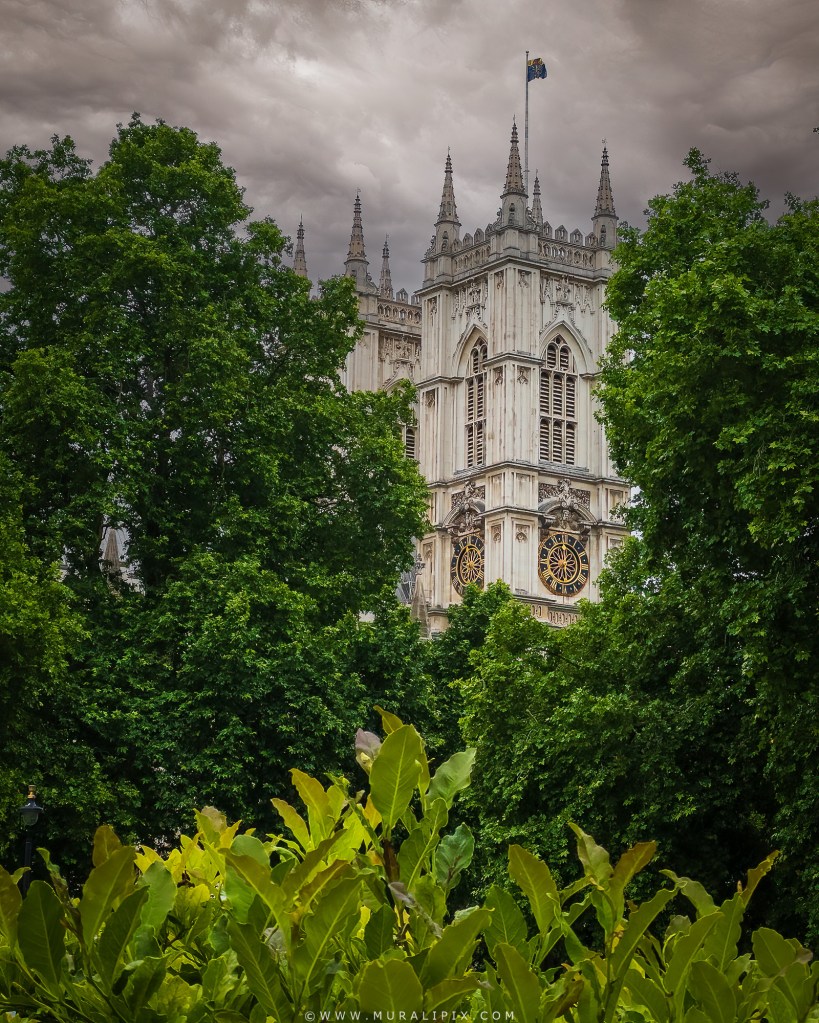
We crossed the river and stopped at Parliament Square. It is one of London’s most important civic spaces, situated at the heart of Westminster and surrounded by some of the nation’s most significant historic and political landmarks. Dominating the eastern side is the magnificent Palace of Westminster (aka The Houses of Parliament), while the square is also bordered by Westminster Abbey, the Supreme Court of the United Kingdom, and several government offices. Statues of influential statesmen and world leaders, including Winston Churchill and Mahatma Gandhi, line the square.
Cabinet Office
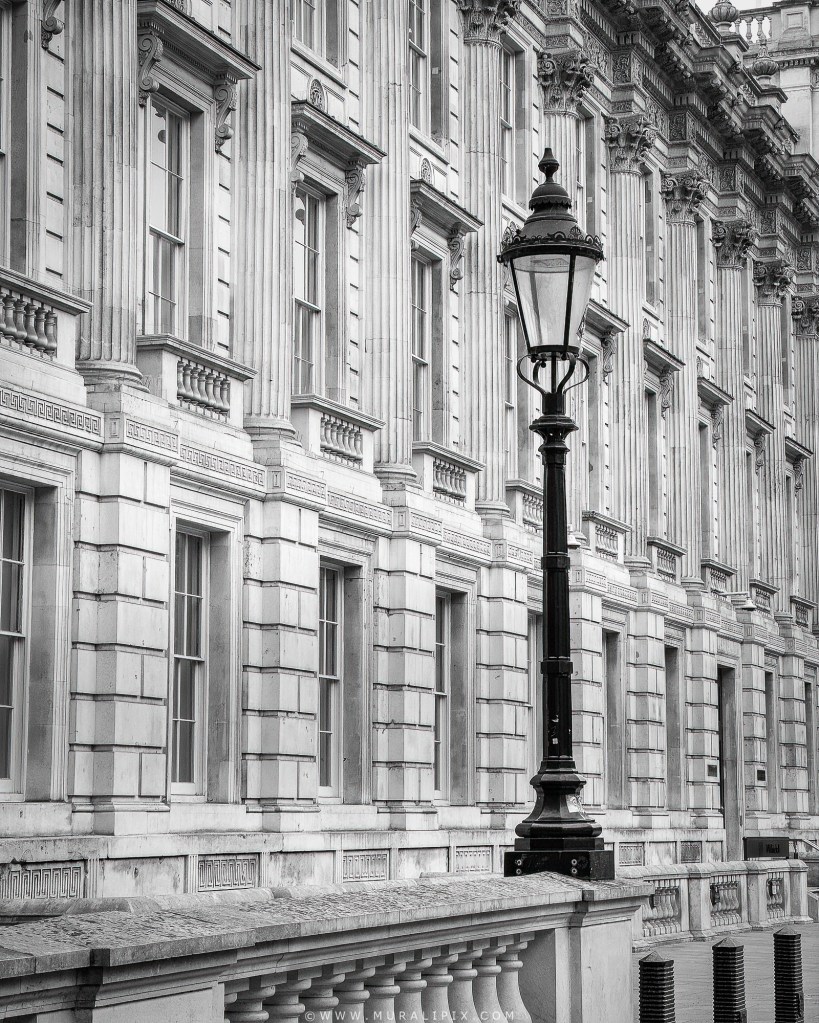
From Parliament Square, we continued north along Whitehall toward Trafalgar Square. A large crowd had gathered outside Downing Street, hoping to catch a glimpse of the Prime Minister or visiting dignitaries entering and leaving Number 10. Just beyond the Prime Minister’s residence stands the imposing Cabinet Office, one of the key administrative centers of the British government. Its imposing façade, part of the late Victorian government complex designed in a grand Classical style, features Portland stone, arched windows, decorative columns, and richly ornamented detailing that reflects the authority and prestige of the British state.
Earl Haig Statue, Banqueting Hall and the Old War Office
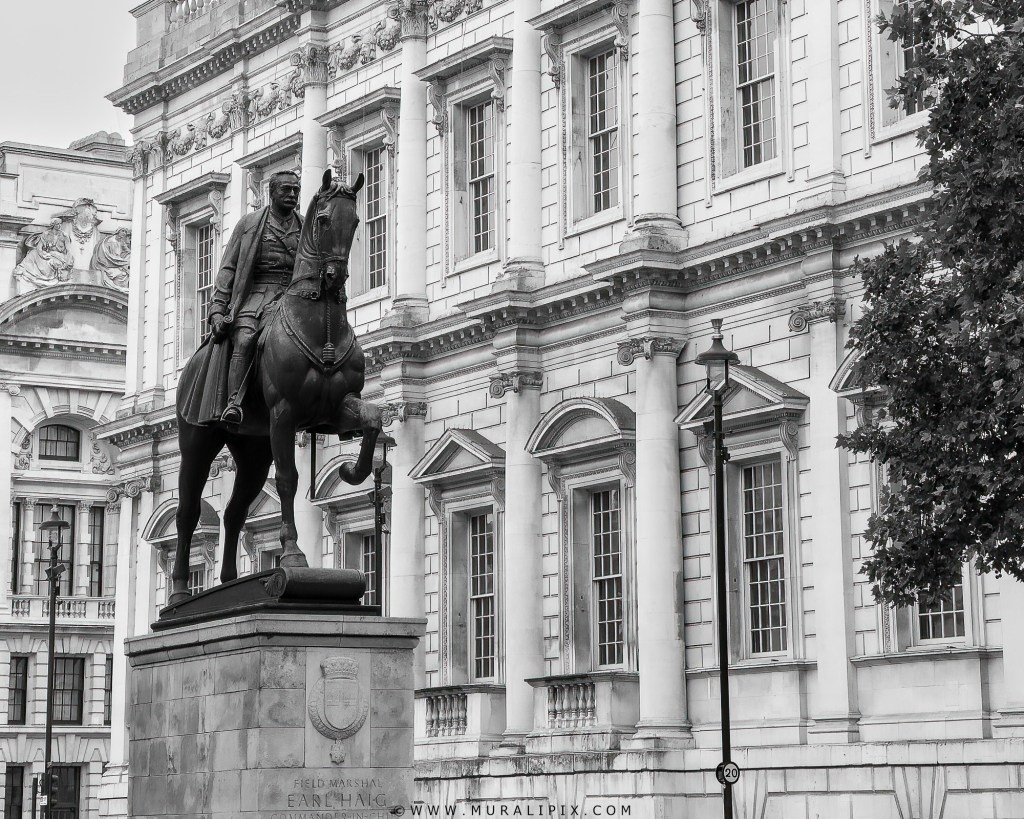
Continuing our walk, our next stop was in front of the Earl Haig Statue, Banqueting Hall and the Old War Office. The bronze statue of Field Marshal Earl Haig stands on Whitehall, commemorating the commander who led British forces on the Western Front during much of the WWI. Unveiled in 1937, the monument depicts Haig on horseback and remains a prominent military memorial in the heart of Westminster.
The Banqueting House is the sole surviving remnant of the vast Palace of Whitehall, once the principal residence of English monarchs. Designed by Inigo Jones and completed in 1622, it is regarded as one of the finest examples of Palladian architecture in Britain.
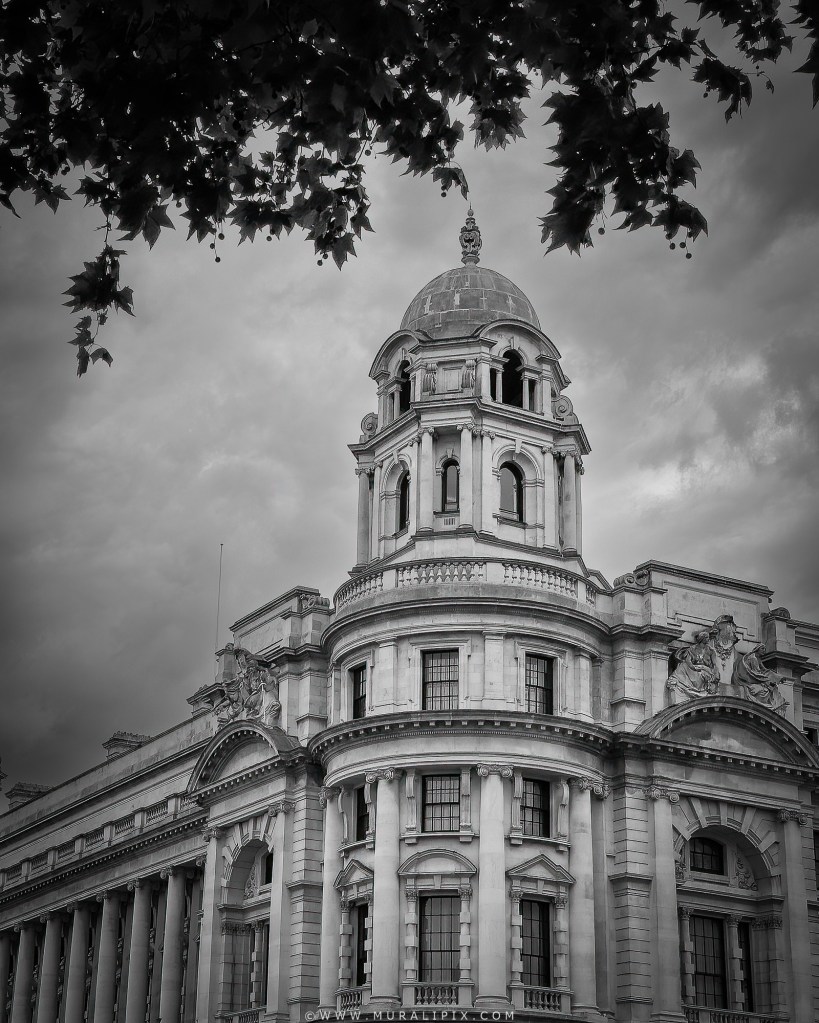
The Old War Office was completed in 1906 as the headquarters of the British Army and later housed some of the most influential figures in British military and political history, including Winston Churchill. Its grand Edwardian Baroque façade stretches along Whitehall, distinguished by its ornate stonework, domed corner towers, and imposing architectural scale.
UK Telephone Box along Whitehall
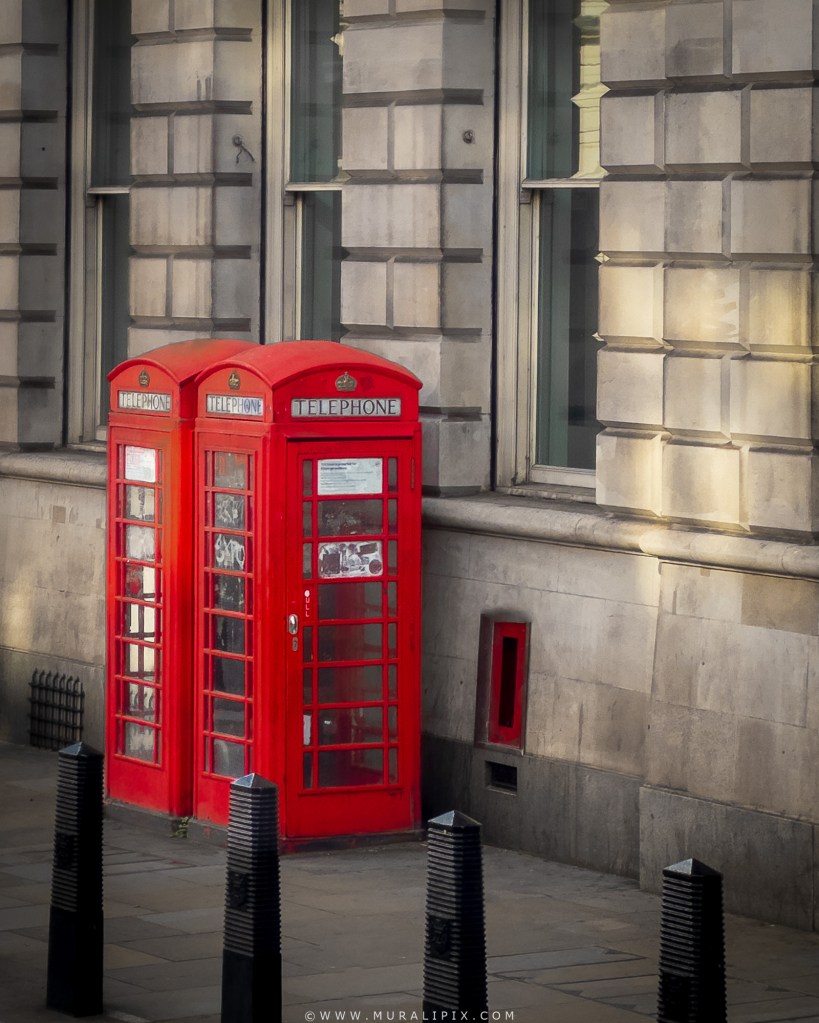
The iconic red British telephone box is one of the most recognizable symbols of the United Kingdom, found in cities, towns, and villages throughout the country. Designed by architect Sir Giles Gilbert Scott in the 1920s, the classic cast-iron kiosk combines practicality with distinctive design and remains a favorite subject for photographers despite the decline of public payphones. There were lines of people in front of the telephone boxes around Parliament Square, but we located a pair at the intersection of Whitehall and Great Scotland Yard that was rather lonely.
Along Whitehall
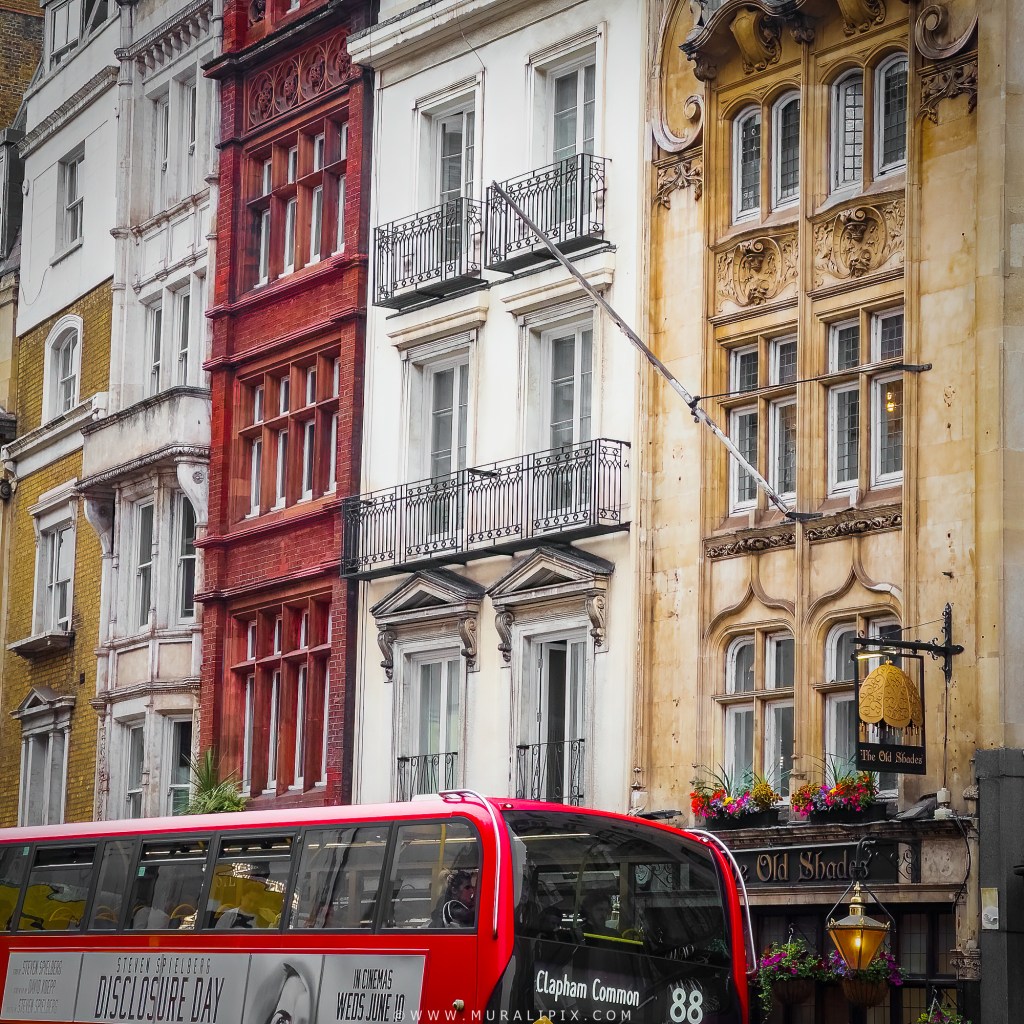
Continuing our walk north, close to Trafalgar Square we came across the building housing the Old Shades restaurant features an elegant late-Victorian façade of warm stone and brick, distinguished by its tall sash windows, decorative cornices, and finely detailed architectural ornamentation that complements the historic streetscape of Whitehall.
Trafalgar Square
Our walk terminated at Trafalgar Square. It is one of London’s most famous public spaces, created in the 19th century to commemorate Britain’s victory at the Battle of Trafalgar in 1805. The square serves as a gathering place for celebrations, demonstrations, and cultural events, while its fountains, statues, and grand surrounding buildings make it a focal point of the city.
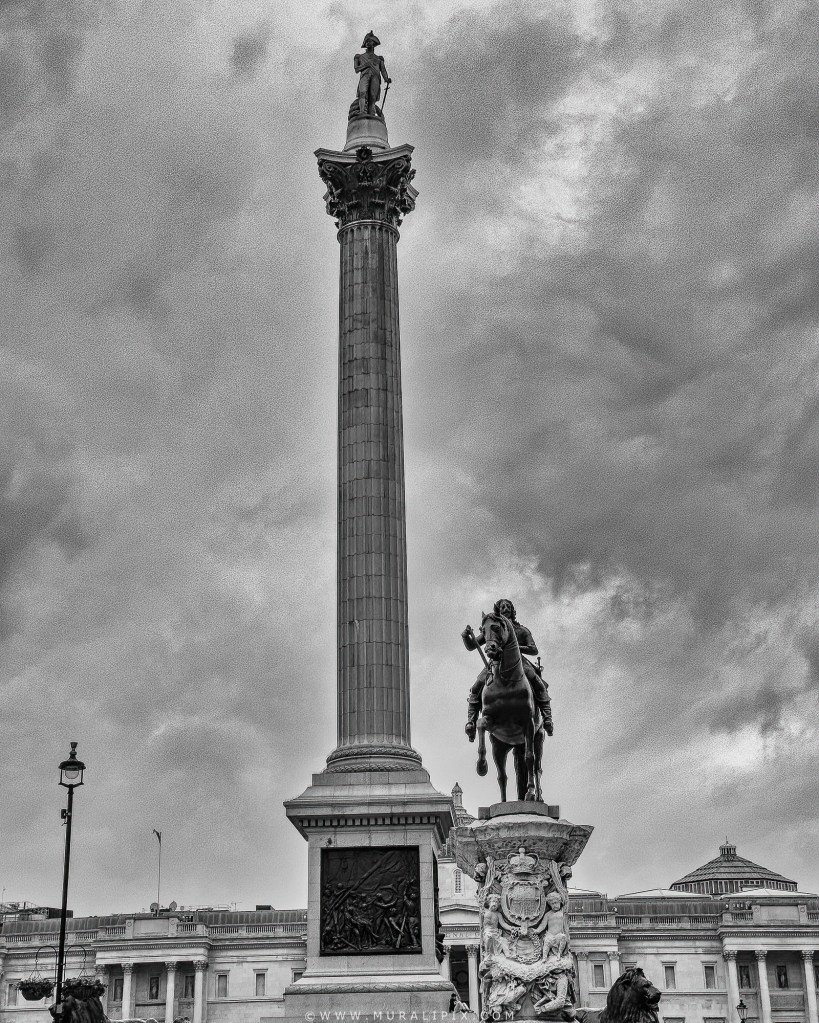
At the center of the square stands Nelson’s Column, a 169-foot monument honoring Admiral Horatio Nelson, who was killed during the Battle of Trafalgar. Completed in 1843, the Corinthian column is topped by a statue of Nelson surveying the city he helped defend.
The equestrian statue of King Charles I stands at the southern end of Trafalgar Square and marks the traditional center of London from which distances to the capital are measured. Cast in bronze in 1633, it is the oldest bronze statue in London and one of the few monuments to survive the upheavals of the English Civil War.
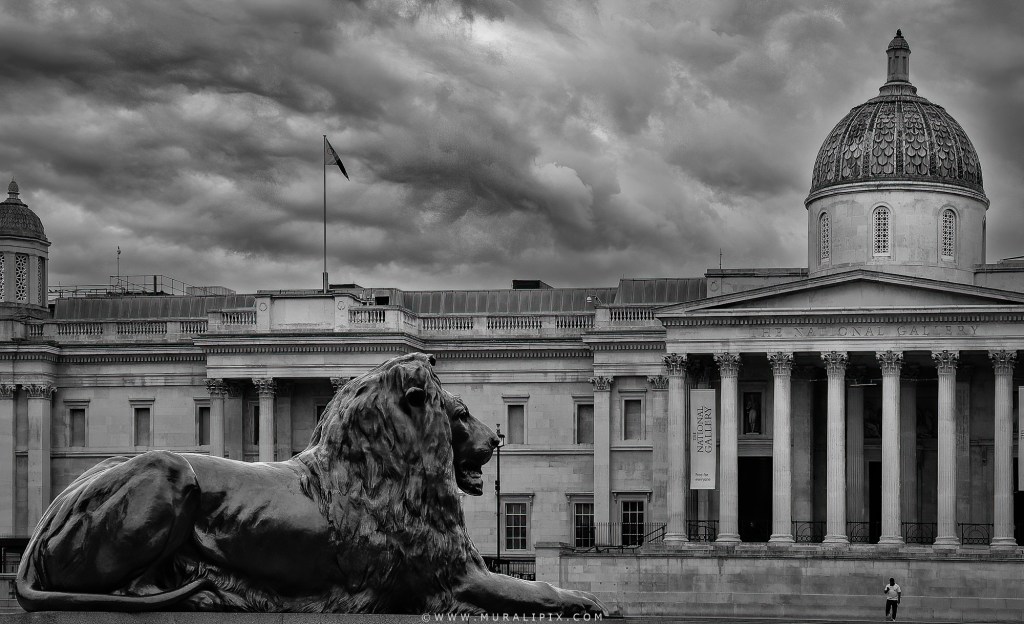
Four monumental bronze lions guard the base of Nelson’s Column, becoming some of the most photographed sculptures in Britain. Designed by Sir Edwin Landseer and installed in 1867, the lions were cast from bronze and symbolize Britain’s naval strength and imperial power.
The imposing façade of the National Gallery forms the northern backdrop of Trafalgar Square and is one of London’s most recognizable architectural landmarks. Designed in a Neoclassical style, it features a grand central portico, elegant Corinthian columns, and a prominent dome that lends dignity and balance to the square.